Jekyll2026-04-07T01:16:25-07:00https://nexus-pai.github.io/feed.xmlSilicon Valley AI Nexus (SVAIN)SVAIN HomepageSVAINSVAIN’s 16th Chapter - SVAIN X LGE Forum: Next-Generation Computing & AI Security Forum2026-03-12T17:01:32-07:002026-03-28T19:01:18-07:00https://nexus-pai.github.io/event-announcements/PST%20-%20K-PAI_forum_announcement%20-%2016posted: 12-Mar-2026
&
updated: 28-Mar-2026
SVAIN Community Members, Friends, Security Researchers, Cryptography Enthusiasts, and AI Innovators!!!!!
⚡ THE QUANTUM SHIELD RISES! ⚡
Following our powerful February forum on battery innovation and investment wisdom, we’re diving deep into the most critical security challenge of our era: protecting AI systems in a post-quantum world.
We are thrilled to invite you to SVAIN’s 16th Forum—a comprehensive exploration of the convergence between quantum computing threats, homomorphic encryption breakthroughs, and next-generation AI security architecture.
But here’s what makes this Forum truly extraordinary
–
Three world-class researchers from LG Electronics will share cutting-edge work that’s shaping the future of secure AI—from encrypted similarity search to intelligent appliance security to the vision of next-generation computing itself.
Plus
–
extended networking time, raffle prizes, and insights into LG’s Global Recruiting Office for those interested in joining one of Korea’s leading technology innovators!
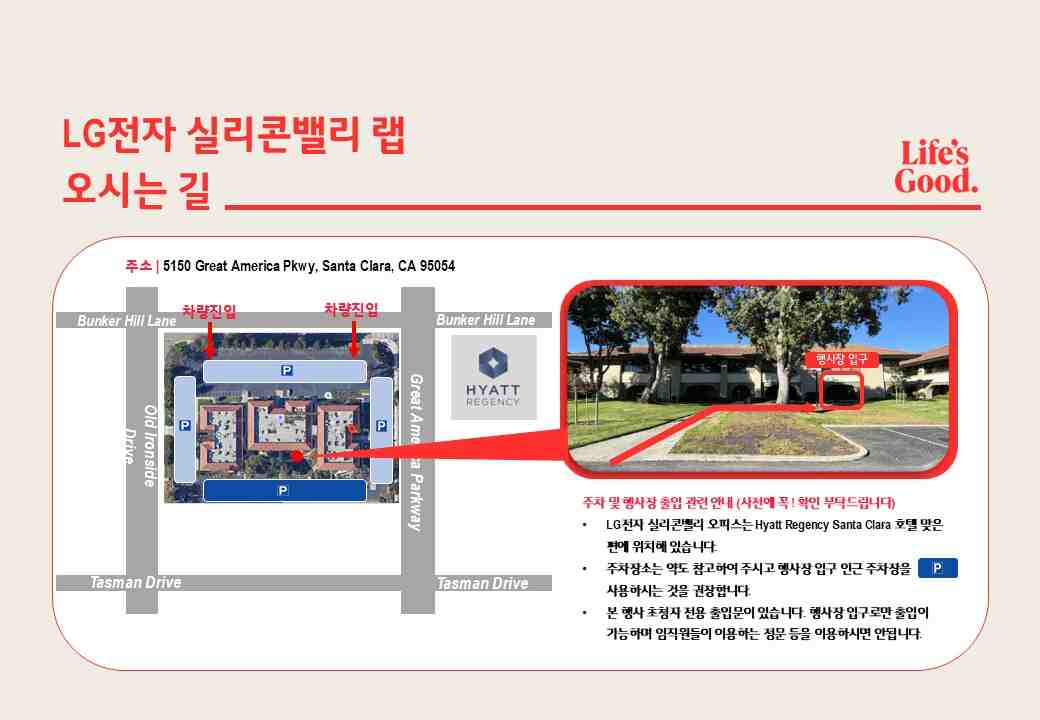
Dinner & Venue Sponsor: LG Electronics North America
Why This Forum Matters
As AI systems scale exponentially and quantum computers advance toward breaking current encryption, three critical questions emerge:
How do we protect AI inference when quantum computers can break today’s encryption? Homomorphic encryption enables computation on encrypted data—but can it work in practice at scale?
What security threats are unique to AI systems? From model extraction to prompt injection to agent manipulation, AI introduces attack surfaces we’ve never encountered before.
What does next-generation computing look like when security, intelligence, and energy efficiency must converge? Edge AI, encrypted computation, and privacy-preserving systems represent a fundamental architectural shift.
Mar-2026 SVAIN Forum brings together three leading LG Electronics researchers to address these questions with real-world solutions, followed by networking time to connect with security professionals, cryptographers, AI researchers, and fellow innovators.
Please visit SVAIN Membership to learn about our SVAIN membership for qualification and all exclusive perks you can enjoy!
Join us at SVAIN Members Kakaotalk Chatroom using this info (if you’re qualified)!
Event Schedule - Security Deep Dives + Networking
This Forum features an intensive technical program followed by extended networking:
Time
Activity
5pm - 5:30pm
Registration & Early Networking (snacks & drinks provided)
5:30pm - 6pm
Talk 1 - Private AI in Practice + Q&A
6pm - 6:30pm
Talk 2 - Securing Intelligent Appliances + Q&A
6:30pm - 7pm
Talk 3 - Next-Generation Computing Vision + Q&A
7pm - 7:10pm
Introduction to LG Global Recruiting Office
7:10pm - 7:15pm
Raffle Draw! 🎉
7:15pm - 8:30pm
Dinner & Extended Networking
What makes this schedule special
LG Electronics is providing snacks and refreshments during early registration (5pm-5:30pm) so you can network comfortably before the technical sessions begin.
After three intensive deep-dives into cutting-edge security research,
enjoy dinner and over an hour (virtually infinite horizon! ★^^★) of networking—plus raffle prizes and insights into career opportunities at LG!
Come for the quantum-resistant cryptography. Stay for the connections. Leave with both knowledge and relationships that last.
Talk 1 – Private AI in Practice - Deploying Encrypted Similarity Search with Fully Homomorphic Encryption
Speaker
–
Bahattin Yildiz - Director, Advanced Security at Emerging Technology Lab, LG Electronics
Korean Title
–
실무에서의 프라이빗 AI - 동형암호를 활용한 암호화 유사도 검색 배포
Homomorphic encryption promises to enable computation on encrypted data—but can it actually work in production? This talk bridges the gap between cryptographic theory and real-world deployment.
Bahattin will present a high-level introduction to Fully Homomorphic Encryption (FHE) and discuss how it moves beyond academic research into practical deployment for privacy-preserving AI applications. The session highlights LG’s recent work on encrypted similarity search, a core building block for applications like facial recognition and personalized services, developed as part of a privacy-preserving edge AI system.
What You’ll Learn
FHE Fundamentals Understanding how homomorphic encryption enables computation on encrypted data without decryption
From Theory to Practice Engineering challenges and solutions for deploying FHE at scale
Encrypted Similarity Search How to perform vector similarity operations (critical for modern AI) while data remains encrypted
Real-World Applications Facial recognition, personalized recommendations, and edge AI scenarios where privacy is paramount
Performance Considerations Computational costs, optimization strategies, and when FHE makes sense
Why This Matters to SVAIN
Privacy-preserving computation is SVAIN’s foundational mission. Seeing how one of the world’s leading electronics companies is actually deploying homomorphic encryption in production systems provides concrete proof that privacy-preserving AI isn’t just theoretical—it’s happening now.
For engineers, researchers, and founders working on AI systems that handle sensitive data, this session offers actionable insights into what’s actually possible with current FHE technology.
Talk 2 – Securing Intelligent Appliances
Speaker
–
Jongho Shin - SW Security Task Leader, Next-Generation Security Research Department, LG Electronics
Korean Title
–
지능형 가전을 위한 통합 AI 보안 아키텍처
As refrigerators, washing machines, and home devices become “intelligent,” they introduce entirely new attack surfaces. Traditional cybersecurity isn’t enough—AI-native threats require AI-aware security.
This talk introduces a comprehensive security architecture addressing threats unique to AI-powered devices - model extraction (stealing proprietary AI models), prompt injection (manipulating AI behavior through inputs), agent manipulation (corrupting autonomous decision-making), and physical-layer attacks (exploiting hardware vulnerabilities).
Jongho will present LG’s research on homomorphic encryption-based inference (protecting models during operation), AI-aware Intrusion Detection and Prevention Systems (IDPS) that understand AI-specific attack patterns, and agent security validated through AI red teaming.
What You’ll Learn
AI-Native Threat Landscape Understanding attacks that only exist because of AI (prompt injection, model extraction, data poisoning)
Integrated Security Architecture How to protect AI systems across hardware, software, and data layers simultaneously
Homomorphic Inference in Practice Running AI models on encrypted inputs for privacy-preserving smart home applications
AI-Aware IDPS Detection systems specifically designed for AI threats vs. traditional network security
Red Teaming for AI Agents How LG tests autonomous systems against adversarial manipulation
Why This Matters to SVAIN
Every SVAIN member working on AI deployment faces these questions
–
How do we protect proprietary models? How do we prevent adversarial attacks? How do we ensure AI agents behave safely?
LG’s integrated approach—combining cryptographic protection, behavioral monitoring, and adversarial testing—represents the state of the art in defending AI systems. Whether you’re building edge AI, deploying models in production, or designing security for intelligent systems, this framework is essential.
Speaker
–
HyoJun Im - Head of Next-Generation Computing Research Lab, LG Electronics
Korean Title
–
차세대 컴퓨팅: 프라이버시 보호 AI, 암호화 연산, 엣지 지능화
This talk steps back to present the vision
–
What does computing look like when security, intelligence, and energy efficiency must all converge?
HyoJun Im will introduce the mission and research focus of LG’s Next-Generation Computing Research Institute, highlighting its role in advancing systems that are simultaneously secure (protecting privacy at every layer), intelligent (leveraging AI without sacrificing security), and energy-efficient (enabling edge deployment without datacenter power budgets).
What You’ll Learn
The Vision How LG is architecting computing systems for a privacy-first, AI-powered, energy-constrained future
Research Priorities Core challenges the Next-Generation Computing Lab is tackling
Edge Intelligence Why computation must move to the edge and how privacy-preserving techniques enable it
Encrypted Computation at Scale Long-term roadmap for making homomorphic encryption practical across consumer devices
Integration Strategy How cryptography, hardware acceleration, and AI optimization work together
Why This Matters to SVAIN
This isn’t just about individual technologies—it’s about how they integrate into a coherent future. Understanding LG’s strategic vision helps SVAIN members see where the entire field is heading and what skills, research directions, and business opportunities will matter most.
For researchers, this session reveals what one of the world’s largest electronics companies believes is worth investing in. For founders and engineers, it illuminates where the market is going.
Special Session
–
LG Global Recruiting Office (GRO)
Presenter
–
YoungKi An - Head of Global Recruiting Office, LG Electronics
After the technical deep-dives, LG’s Global Recruiting Office will share insights into career opportunities at LG Electronics for researchers, engineers, and innovators passionate about next-generation computing, AI security, and privacy-preserving systems.
What You’ll Learn
LG Electronics’ research priorities and expansion areas in Silicon Valley and Korea
Open positions in AI security, cryptography, edge computing, and related fields
How LG supports researchers transitioning between academia and industry
Global career pathways within LG’s innovation ecosystem
Why This Matters
If the technical talks inspire you to work on these problems at scale, this is your chance to learn how. LG is actively building teams in exactly these areas—and SVAIN members are ideal candidates.
Raffle Time! 🎉
LG Electronics has prepared raffle prizes to celebrate our community! After the GRO introduction, we’ll draw winners for exciting prizes.
This is SVAIN’s way of adding fun to forums—because serious technical content and enjoyment aren’t mutually exclusive. The best communities know how to celebrate together!
Dinner & Extended Networking (7:15pm - 8:30pm)
Over an hour of networking!
Dinner and refreshments, generously sponsored by LG Electronics North America, create the perfect environment for meaningful connections.
Professional Connections
Meet LG researchers and recruiters (potential collaborators or employers!)
Connect with security researchers, cryptographers, AI engineers
Discover career opportunities in quantum-resistant cryptography and AI security
Build relationships across Korean and Silicon Valley tech ecosystems
Technical Exchange
Discuss homomorphic encryption implementation challenges with people deploying it
Explore AI security architectures with practitioners defending real systems
Share insights on edge intelligence and privacy-preserving computation
Debate the future of encrypted computation and quantum threats
Cross-Pollination
Security researchers meet AI engineers (defense strategies emerge)
Academic researchers meet industry practitioners (collaboration opportunities form)
Founders meet engineers (teams get built)
Cultural Community
Connect with fellow Korean professionals navigating Silicon Valley’s security landscape
Learn about opportunities at LG and other Korean tech leaders
Share experiences and build the support network that matters
Pro Tips for Networking Success
Ask about implementation details! These speakers are deploying this tech in production—go deep.
Connect researchers with complementary expertise. “You work on FHE optimization? Meet someone doing edge AI deployment.”
Follow up within 48 hours! Security and crypto communities are tight-knit—make the connection count.
Explore career opportunities thoughtfully. LG is hiring, and SVAIN members have the right background.
Have fun! The raffle, the food, the conversations—enjoy the community we’ve built.
Dinner & Venue Sponsor - LG Electronics North America
We are deeply grateful to LG Electronics North America for sponsoring this entire forum—providing the venue, registration snacks and drinks, networking dinner, raffle prizes, and most importantly, three world-class researchers sharing cutting-edge work!
About LG Electronics
LG Electronics is a global innovation leader in technology and manufacturing, with a 2023 global revenue of over $60 billion. Beyond consumer electronics, LG is a powerhouse in advanced research—particularly in AI security, quantum-resistant cryptography, edge computing, and next-generation computing architectures.
LG’s Silicon Valley Presence:
LG’s Silicon Valley Lab serves as a critical innovation hub, connecting LG’s global R&D with the world’s leading technology ecosystem. The lab focuses on emerging technologies including AI security, privacy-preserving computation, autonomous systems, and edge intelligence—exactly the topics of tonight’s forum.
Why LG’s Research Matters:
When a company deploying AI in hundreds of millions of devices worldwide invests in homomorphic encryption and quantum-resistant security, it signals where the industry is heading. LG isn’t just researching these technologies academically—they’re building them into products that will reach consumers globally.
Tonight’s GRO session provides insights into joining teams working on exactly the problems presented in this forum.
SVAIN Community Members, Friends, Innovators, Energy Enthusiasts, and Investors!
⚡ POWERING THE FUTURE WITH SVAIN! ⚡
2026 has already started with incredible momentum! Our historic New Year Celebration brought our community together in ways we’ve never experienced before—with powerful reflections on leadership, record-breaking fundraising, and pure joy that reminded us why relationships are fundamental to everything we do.
Now we’re ready to dive back into the cutting edge of technology—but with a twist!
We are thrilled to invite you to SVAIN’s 15th Forum—a unique dual-track exploration connecting the physical foundations of our AI future (battery technology) with the financial engines that bring innovation to market (venture capital and startup ecosystems).
But here’s what makes this Forum truly special – Nearly 2 hours of energized networking!
After comprehensive presentations on battery science, investment wisdom, and practical resources for global expansion, we’re dedicating extended time for the kind of active, interactive, energized networking you can only experience at SVAIN. Connect with battery engineers, AI researchers, investors, founders, legal professionals, and fellow innovators in an environment designed for meaningful conversations and lasting relationships.
As AI scales exponentially, two questions become increasingly critical!
Where will the energy come from? Battery technology isn’t just about electric vehicles—it’s about energy storage infrastructure, grid modernization, renewable integration, and the portable power that enables edge AI and autonomous systems.
How do breakthrough technologies reach global scale? The journey from innovation to impact requires more than brilliant engineering—it demands strategic capital, market understanding, and the hard-earned wisdom of those who’ve built companies across continents.
Feb-2026 SVAIN Forum brings both perspectives together in one evening, followed by the networking time to forge connections that bridge technical excellence and business reality.
Junsung Kim - KOTRA - Your Gateway to Global Expansion
7:15pm - 9pm
🎉 Extended Networking Dinner (Nearly 2 Hours!) 🎉
Why are we dedicating nearly 2 hours to networking?
At our New Year Party, we learned something profound - the most valuable experiences happen not just when we’re learning about technology, but when we’re connecting with the people building it. The conversations during dinner, the spontaneous collaborations, the “you should meet…” introductions—these moments create lasting value.
So this Forum is designed to give you time. Time to find your future co-founder. Time to discover your next investor or advisor. Time to connect with someone working on the exact technical challenge you’re facing. Time to build relationships that matter.
Come for the insights. Stay for the connections. Leave with relationships that last.
SpeakerNathan Chang - SVP at Samsung Electronics DSRA, ACM Fellow, and IEEE Fellow
This talk begins with the fundamentals of lithium-ion chemistry, cell architecture, and performance trade-offs between energy, power, lifetime, and safety. It then examines manufacturing processes, cost drivers, yield challenges, and scaling constraints that shape real-world competitiveness. We connect these technical and manufacturing realities to current market trends, including chemistry transitions, supply chain pressures, regional competition, and long-term cost evolution.
As artificial intelligence drives unprecedented computational demand and clean energy transitions reshape global infrastructure, battery technology emerges as a critical bottleneck and opportunity. This comprehensive session examines lithium-ion batteries from first principles to market realities.
What Makes This Relevant to SVAIN!
Battery technology intersects with SVAIN’s core themes in unexpected ways.
AI-driven optimization - Battery manufacturing, supply chain logistics, and performance prediction increasingly leverage ML
Energy infrastructure - The power demands of AI datacenters connect directly to grid-scale storage
Privacy-preserving collaboration - Battery companies share operational data through federated learning to improve processes without exposing IP
Korean technological leadership - Korea’s battery manufacturers (LG, Samsung, SK) represent some of the nation’s most advanced manufacturing and R&D capabilities
This talk provides the technical depth and market context to understand why batteries matter—not just for EVs, but for the entire AI-enabled, electrified future we’re building.
Talk 2 - Seoul to Silicon Valley - Lessons Learned as a Founder and Investor
SpeakerDavid Lee - Investor, Entrepreneur, Tech & Media Exec, Producer
Join David Lee—prolific investor, tech executive, entrepreneur and one of Google’s first 200 employees—for an inside look at the his journey and lessons learned from the Silicon Valley venture capital and startup ecosystems.
Drawing on his experience backing over 150 companies, including giants like Facebook, Twitter, Wish and companies in Korea such as Olaworks and Miso, David provides a high-level investor’s perspective on what truly moves the needle for global operators. From the fundamentals of scaling to the current AI explosion with Poseidon and Higgsfield, he will share his experiences as an investor and entrepreneur for founders navigating the 2026 Silicon Valley landscape.
In this candid session, David shares hard-won lessons from two decades at the intersection of technology, capital, and entrepreneurship.
What Makes This Relevant to SVAIN!
Many SVAIN members are founders, aspiring founders, or early employees at startups. David’s perspective offers something rare - a view from inside the room where investment decisions happen, informed by actual operational experience building companies.
Whether you’re seeking funding, considering joining a startup, evaluating career moves, or simply curious about how Silicon Valley actually works behind the buzzwords—this session provides unfiltered insights from someone who has seen it all, succeeded and failed, and kept building anyway.
After our talks, MiSook Chung will introduce SVAIN’s organic groups (소모임) initiative—a framework for members to self-organize around shared interests, professional goals, and personal passions.
Why this matters?
Our New Year Party taught us something important - SVAIN’s value isn’t just in quarterly forums—it’s in ongoing relationships. SVAIN Groups provide structure for those relationships to deepen between our main events.
By the time we transition to dinner, you’ll have everything you need to either join an existing group or start your own!
For more information, visit our Groups page showcasing existing SVAIN Groups and their activities.
Special Presentation - KOTRA - Your ‘Control-C, Control-V’ for Global Expansion
Speaker Junsung Kim - Head of Silicon Valley IT Center and Director of KOTRA Silicon Valley
slides
In this practical 15-minute session, Junsung Kim will demystify how KOTRA (Korea Trade-Investment Promotion Agency) serves as your strategic partner for global business expansion—making international growth as simple as “copy-paste.”
Why This Matters to SVAIN
Many SVAIN members are founders, early employees, or professionals at companies navigating the Korea-US corridor. Whether you’re a Korean startup exploring Silicon Valley expansion, a US company considering Korean markets, or a professional facilitating cross-border collaboration, KOTRA provides institutional support that can dramatically accelerate your efforts.
This session offers practical insights into how to access government resources designed specifically to support the kind of trans-Pacific innovation our community embodies.
Nearly 2 Hours of THE SVAIN Networking
7:15pm - 9pm - This is why you came!
Light dinner and refreshments, generously sponsored by Erudio Bio Korea, Inc., create the perfect environment for meaningful connections.
Connect with fellow Korean professionals navigating Silicon Valley
Share experiences, challenges, advice
Build the support network that makes a difference
And Yes, Fun!
Because the best conversations often happen when you’re laughing
Because professional networking doesn’t mean being professionally boring
Because SVAIN knows how to celebrate community
Pro Tips for Networking Success
Come with questions, not just answers! The best networkers are genuinely curious.
Make introductions! “You should meet…” is the most powerful phrase in networking.
Follow up within 48 hours! Connections fade fast without follow-through.
Don’t just collect business cards! Have real conversations.
Help before you ask! “How can I be useful to you?” opens doors.
Dinner Sponsor - Erudio Bio Korea, Inc.
We are deeply grateful to Erudio Bio Korea, Inc. for sponsoring the light dinner and refreshments that make our 2-hour networking session possible!
About Erudio Bio
Erudio Bio represents the convergence of AI innovation and biomedical breakthroughs that SVAIN exists to celebrate. Founded with dual presence in the United States (Erudio Bio, Inc.) and Korea (Erudio Bio Korea, Inc.), Erudio Bio is pioneering AI-powered platforms that are transforming cancer diagnostics and drug discovery.
Two Revolutionary Platforms:
1. Versatile Smart Assay (VSA) - Cancer Diagnostics Revolution
VSA technology enables ultra-sensitive, multiplexed detection of cancer biomarkers from minimal sample volumes. By combining advanced microfluidics, AI-driven analysis, and privacy-preserving computation, VSA makes precision oncology accessible and affordable.
2. bioTCAD™ - Drug Discovery Acceleration
bioTCAD™ (Biological Target-Compound Activity Discovery) applies AI to dramatically accelerate the drug discovery process. By intelligently modeling molecular interactions and predicting compound activity, bioTCAD™ reduces the time and cost of bringing new therapies to market.
Validation and Recognition
Erudio Bio’s work has garnered significant recognition:
$1 Million Gates Foundation Grant (2024): Supporting development of diagnostic technologies for global health challenges
Seoul National University Bundang Hospital Partnership: Joint development of cancer diagnostic devices with one of Korea’s leading medical institutions
Silicon Valley - Korea Bridge: Dual headquarters enabling seamless collaboration between U.S. innovation ecosystems and Korean clinical/manufacturing excellence
Now it’s time to reflect, celebrate, and look forward together!
We are absolutely thrilled to invite you to SVAIN’s 2026 New Year Celebration—our
14th Event and a Festive Gathering unlike any SVAIN forums you’ve experienced before!
This is not just another seminar; this is OUR celebration—a community gathering where we honor the incredible journey we’ve shared, recognize outstanding contributions, and collectively envision the exciting possibilities awaiting us in 2026.
Join us for an evening of music, reflection, inspiration, recognition, fun, and meaningful connections as we transition from an extraordinary 2025 into what promises to be an even more transformative 2026!
Please visit SVAIN Membership to learn about our SVAIN membership for the qualification and all exclusive perks you can enjoy!
and join us at SVAIN Members Kakaotalk Chatroom using this info (if you’re qualified)!
Special thanks to KSWAN and LikeLion for graciously sponsoring our celebration dinner! Your generosity enables our community to gather, connect, and celebrate together.
Donate Your Items For The Auction! 🎁
DONATE YOUR ITEMS FOR THE AUCTION!
We need YOUR treasures! Help make our first SVAIN auction spectacular by donating items for bidding!
Why we’re doing this: The auction serves a meaningful purpose—funds raised will support SVAIN’s sustainability through three pillars: (1) basic non-profit operations (tax filing, bookkeeping), (2) enhanced member value (travel stipends for world-class speakers, mentorship programs), and (3) broader societal impact (e.g., SVAIN scholarships, partnerships addressing AI-era inequality and equitable technology access). Your donations don’t need to be expensive—every contribution, regardless of value, helps build our community’s collective resources!
What to donate: Technology gadgets, art pieces, collectibles, services (consulting, coaching, lessons), experiences (dinner for two, wine tasting), signed books, vintage items, handmade crafts—anything of value to our community!
What we need from you:
Item name and description
Suggested starting bid (we want fair value for your generous contribution!)
High-quality PHOTO of the item
Where it goes: All donated items will be posted at Auction Page as soon as we receive them—giving attendees advance notice to plan their bidding strategy!
Submit your auction donations to Sunghee via Kakaotalk (Kakao ID: shoptyun) by 13-Jan-2026!
Both SVAIN members and non-members are warmly invited to donate! This is your chance to support our community while sharing something special.
Donate Prizes For Awards & Games! 🏆
DONATE PRIZES FOR AWARDS & GAMES!
We also need prizes! Help us celebrate our award winners and game participants with awesome gifts!
What to donate: Gift cards, tech accessories, books, SVAIN branded items, wine/spirits, gourmet food baskets, experience vouchers, subscription services—anything that would delight a winner!
What we need from you:
Item name and description
High-quality PHOTO of the item
Where it goes: All donated prizes will be posted at Prizes Page so everyone can see the amazing contributions our community is making!
Submit your auction donations to Sunghee via Kakaotalk (Kakao ID: shoptyun) by 13-Jan-2026!
These prizes will honor our outstanding community members and add excitement to our interactive games—your generosity directly enhances everyone’s celebration experience!
Evening Program (5pm ~ 8:30pm)
Opening Reception & Networking (5pm ~ 6pm)
Arrive early to reconnect with familiar faces and meet new community members! Enjoy light refreshments as we gather to celebrate the year’s achievements and welcome 2026 together. This opening reception sets the tone for an evening of celebration, recognition, and joyful connection.
The Year in Review - Reflections on 13 Transformative Chapters (6pm ~ 6:15pm)
2025 - A Year of Milestones and Growth
Prof. Jung Hee Cheon
will reflect on SVAIN’s remarkable journey through 2025.
From our historic partnerships with KOTRA SV
and
exploring AI’s energy sustainability challenges
to
examining semiconductor foundations—he’ll weave together the threads connecting our 13 forums into a coherent narrative of community growth and technical evolution.
This isn’t just a chronological recap; it’s a meditation on how SVAIN has matured from technical education into strategic discourse, from event series into genuine community, from local gathering into international bridge between Korean and Silicon Valley AI ecosystems.
Community Voice (Part 1) - The Immigrants Paradox (6:15pm ~ 6:30pm)
Why Korean Engineers Win the Job but Lose the Leadership Story
Sue Kim
will address a critical challenge facing our community: why many Korean engineers remain underrecognized in leadership tracks—not due to capability, but due to narrative, visibility, and cultural communication gaps.
Drawing from her 25+ years of experience working closely with U.S. CEOs and executive teams in Silicon Valley’s semiconductor industry, Sue will explore
• how technical excellence alone doesn’t guarantee leadership recognition
• the role of narrative, storytelling, and executive communication in career advancement
• cultural communication gaps that hinder visibility and sponsorship
• practical strategies for self-advocacy and building executive presence
• the importance of broadening diverse voices within our community.
Sue’s presentation bridges individual career development with SVAIN’s community aspirations—reminding us that our collective success depends on creating pathways where Korean engineers not only excel technically but also lead strategically, shaping the future of technology with their unique perspectives and voices.
This segment naturally flows into broader community aspirations: What does SVAIN need to do to support members’ professional growth? How can we collectively address systemic barriers? What dreams do members harbor for what SVAIN might become?
Community Voice (Part 2) - The Philosophy of Community Recognition (6:30pm ~ 6:45pm)
What Makes Our Community Exceptional
MiSook Chung
will share reflections on what defines excellence in our community—the values we celebrate, the contributions that matter, and the spirit that makes SVAIN more than just a professional network. This presentation will frame the evening’s awards ceremony, articulating the philosophy behind how we recognize and honor outstanding community members.
MiSook’s humanistic perspective will remind us that an advanced AI community is defined not by technological sophistication alone, but by how we use innovation to serve humanity with compassion, dignity, and wisdom.
This segment sets the conceptual foundation for understanding why certain contributions deserve celebration, and what we collectively aspire to embody as a community.
Vision 2026 - SVAIN’s Strategic Direction (6:45pm ~ 7pm)
Where We’re Heading - Themes, Partnerships, and Ambitions
Chanik Park
will articulate SVAIN’s vision for 2026—the themes we’ll explore, the partnerships we’ll cultivate, the initiatives we’ll launch, and the impact we aspire to create. Building on 2025’s foundation (strategic alliance with KOTRA SV and established presence as Silicon Valley’s premier AI discourse venue), what new frontiers await?
Expect insights into
• planned forum themes addressing emerging AI challenges
• potential new strategic partnerships expanding SVAIN’s ecosystem
• community initiatives deepening member engagement and collaboration
• international dimensions connecting global AI innovation hubs
• mechanisms for translating SVAIN insights into actionable impact.
This session invites YOUR input! Chanik’s vision provides direction, but SVAIN’s future is collectively shaped. Your participation tonight literally influences what topics we explore, which partnerships we pursue, and how our community evolves.
Holistic Synthesis - The AI Landscape through SVAIN’s Lens (7pm ~ 7:15pm)
13 Forums, One Coherent Vision - Connecting the Dots
What insights emerge when we synthesize 13 forums spanning security, ethics, law, energy, marketing, semiconductors, and more? How do these apparently diverse topics actually interconnect into a coherent understanding of responsible AI development? What patterns become visible when we step back and view the complete landscape?
Sunghee Yun
will provide a holistic meta-analysis drawing connections across
• technical layers - from algorithms and applications down through semiconductors to energy infrastructure
• disciplinary domains - how legal frameworks, ethical principles, business models, and technical architectures mutually constrain and enable each other
• temporal dimensions - how 2025’s explorations lay groundwork for 2026’s inquiries
• geopolitical contexts - Korea-US partnerships as model for international AI cooperation
• human dimensions - agency, dignity, privacy, and human flourishing as through-lines across all forums.
This synthesis demonstrates that SVAIN’s true value lies not in individual forums but in cumulative understanding—building systems-level comprehension where each new perspective enriches appreciation of all others.
Expect frameworks, mental models, and conceptual architectures that help organize and integrate the rich knowledge we’ve collectively absorbed throughout 2025.
The First Annual SVAIN Community Awards! 🏆 (7:15pm ~ 7:30pm)
Recognizing Excellence, Contribution, and Community Spirit
For the first time in SVAIN history, we’re instituting community awards recognizing outstanding contributions! These aren’t just acknowledgments—they’re celebrations of the qualities that make our community exceptional.
Award Categories
The Best Ownership Award 🎭 recognizing Outstanding Member Participation and Engagement
–
SVAIN members who take ownership—recommending readings, sharing resources, contributing expertise—elevate the entire community;
This award honors the member demonstrating exceptional ownership of SVAIN’s collective success through sustained, meaningful participation.
The “Always There” Award 💪 recognizing Most Consistent and Reliable Community Presence
–
Consistency matters. This award honors the member who has reliably attended forums, consistently engaged with content, and dependably contributed to discussions—providing the stable foundation upon which vibrant communities are built;
The recipient embodies commitment and reliability.
Award Selection Process
Winners have been selected by the SVAIN Committee based on 2025 forum participation, contribution quality, and community impact. The committee carefully evaluated each member’s engagement throughout the year to identify those who best embody SVAIN’s values of intellectual curiosity, generous collaboration, and community building.
Before presenting the awards, Sunghee Yun and MiSook Chung will share a statement explaining the philosophy behind these awards and what they represent for our community’s spirit and aspirations.
While we can’t recognize everyone deserving acknowledgment, these awards represent the spirit and excellence we all aspire to embody—celebrating the diverse ways members contribute to making SVAIN exceptional!
Here’s something completely new and exciting—a community auction featuring items donated by SVAIN members themselves!
Why We're Holding This Auction
This auction represents more than fundraising—it’s a strategic initiative to ensure SVAIN’s long-term sustainability and expanding impact. The funds raised will be allocated across three essential pillars:
1. Organizational Sustainability
Basic non-profit operations including tax filing, bookkeeping, and administrative infrastructure that keep SVAIN running professionally and compliantly.
2. Enhanced Member Value
Travel stipends to bring world-class speakers we couldn’t otherwise afford, mentorship programs for entrepreneurship and career development, and resources that directly benefit our community members.
3. Societal Impact
Establishing the “SVAIN Scholarship” and collaborating with organizations focused on gender equality, equitable technology access, and addressing AI-era inequality challenges—extending SVAIN’s positive influence beyond our immediate community.
By participating in this auction—whether as donor or bidder—you’re directly investing in SVAIN’s ability to serve not just our members, but the broader cause of responsible, humanistic, and inclusive AI development.
How It Works
For Donors
Members contribute items (technology, art, experiences, services, collectibles—anything!)
All donations support SVAIN’s operations, events, and community initiatives
Items don’t need to be expensive—every contribution matters and is deeply appreciated
For Bidders
Discover unique items you won’t find elsewhere
Support fellow community members
Contribute to SVAIN’s sustainability across all three pillars
Have fun competing for interesting offerings!
This auction embodies SVAIN’s communal spirit—members supporting each other while building our collective resources. It’s fundraising, but it’s also community building through playful interaction and shared generosity. More fundamentally, it’s about ensuring SVAIN can continue growing as a force for responsible AI development that serves humanity.
We’ll close with interactive games designed to spark connections, generate laughter, and create memorable moments! Expect icebreakers, trivia, team challenges, and networking activities that mix fun with meaningful interaction.
Previous SVAIN networking sessions have been legendary for conversations that refuse to end—tonight we’re structuring space for both spontaneous connection AND facilitated interaction ensuring everyone leaves having made new friends and meaningful contacts.
Why You Can’t Miss This!
This isn’t just another SVAIN event—it’s a celebration of everything we’ve built together. You’ll experience:
📚 Comprehensive synthesis of 2025’s transformative journey
🔮 Strategic vision for SVAIN’s exciting 2026 direction
🧠 Holistic integration connecting 13 forums into coherent understanding
🏆 Recognition and celebration of outstanding contributions
🎨 Unique auction supporting our community
🎮 Games and networking creating lasting connections
Most importantly, you’ll celebrate with the remarkable people who make SVAIN special—researchers, entrepreneurs, engineers, investors, leaders, journalists, lawyers, public servants, and innovators who together form Silicon Valley’s most vibrant AI community.
Why This Celebration Matters
The past 13 months have witnessed SVAIN’s evolution from a technical seminar series into a genuine professional community that bridges disciplines, nations, and institutions.
We’ve explored everything from AI security to humanistic leadership,
from renewable energy infrastructure to AI-powered marketing,
from semiconductor innovation
to privacy-preserving techniques—building holistic understanding of AI’s responsible development across technical, ethical, legal, and societal dimensions.
But beyond the content, we’ve created something even more valuable: a community where genuine connections emerge, where diverse perspectives enrich understanding, where collaboration happens naturally, and where innovation thrives at disciplinary intersections. This celebration honors not just our technical achievements but the human connections that make SVAIN truly special.
So this evening is not about presentations—it’s about US. About recognizing each other’s contributions. About strengthening bonds. About laughing together. About envisioning our collective future. About celebrating what we’ve built and what we’ll create together.
Continued Partnership Excellence
🎉 OUR KOTRA SILICON VALLEY PARTNERSHIP CONTINUES! 🎉
As part of our Strategic Alliance between SVAIN and KOTRA Silicon Valley, we are delighted to host this celebration at the prestigious Alaska venue—a space that has become synonymous with SVAIN’s warmth, hospitality, and community spirit!
The KOTRA partnership continues enabling the world-class experiences you’ve come to expect from SVAIN events: exceptional venues, premium hospitality, and seamless logistics that allow us to focus on what matters most—content, connections, and community.
We extend our heartfelt gratitude to KOTRA Silicon Valley for their unwavering support in making SVAIN’s continued success possible, and for providing the perfect setting for this special celebration.
Beyond Forums - A Community Coming Alive!
While our 13 forums provided the intellectual foundation, the real magic of 2025 happened in the spaces between—in the spontaneous group meetings, the strategic partnerships, the personal transformations, and the exponential community growth that turned SVAIN from an event series into a living, breathing ecosystem!
🏛️ Silicon Valley Expert Roundtable with Korean National Assembly Members (October 7, 2025) - COMPLETED
SVAIN mobilized our community’s expertise for high-level policy dialogue! As part of our strategic alliance with KOTRA Silicon Valley, we recruited and coordinated Silicon Valley experts across multiple disciplines to engage with four National Assembly members focused on AI policy, the AI-specialized consul, and representatives from major tech companies. This exemplifies SVAIN’s unique ability to bridge Silicon Valley technical excellence with Korean policymaking—creating tangible impact beyond academic discourse.
🤝 SNU College of Engineering Strategic Partnership Initiative (Kick-off: January 9, 2026) - IN PROGRESS
SVAIN is developing a formal strategic partnership with Seoul National University College of Engineering through a Memorandum of Understanding (MOU). Dean Young-Oh Kim will meet with SVAIN members during his Silicon Valley visit to discuss comprehensive collaboration across faculty recruitment & exchange, student exchange programs, startup ecosystem connection, joint research initiatives, and professional development programs. This represents SVAIN’s evolution from event organizer to institutional partner capable of creating systematic pathways between Silicon Valley’s Korean professional community and Korea’s premier academic institutions.
🔬 KAIST Silicon Valley Roundtable (January 22, 2026) - SCHEDULED
Professor Sungwon Lim, former Ministry of Science and ICT official and current visiting professor at KAIST School of Electrical Engineering, is conducting field research to understand the real needs and challenges faced by Korean scientists and engineers in Silicon Valley. SVAIN will facilitate an intimate roundtable connecting 5-6 highly qualified Korean professionals from industry with KAIST leadership, enabling candid dialogue that will directly inform government programs supporting overseas Korean talent and strengthening bilateral collaboration. This exemplifies SVAIN’s expanding role as strategic connector between practitioners and policymakers.
🎓 Korea University Business School (KUBS) Partnership Initiative - UNDER DEVELOPMENT
Following Sunghee’s AI seminar series at KUBS, we’re developing an innovative online roundtable series connecting KUBS professors with SVAIN members. The opportunity: bridging academic rigor with Silicon Valley’s practical AI implementation know-how. KUBS brings theoretical frameworks and organizational studies; SVAIN brings data-driven methodologies and real-world applications. This interdisciplinary collaboration opens doors for members to engage meaningfully in industry-academia joint projects!
🎮 Joint Hackathon with Krafton (PUBG Developers) - UNDER DEVELOPMENT
An exciting collaboration emerging from serendipitous connections! Krafton’s 100+ AI/ML PhD team is planning a Silicon Valley visit, and preliminary discussions point toward a co-hosted hackathon. Imagine: Krafton’s game development AI expertise + SVAIN’s AI knowledge + Silicon Valley’s collaborative innovation culture = breakthrough solutions at the intersection of gaming, AI, and technology innovation!
Organic Group Meetings - Community Self-Organization
SVAIN Groups showcases something truly special—members spontaneously organizing their own gatherings! This organic growth signals genuine community vitality:
November 4th: The FIRST SVAIN Bio/Medical/Data group meeting in Mountain View (Chanik, Insuk, Mitch, Minha, Sunghee)
November 10th: SVAIN meets KABANC in Palo Alto (Daniel, Hayden, Jeff, Sunghee)
November 14th: Interdisciplinary gathering in Berkeley—lawyers, judges, engineers, scientists, entrepreneurs!
November 15th: SVAIN + Institute for Information Communication Technology Planning and Evaluation (IITP) in Morgan Hill
November 27th: Early morning breakfast in Seoul (June Hee, Chanik, Sunghee)
December 5th: Flash meetup in Santa Clara (Jae Chul, Goonho, Wonpyo, Sunghee)
These weren't organized by [SVAIN](/) leadership—members themselves initiated these connections! This is how genuine professional communities evolve: from scheduled forums to spontaneous collaboration emerging naturally from shared interests and mutual respect.
Personal Transformations: Individual Impact Stories
To Me, SVAIN is… captures profound personal journeys enabled by our community:
These aren’t just networking success stories—they’re life trajectory changes enabled by a community that genuinely cares about human flourishing alongside technical excellence.
Explosive Committee Growth: 4 → 20! 🚀
Perhaps the most tangible evidence of SVAIN’s evolution: our committee has quintupled from 4 original organizers to 20 dedicated members ★^^★
Twenty people dedicating their time and expertise to make [SVAIN](/) exceptional—that's not just organizational growth, that's a movement!
So when you attend the New Year Party, you’re not just celebrating what SVAIN did in 2025—you’re celebrating what SVAIN has BECOME, and the infinite possibilities that emergence creates for 2026 and beyond!
Target Audience
Everyone who is or wants to be part of the SVAIN community!
Current SVAIN members (you’re the guests of honor!)
Anyone passionate about responsible AI development
People who value genuine professional community
This is explicitly designed as a community celebration, not a technical seminar. No prerequisites beyond enthusiasm for AI innovation and appreciation for meaningful human connection!
P.S. — Seriously, don’t miss this. When’s the last time you attended a New Year celebration featuring kids’ orchestra, strategic vision presentations, community awards, AND a fun auction? Plus, you know SVAIN’s networking is legendary. This is where you want to be on January 14th. - Sunghee
]]>SVAINSilicon Foundations - The Strategic Alliance That Illuminates AI’s Most Essential Layer2025-12-23T19:39:52-08:002025-12-30T17:27:10-08:00https://nexus-pai.github.io/seminar-reflections/PST%20-%20K-PAI%20seminar%20reflection%20-%2013posted: 23-Dec-2025
&
updated: 30-Dec-2025
To access all the photos and videos taken during the Forum,
please click here!
The 13th SVAIN Forum marked a historic inflection point—the first joint seminar with K•ASIC revealing the foundational silicon layer that enables all AI innovation. While discourse typically focuses on algorithms and applications, this evening illuminated the essential truth: AI’s future is built not only on code but on silicon, requiring deep understanding of the semiconductor ecosystem that makes everything possible.
The progression from October’s marketing AI focus through November’s semiconductor exploration demonstrates SVAIN’s evolving sophistication in creating narrative arcs across forums rather than treating each event in isolation.
A Historic Partnership Takes Shape
The SVAIN x K•ASIC Strategic Alliance
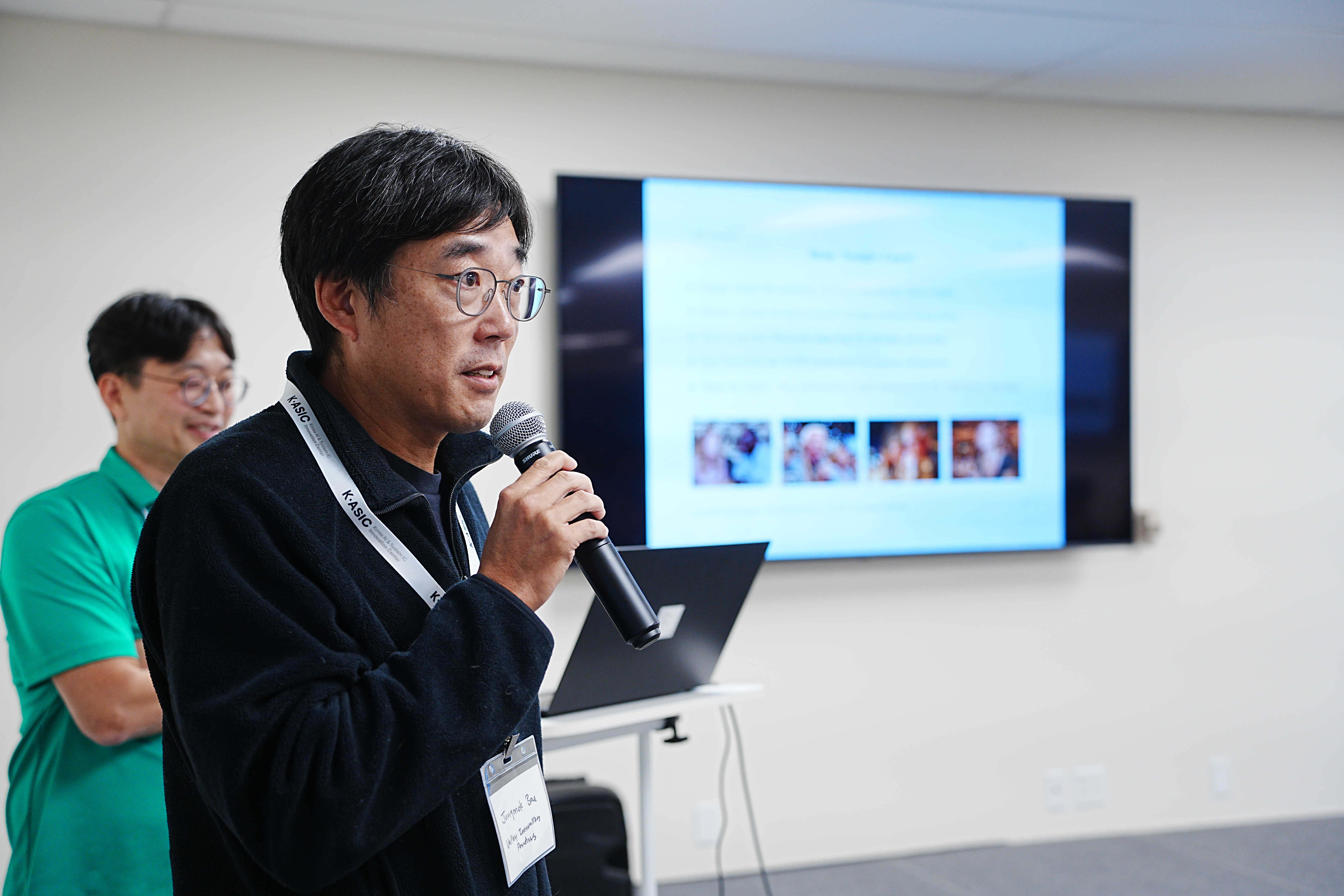
The 13th SVAIN Forum, held on November 12, 2025,
at K•ASIC’s Innovation Center in the heart of Silicon Valley,
represented far more than another successful technical presentation.
The evening marked the first joint seminar between SVAIN and K•ASIC—a strategic alliance that positions both organizations at the forefront of AI semiconductor innovation and Korea-US technological cooperation.
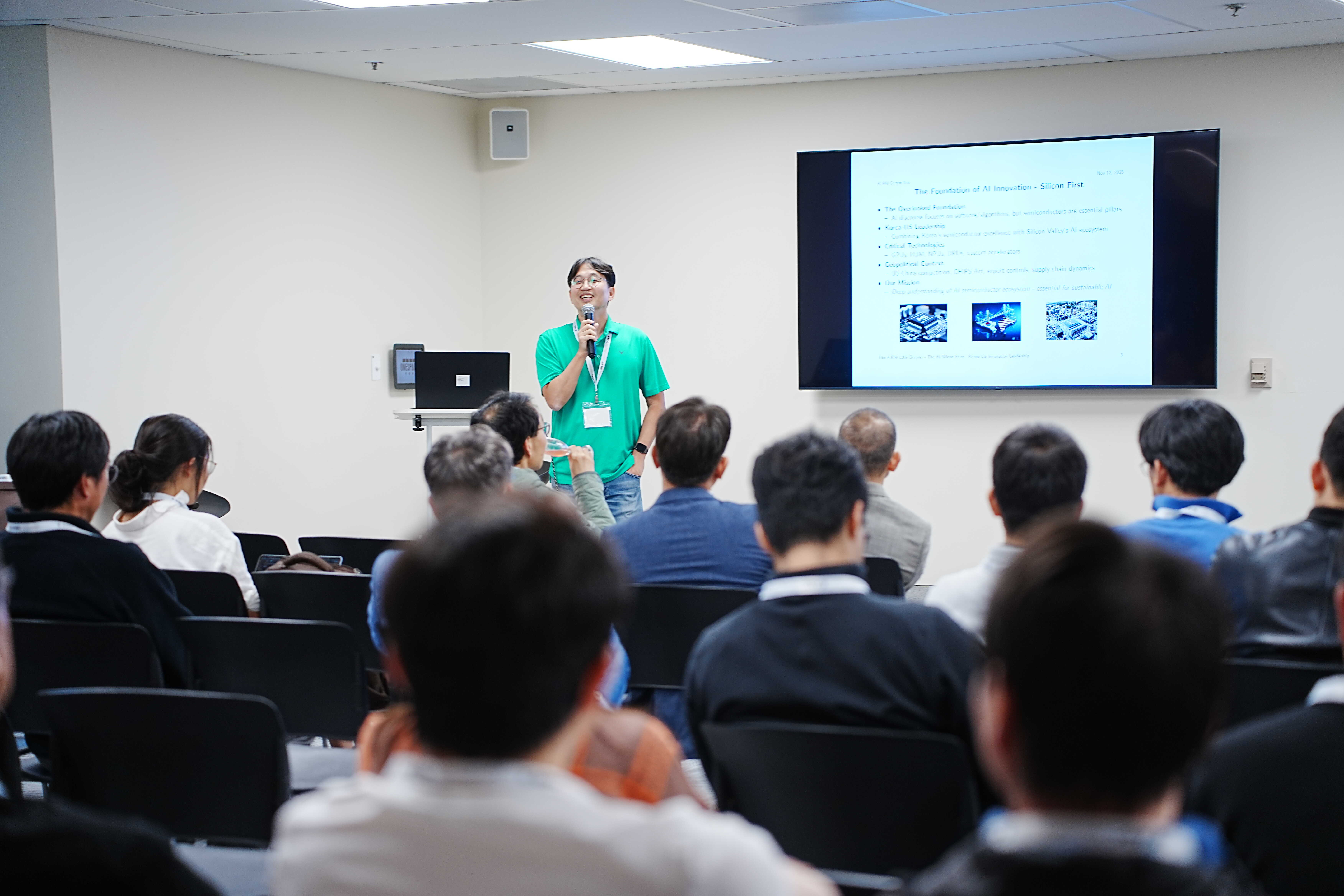
This partnership transcends simple event co-hosting. As we articulated in the opening remarks, this collaboration addresses the most foundational layer of the AI ecosystem. Contemporary AI discourse tends to focus heavily on visible layers—software services, algorithms, and applications—while overlooking the semiconductor infrastructure that makes everything possible. Even within technical domains, hardware constitutes the essential pillar: GPUs (Nvidia’s dominance, partially, only partially though, by Google’s TPUs ★^^☆), HBM (SK hynix’s breakthroughs), specialized AI semiconductors (NPUs, DPUs), custom accelerators from tech giants, and what not!
The strategic partnership between K•ASIC and SVAIN illuminates this foundational layer while connecting Korea’s and America’s semiconductor innovation leadership. This is why we titled this forum “The AI Silicon Race - Korea-US Innovation Leadership.” The event shares the core insight that AI’s future rests on silicon, serving as a venue to explore sustainable development of the global AI ecosystem by consolidating the semiconductor capabilities of both nations.
The Significance of Location
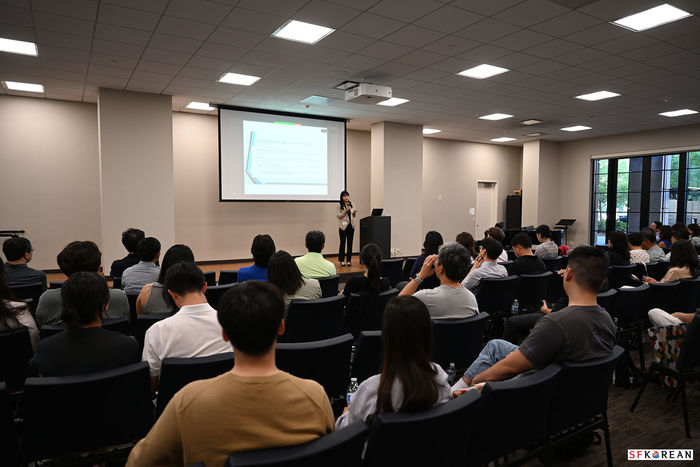
K•ASIC’s state-of-the-art Innovation Center provided more than just a venue—it embodied the partnership’s substance. The facility’s comprehensive event support, including premium signage, professional name badges, and exceptional catering, demonstrated the institutional commitment underpinning this collaboration. More importantly, the center’s role as a bridge between Korean semiconductor excellence and Silicon Valley’s AI ecosystem manifested tangibly through the attendee composition - semiconductor engineers from leading chip companies, AI architects designing next-generation NPUs, hardware entrepreneurs building innovative solutions, and researchers spanning computer architecture, electrical engineering, and systems integration.
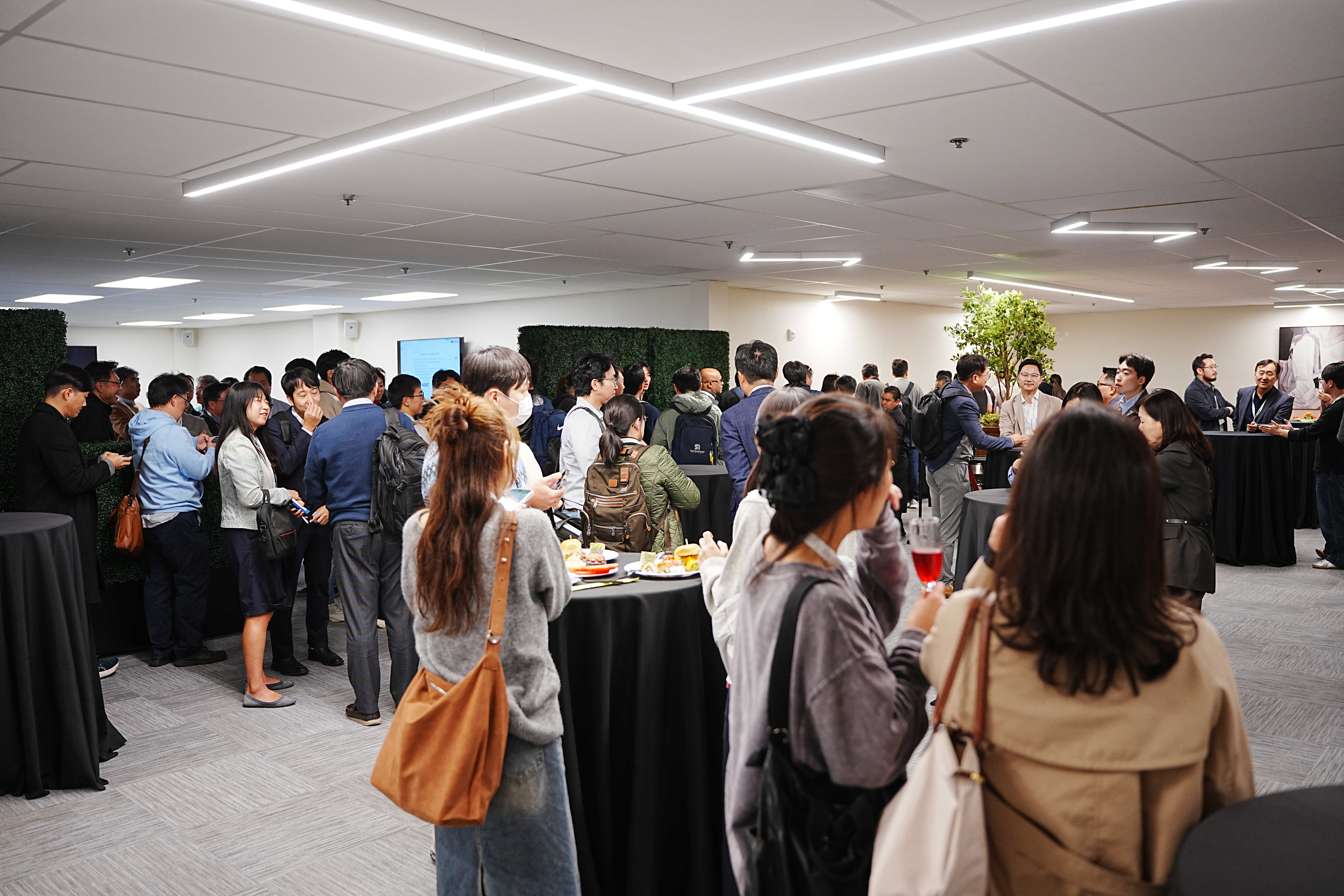
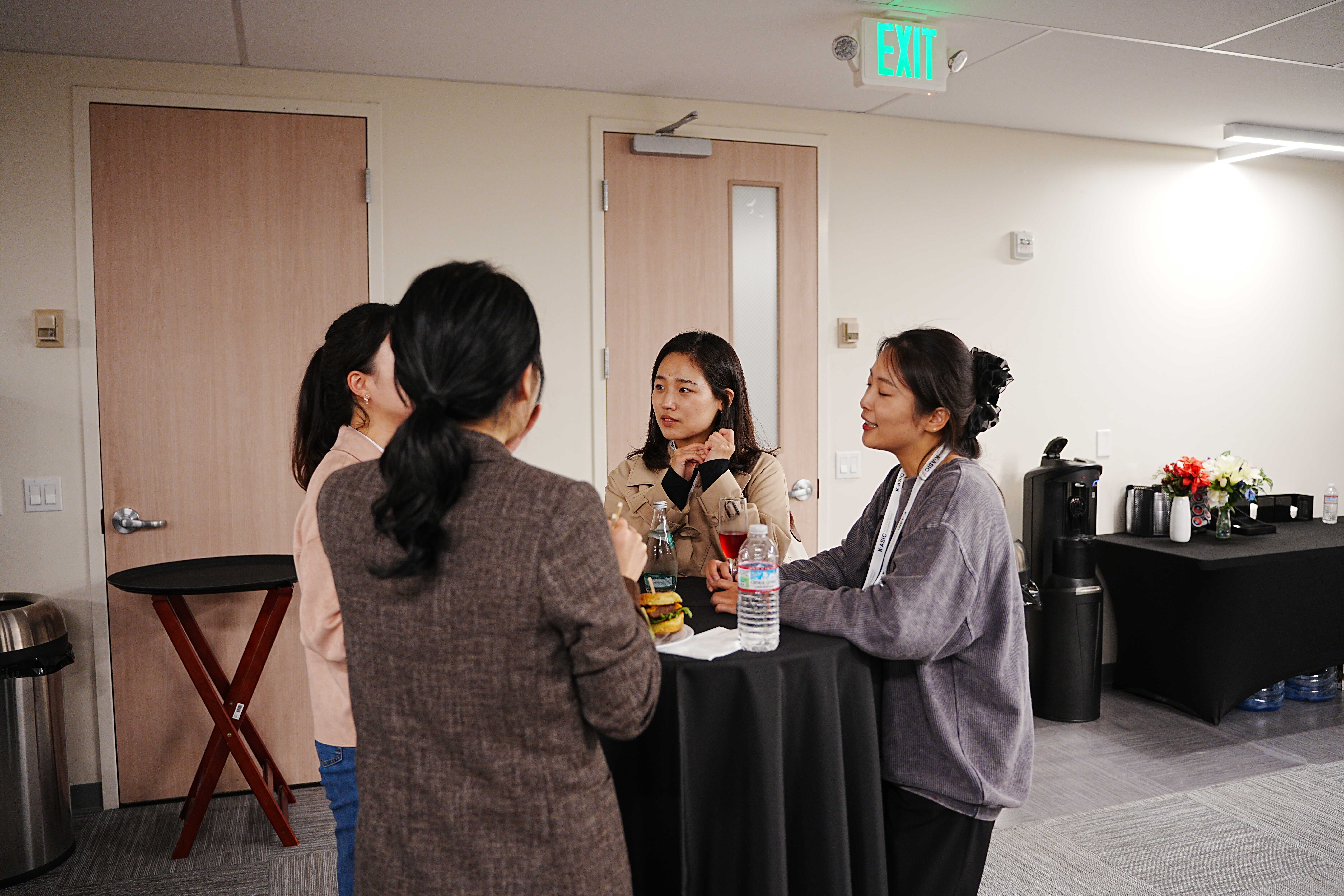
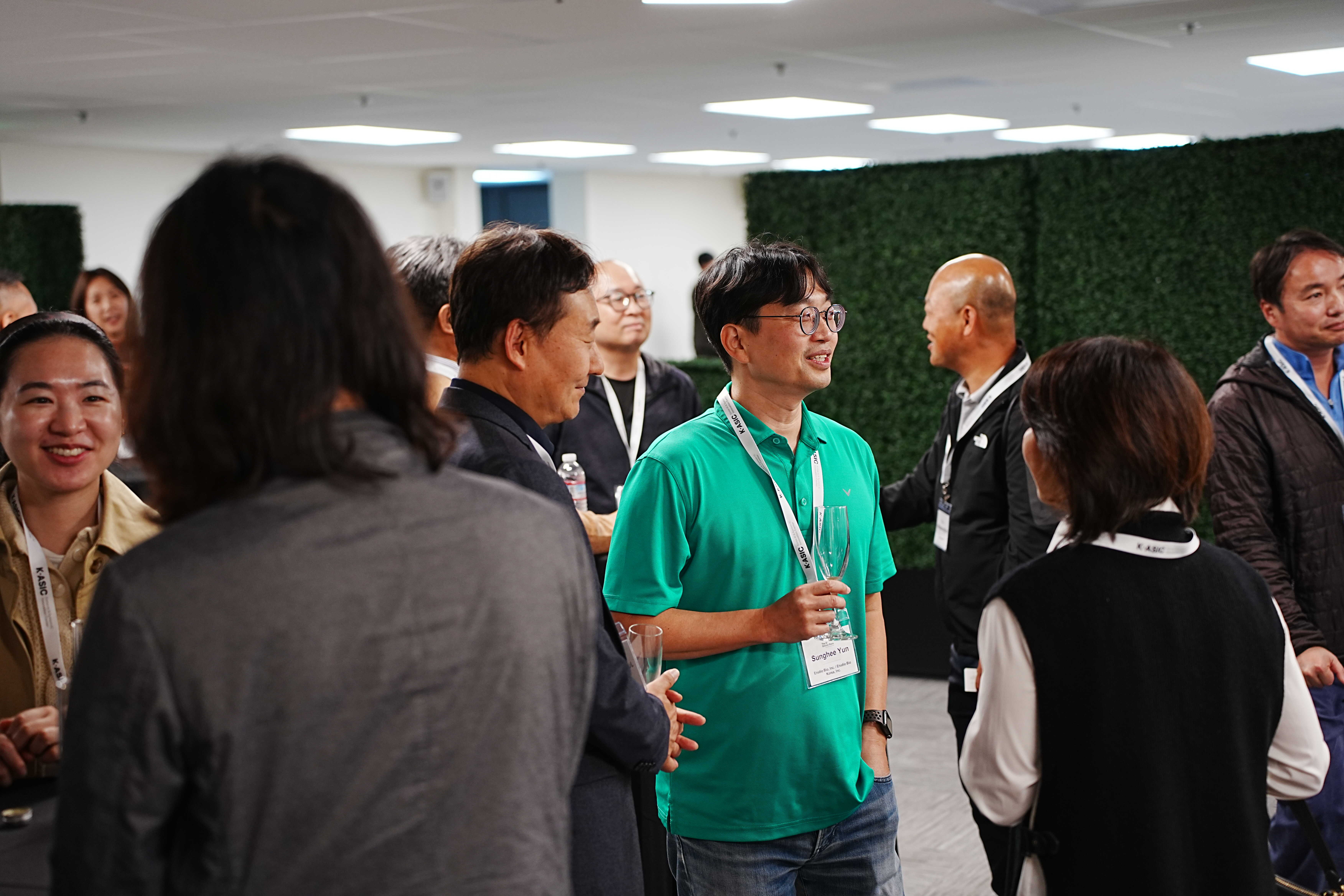
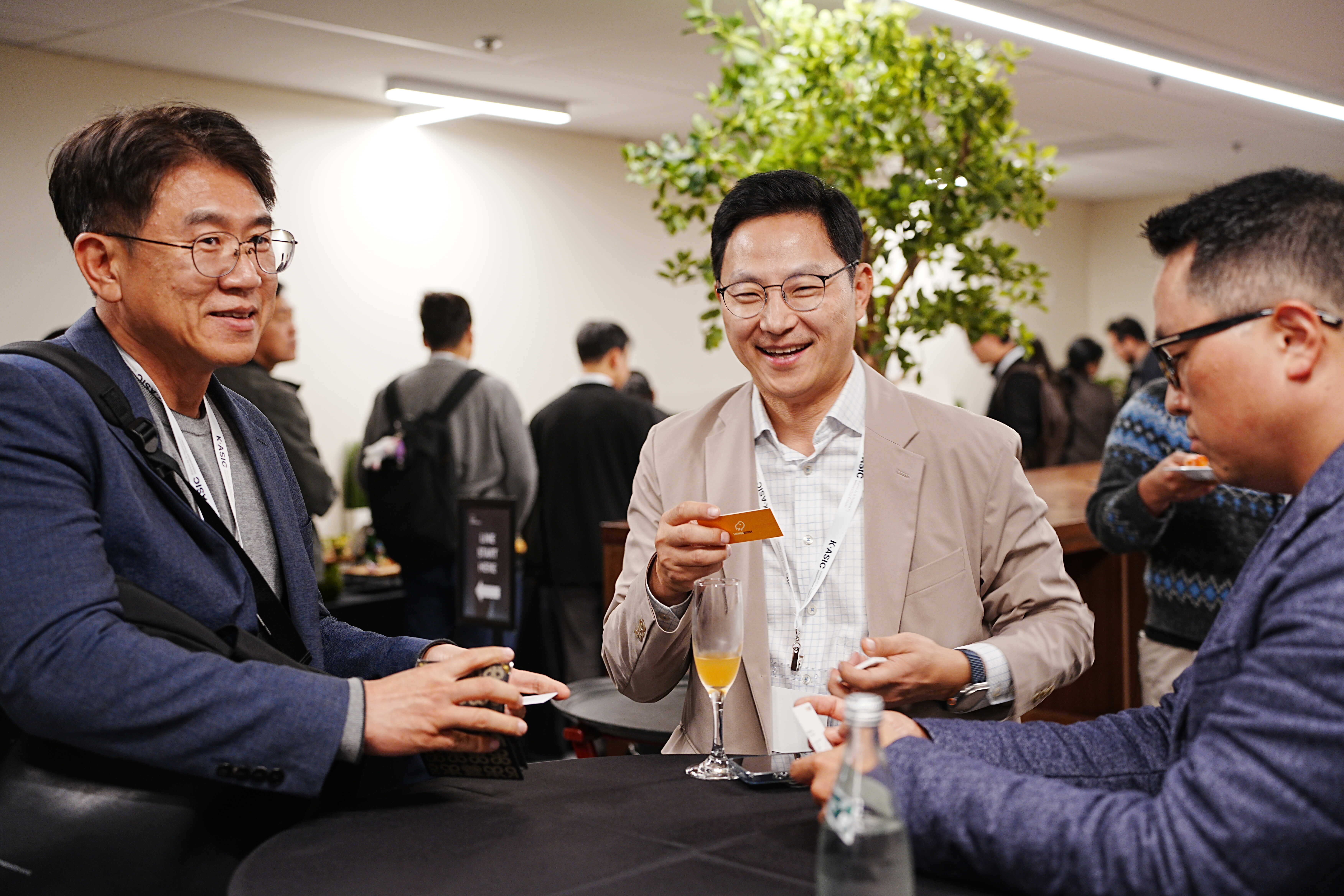
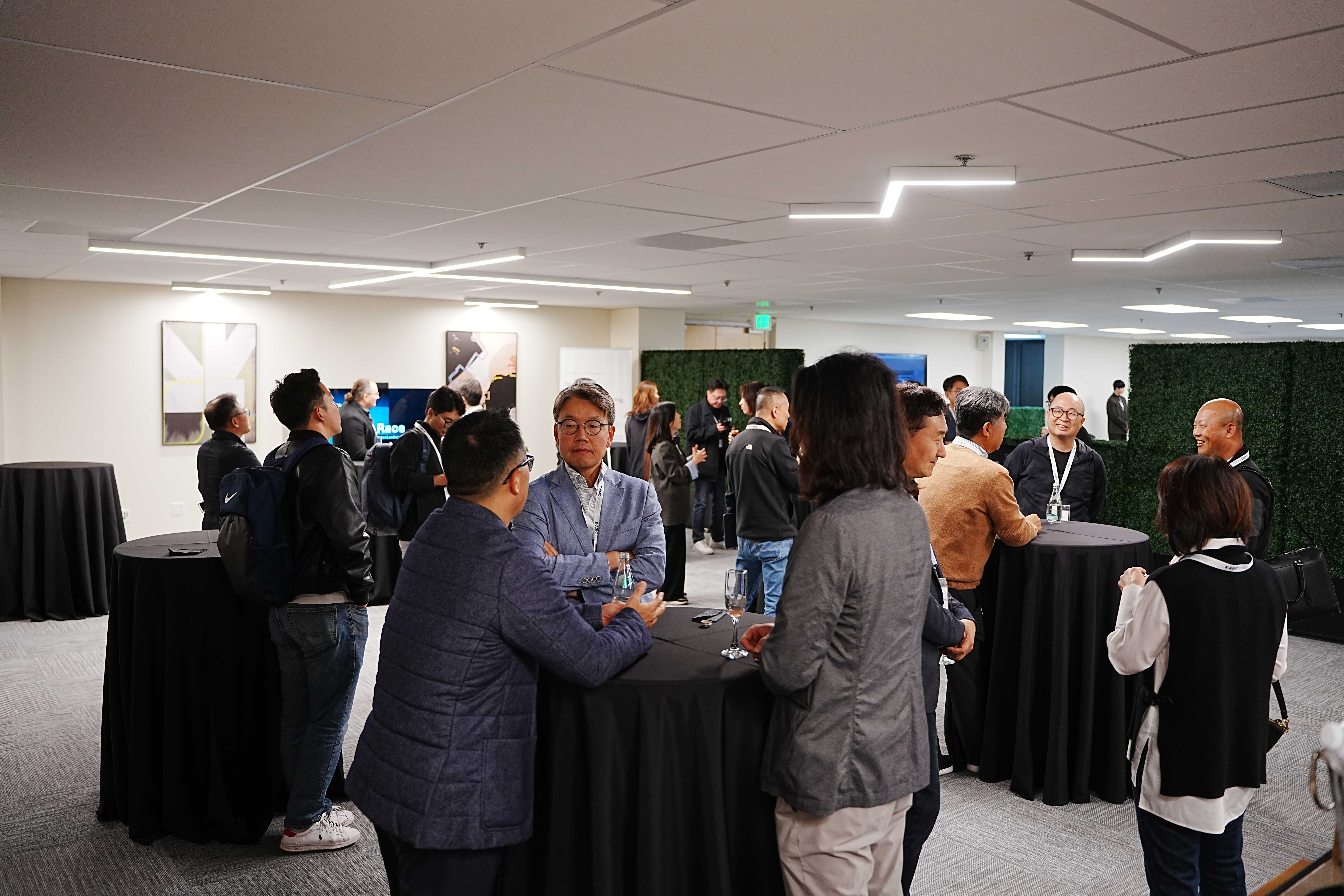
The reception and networking session (5pm - 5:30pm) in K•ASIC’s premium facilities created immediate connections between professionals who are pioneering the next generation of AI silicon. This signature SVAIN networking atmosphere—where genuine technical dialogue emerges naturally rather than through forced mingling—demonstrated how the right venue amplifies community building.
Opening Remarks - Framing Silicon as the Invisible Foundation
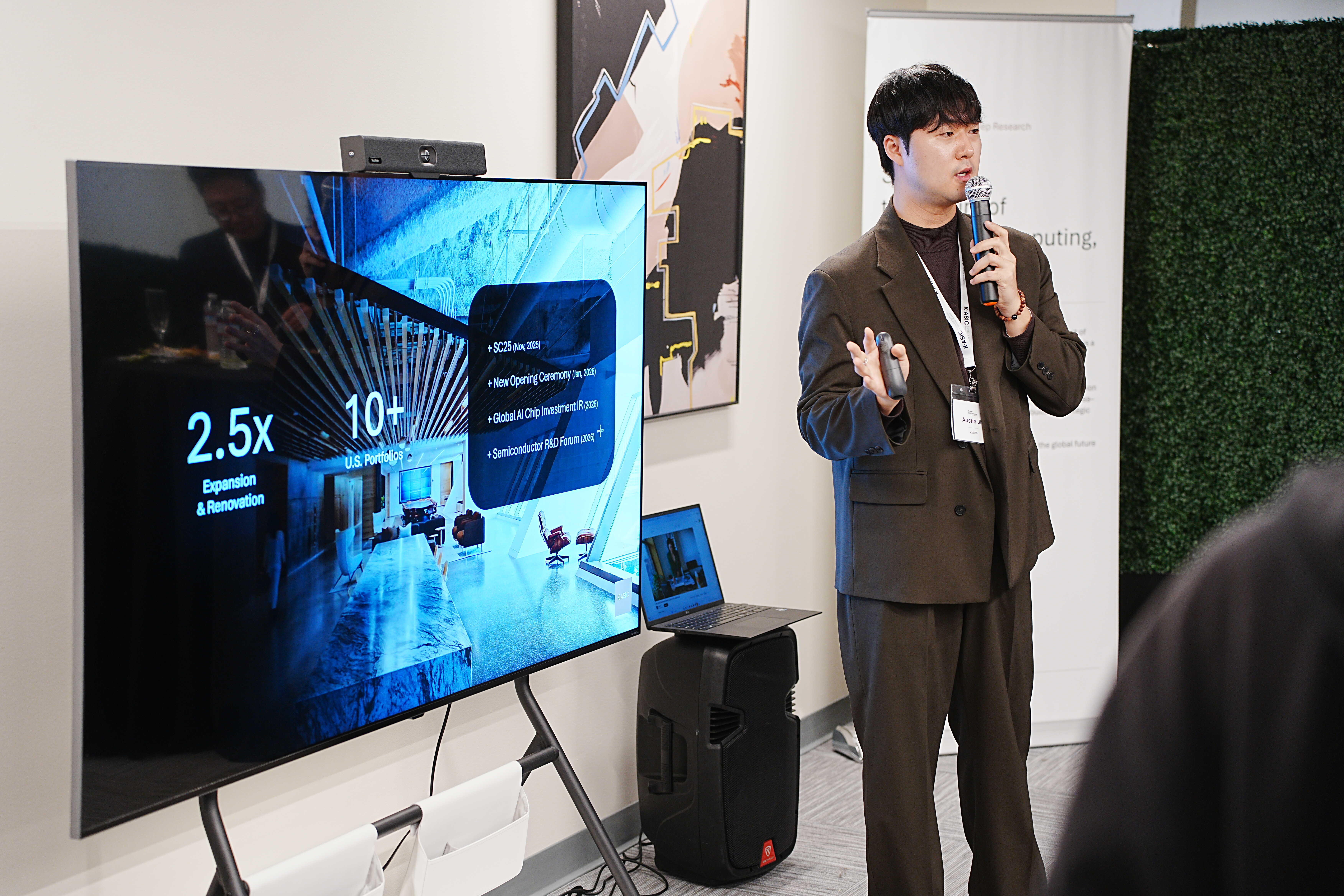
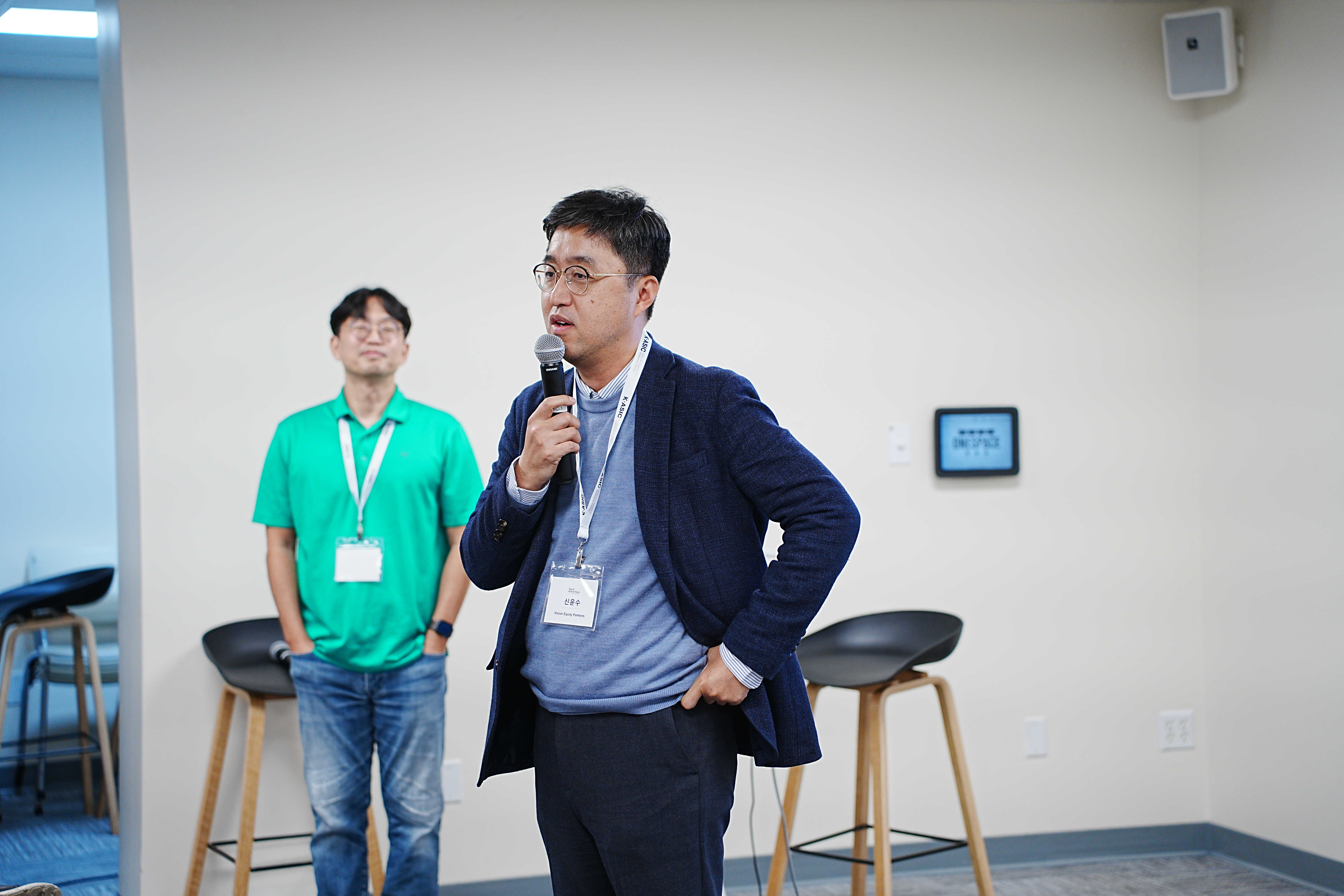
The evening’s opening remarks (5:30pm - 5:40pm) by SVAIN and K•ASIC leadership
(Sunghee, Austin, and Kisoo)
established the intellectual framework for understanding why this forum represents more than another technical presentation—it illuminates the most foundational yet frequently overlooked layer of the entire AI ecosystem.
The Overlooked Foundation
As articulated in the opening presentation, contemporary AI discourse exhibits a persistent blind spot. AI discourse focuses on software and algorithms, but semiconductors are the essential pillars upon which everything else rests. Even within technical domains, semiconductor and hardware infrastructure constitute the foundational requirements:
This hardware landscape is increasingly shaped by geopolitical dynamics—US-China technology competition, CHIPS Act implementation, export controls tightening, and supply chain restructuring. Understanding and leading sustainable AI development requires deep knowledge of the AI semiconductor ecosystem as absolutely essential rather than optional context.
The strategic framing emphasized why we titled this forum “The AI Silicon Race - Korea-US Innovation Leadership.” This partnership transcends simple technical exchange—it recognizes and leverages complementary asymmetric strengths:
Korea’s Semiconductor Excellence
world-leading memory technology (Samsung, SK hynix dominance in DRAM and HBM)
advanced manufacturing capabilities (cutting-edge process nodes)
high-volume production expertise enabling massive scaling
decades of accumulated semiconductor manufacturing knowledge
Silicon Valley’s AI Ecosystem
algorithm innovation and AI architecture development
systems integration and software stack sophistication
entrepreneurial velocity and rapid iteration culture
close coupling between AI research and commercial deployment
By combining Korea’s semiconductor manufacturing excellence with Silicon Valley’s AI ecosystem innovation, this partnership positions both communities to address the complete stack—from silicon substrates through system architectures to application deployment—in ways neither could achieve independently.
The Mission - Deep Understanding for Sustainable AI
The opening remarks crystallized SVAIN’s evolving mission: deep understanding of AI semiconductor ecosystem is essential for sustainable AI development. This represents a maturation from focusing solely on privacy-preserving techniques or algorithmic innovation toward recognizing that AI’s future depends fundamentally on silicon realities.
Three critical dimensions emerged:
Technical Sustainability - without continued semiconductor innovation—more efficient architectures, novel memory solutions, advanced packaging—AI scaling faces hard physical limits regardless of algorithmic breakthroughs.
Economic Sustainability - chip costs, manufacturing capacity, and supply chain resilience determine which AI applications achieve viable unit economics at scale versus remaining research curiosities.
Geopolitical Sustainability - semiconductor supply chains, manufacturing locations, and technology transfer policies increasingly shape what AI development is even possible for different nations and companies.
The evening’s presentations would explore these dimensions through three complementary lenses: library-based design evolution (Chang), inference economics and architecture (Oh), and edge NPU optimization (Burroughs)—together building comprehensive understanding of how silicon enables and constrains AI futures.
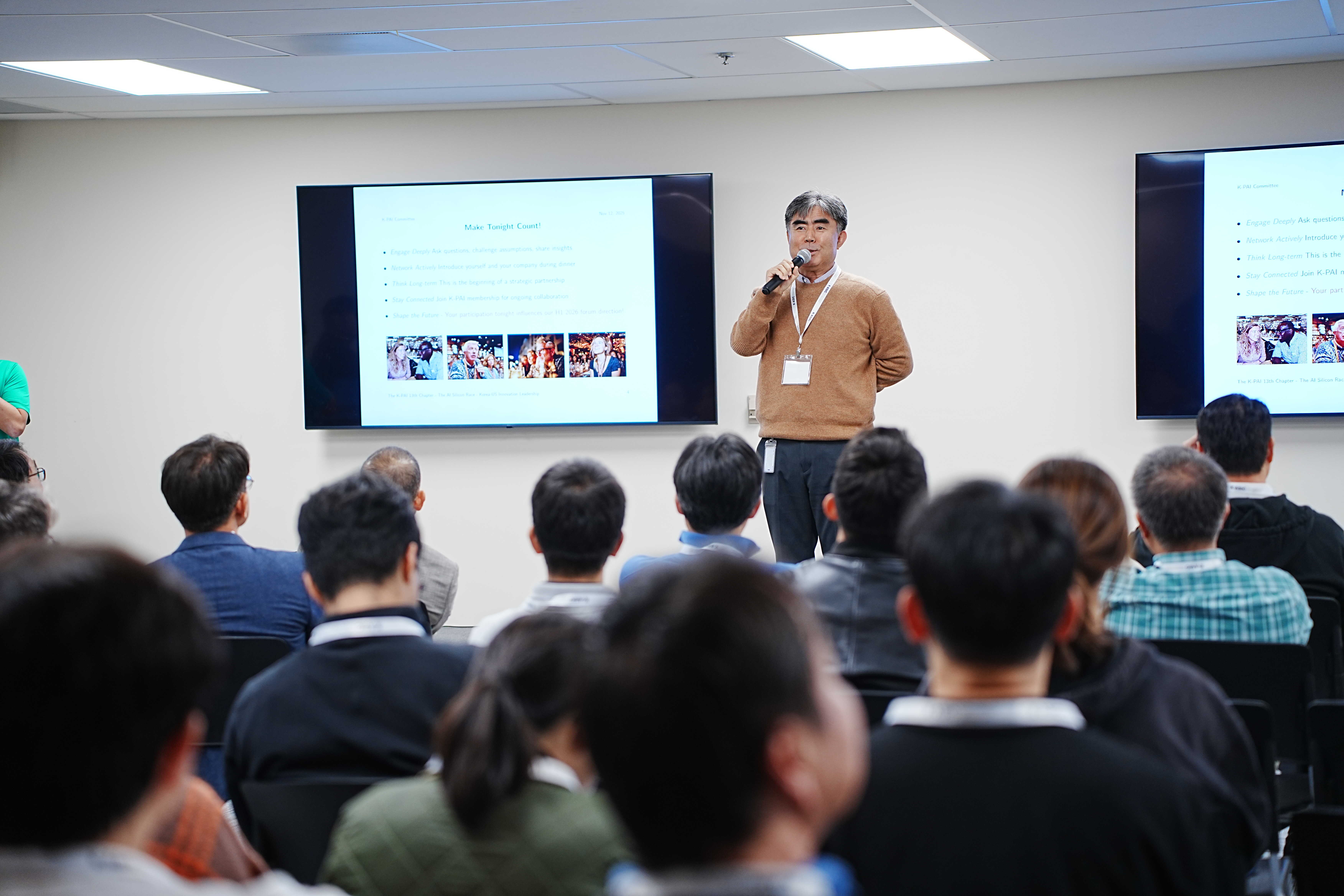
Make Tonight Count - A Call to Active Engagement
The opening concluded with an explicit invitation to active participation rather than passive attendance—five specific imperatives that reflect SVAIN’s community-building philosophy:
Engage Deeply - Ask questions, challenge assumptions, share insights. The forum’s value multiplies when attendees contribute perspectives rather than merely absorbing content.
Network Actively - Introduce yourself and your company during dinner. SVAIN’s networking sessions have historically generated transformative partnerships precisely because members view these as professional collaboration opportunities rather than social obligations.
Think Long-term - This is the beginning of a strategic partnership, not a one-time event. The SVAIN x K•ASIC collaboration creates infrastructure for sustained dialogue spanning years.
Stay Connected - Join SVAIN membership for ongoing collaboration. The community’s strength derives from continuity—members who engage across multiple forums build cumulative understanding and lasting relationships.
Shape the Future - Your participation tonight influences our H1 2026 forum direction! The partnership’s flexibility enables responsive topic selection based on community needs and industry evolution.
This participatory ethos distinguishes SVAIN from conventional seminar series. Rather than treating attendees as consumers of expert knowledge, the forums position community members as co-authors and co-creators of an evolving discourse about AI’s responsible development—with semiconductor infrastructure now recognized as equally essential as algorithms, ethics, or applications in that comprehensive understanding.
The Foundation - Library-based Design meets AI Innovation
Naehyuck Chang’s Vision - From Standard Cells to Physical AI
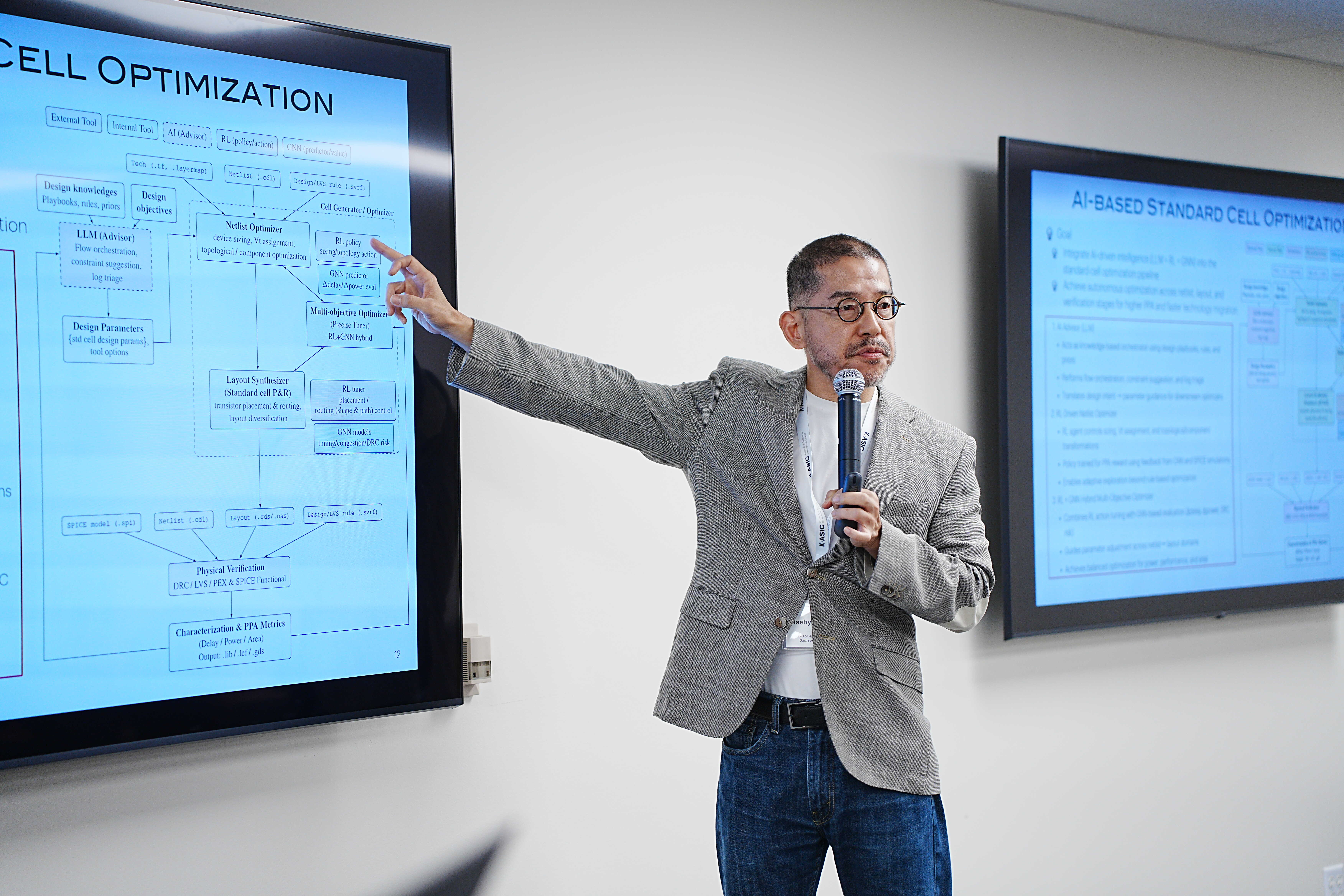
Naehyuck Chang’s keynote presentation, “From Semiconductor PPA Optimization to Physical AI - Library-based Design Challenges and New Frontiers,” provided the intellectual foundation for understanding how AI is transforming chip design while simultaneously exploring how chip design principles are transforming AI deployment in physical systems.
Chang brings unparalleled credentials to this discussion—ACM Fellow, IEEE Fellow, former Executive Vice President at Samsung Electronics, and former Technical Program Chair of the prestigious Design Automation Conference (DAC). His career trajectory from Seoul National University through KAIST to Samsung’s highest technical ranks, combined with his extensive experience spanning low-power systems, design automation, battery technology, renewable energy, electric vehicles, and AI algorithms, positions him uniquely to bridge semiconductor design and AI innovation.
The Library-based Design Paradigm
The presentation began by establishing the foundational concept that has driven semiconductor productivity for decades: library-based design. Rather than designing every circuit element from scratch, engineers leverage pre-verified, reusable building blocks—standard cells, IP blocks, analog macros, and layout generators—qualified by foundries or EDA vendors.
Each library element encapsulates domain knowledge, design rules, and performance characterization. Designers focus on system integration and optimization while libraries ensure functional and physical correctness. This process scales from RTL synthesis through layout to verification and sign-off, drastically shortening development cycles.
The key advantages Chang enumerated resonate deeply with anyone who has witnessed semiconductor evolution;
Design Time Reduction,
Verification Efficiency,
Engineer Productivity,
Business Alignment,
Design Reuse,
Technology Migration,
and
Cross-Domain Application.
This last point represents Chang’s crucial insight: the library-based paradigm that revolutionized semiconductor design can now transform how we deploy AI in physical systems.
AI-Driven Optimization - When Intelligence Designs Intelligence
The presentation’s technical core explored how artificial intelligence is optimizing the very silicon that enables AI itself—a recursive relationship with profound implications. Standard cell optimization still has significant room for improvement despite decades of refinement. The conventional layered design process leaves optimization opportunities within standard cell libraries, which play crucial roles in determining power, performance, and area (PPA).
Chang presented Axion’s practical approach using artificial intelligence to improve cell library design and enhance PPA efficiency. The methodology integrates three AI paradigms;
AI Advisor (LLM),
RL-Driven Netlist Optimizer,
GNN-Enhanced Layout Synthesizer,
and
Verification & Characterization.
The integration creates a continuous learning loop where LLM knowledge feeds RL policy, which guides GNN prediction and generates better optimization outcomes. This enables self-improving cell generation, rapid PPA closure, and scalable technology migration without requiring expert-level system knowledge.
The implications extend far beyond individual cell optimization. As I reflected in recent writings on AI’s energy challenges, every efficiency gain at the silicon level multiplies across billions of operations, potentially addressing the existential energy constraints facing AI scaling. Chang’s work demonstrates that AI can help solve its own infrastructure challenges through recursive self-improvement at the foundational hardware layer.
Physical AI - The Convergence of Control, Systems, and Intelligence
The second half of Chang’s presentation introduced a future-oriented vision: Physical AI, which combines control intelligence with physical systems. This concept extends the library-based design philosophy from semiconductors to embodied intelligent systems—robotics, manufacturing, industrial design, autonomous vehicles, and smart infrastructure.
Chang articulated the Physical AI vision compellingly: bridging control, systems, and AI domains through integrated policy development, encapsulating domain knowledge into pretrained reusable libraries for scalable deployment, and enabling PPA enhancement via end-to-end learning across design, control, and physical systems.
The Pretrained Physical AI Libraries concept mirrors semiconductor library evolution. Just as Axion Cell library optimization originates from control-system expertise and Design Automation of Things (DAoT) principles, Physical AI libraries encapsulate specialized knowledge in specific domains: vision and perception algorithms, robot motion control theory, classical control technologies, position and attitude control methods.
Remarks - The Chemistry between Electrical Engineering and Computer Science
Chang’s closing remarks offered a philosophical reflection that resonated powerfully with SVAIN’s interdisciplinary ethos. He articulated his lifetime goal: “To build and sustain a collaborative culture that achieves genuine, chemistry-level integration between Electrical Engineering and Computer Science.”
The question he posed—”Why chemistry mixing? Is CS and EE interface a border city or a PN junction?”—cuts to the heart of how we structure knowledge domains and professional communities. A border city implies separate territories with occasional crossing points. A PN junction suggests fundamental integration where the interface itself creates entirely new properties—the depletion region where electrons and holes recombine to form something neither domain alone possesses.
This vision aligns perfectly with SVAIN’s founding principles—that the most transformative innovations emerge at disciplinary boundaries, where distinct bodies of knowledge create new synthesis through genuine integration rather than superficial collaboration.
NPU Architecture Evolution
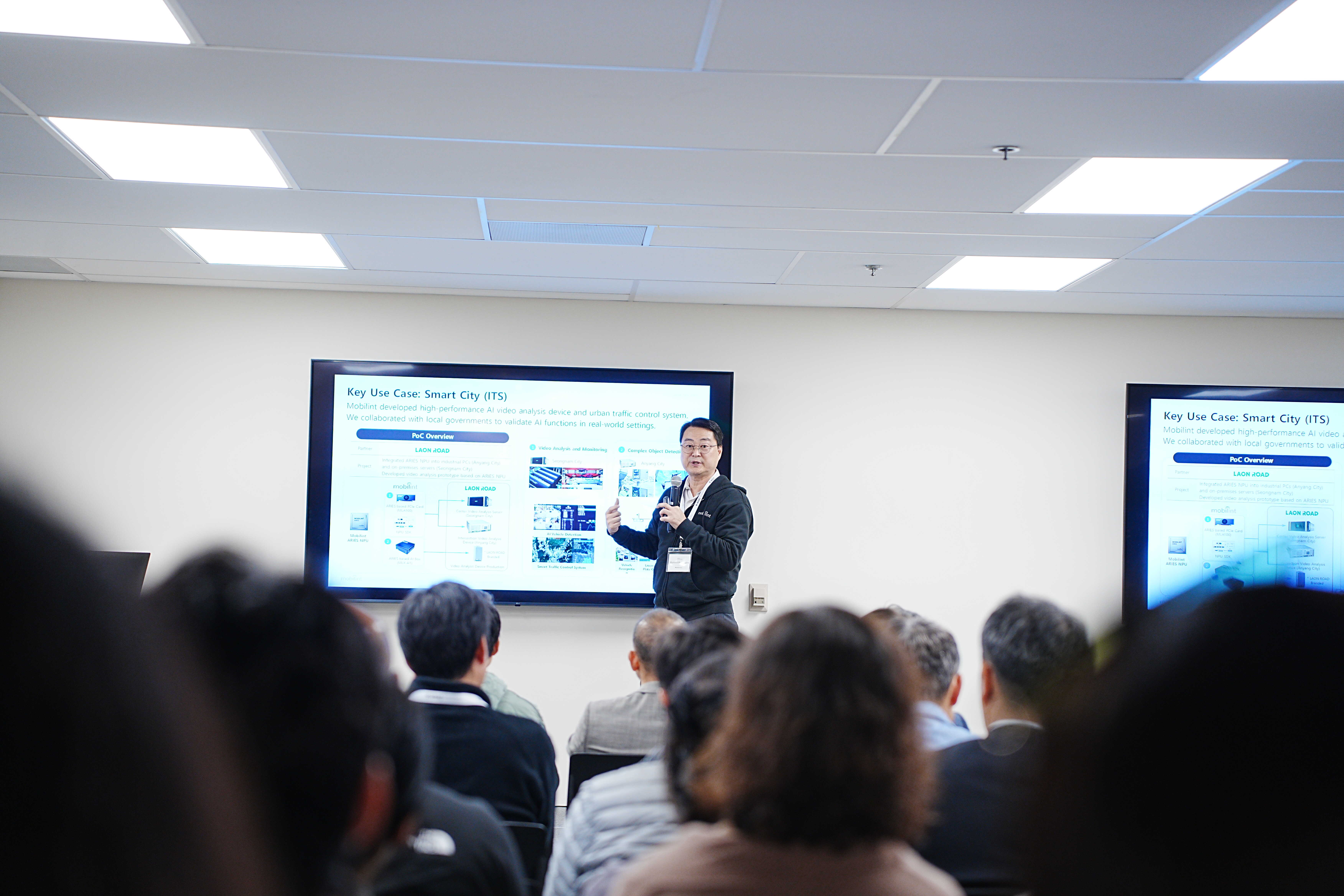
Richard Burroughs, Vice President at Mobilint, Inc., presented “AI Starts Here - 온디바이스 AI 시대, 경량화된 NPU 아키텍처의 진화” (Lightweight NPU Architecture Evolution in the On-Device AI Era).
Burroughs’ presentation explored how Neural Processing Unit (NPU) architectures are evolving to meet on-device AI demands—examining architectural innovations enabling efficient inference from quantization techniques and model compression to novel dataflow architectures and memory hierarchies optimized for neural network workloads.
The presentation demonstrated how NPU evolution enables sophisticated AI capabilities in smartphones, IoT devices, and embedded systems while maintaining strict power budgets and thermal constraints—providing insights into design tradeoffs between computational throughput, power efficiency, and silicon area.
This perspective represented an important dimension of the AI silicon ecosystem - while datacenter chips pursue maximum performance within generous power envelopes, edge NPUs must deliver acceptable intelligence within milliwatt budgets and consumer product thermal constraints. The architectural innovations enabling this—specialized datapaths, aggressive quantization, model-architecture co-design—represent equally sophisticated engineering as datacenter accelerators but with fundamentally different optimization objectives.
Future SVAIN forums might explore this edge AI dimension more deeply, potentially examining how architectural choices at the edge (NPUs in smartphones, automotive processors, IoT chips) differ from datacenter acceleration and how these distinct optimization regimes might inform each other.
The Economics - Bridging Performance and Affordability
Juntaek Oh, Compiler Engineer at HyperAccel, brought a complementary perspective grounded in stark market realities and entrepreneurial pragmatism. His presentation, “Bridging Performance and Affordability in AI Silicon,” addressed the critical tension between cutting-edge computational capabilities and cost-effective implementations.
The Trillion-Dollar Context
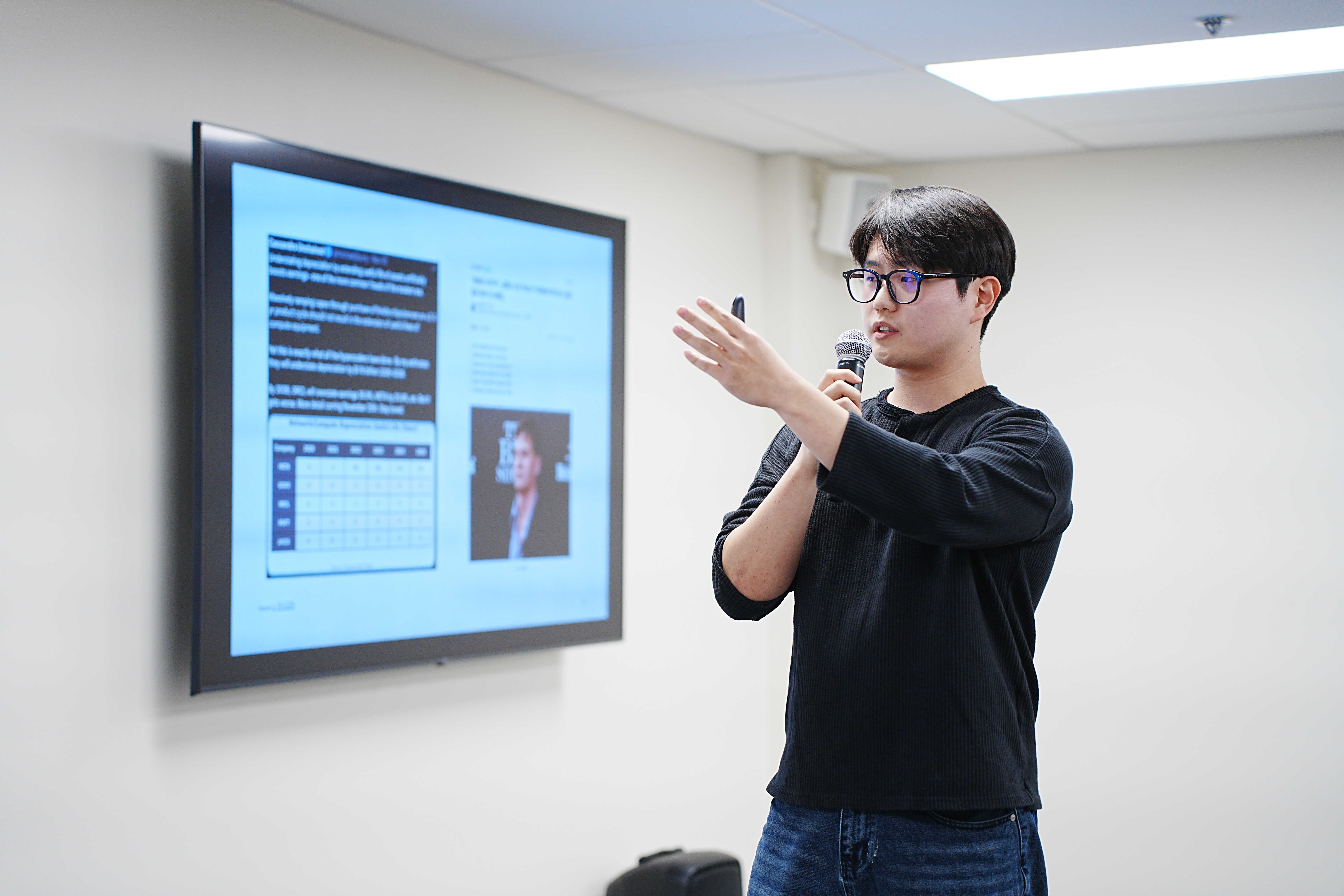
Oh opened with vivid illustrations of the massive capital flows reshaping AI infrastructure. The images of tech CEOs meeting casually—the famous photo that circulated in Korean media showing industry titans sharing drinks and discussing billions in GPU purchases—established the scale of investment driving AI semiconductor demand.
The market data painted an urgent picture:
AMD CEO Lisa Su projects the AI data center market reaching $1 trillion by 2030
Meta plans $600 billion US spend as AI data centers expand
Google Cloud launches Ironwood TPUs and new Axion VMs for AI inference
Nvidia announces 26 major AI chip customers with $65 billion of committed orders
Yet beneath this apparent gold rush lies troubling complexity. The Cassandra Unchained analysis Oh presented revealed uncomfortable truths about depreciation accounting: hyperscalers may understate depreciation by $176 billion from 2026-2028 through artificially extended useful lives of AI equipment. By 2028, Oracle could overstate earnings by 26.9%, Meta by 20.8%—accounting practices that mask the true economics of AI infrastructure deployment.
The energy constraints add another dimension of urgency. MIT News analysis estimates that by 2030, all generative AI queries will consume 347 TWh—equivalent to 44 nuclear reactors’ annual output. Even 100MW data center capacity may remain unused for years due to power shortage, according to supply chain analyses. The infrastructure cannot keep pace with computational demand.
HyperAccel’s LPU Vision - Specialized Excellence
HyperAccel’s approach crystallized around a fundamental insight: training and inference represent fundamentally different computational patterns requiring different silicon architectures.
Training (Model Making) -
Large batch sizes enabling high parallelism,
Compute-intensive operations dominating workload,
and
Throughput-oriented optimization.
Inference (Service Deployment) -
Small batch sizes (often individual requests),
Memory-intensive patterns (model parameter access),
and
Latency-oriented requirements for user experience.
GPUs excel at training’s parallel compute patterns but prove inefficient for inference’s sequential, memory-bound characteristics. HyperAccel’s LPU (LLM Processing Unit) architecture specifically targets the Transformer’s large models and sequential processing demands.
The Technical Differentiation: LPDDR vs HBM
Oh’s presentation detailed HyperAccel’s key innovation: replacing expensive HBM (High Bandwidth Memory) with standard LPDDR memory. The advantages compound:
Cost Efficiency -
LPDDR costs approximately ½ the price of HBM,
No expensive HBM advanced packaging required,
and Comparatively lower IP licensing costs.
Supply Availability -
LPDDR is widely available vs. HBM supply constraints
and
2x the maximum capacity of current HBM implementations.
Power Efficiency -
60% less power consumption than HBM
and
Critical for total cost of ownership in datacenter deployments.
Architectural Optimization -
Streamlined memory access patterns maximizing bandwidth utilization,
Specialized compute engines for end-to-end LLM operations,
and
Matrix and vector execution engines purpose-built for Transformer architecture.
The full-stack HyperDex software platform ensures developers experience seamless transition from GPU environments—using same OpenAI API requests, running vLLM OpenAI-compatible server, accessing models from HuggingFace Hub. This software compatibility removes adoption friction while hardware delivers superior economics.
Performance Claims and Market Positioning
HyperAccel’s performance assertions are striking: 2X higher throughput, 20X better cost efficiency, and 5X better energy efficiency compared to Nvidia H100 (for Llama 3.1 70B workloads). If validated at scale, these metrics would fundamentally reshape datacenter AI economics.
The datacenter cost reduction analysis Oh presented demonstrated how chip-level improvements cascade through total infrastructure costs:
Chip cost reduction (90% savings: $3,850 vs $40,000 per chip)
Energy savings (60% reduction in power consumption)
Combined impact: 17.6% reduction in total datacenter operating costs
For hyperscalers deploying thousands of chips, even incremental percentage improvements in efficiency translate to hundreds of millions in annual savings.
This staged approach—FPGA prototype enabling rapid iteration, followed by datacenter ASIC, then edge deployment—mirrors successful semiconductor startup patterns while demonstrating capital-efficient development.
The Affordability Imperative
Oh’s presentation title—”Bridging Performance and Affordability”—captured an essential tension in AI silicon development. The industry has demonstrated it can build ultra-high-performance chips (H100, TPU v5) but at price points that limit deployment breadth. HyperAccel’s thesis is that the inference market demands different tradeoffs: sufficient performance for quality user experience, but at costs enabling widespread deployment rather than concentration in hyperscaler datacenters alone.
This democratization narrative—making AI infrastructure accessible beyond the biggest tech companies—aligns with broader industry trends toward edge AI, on-device processing, and distributed intelligence. If specialized inference chips can deliver acceptable performance at fractional costs, entirely new categories of AI applications become economically viable.
Thematic Synthesis - The Layered AI Stack
From Applications to Silicon - Cumulative Understanding
The progression from October’s marketing AI focus through November’s semiconductor exploration demonstrates SVAIN’s evolving sophistication in creating narrative arcs across forums rather than treating each event in isolation.
The 12th forum examined how AI transforms advertising through intelligent optimization—video analysis, budget allocation, programmatic systems. These capabilities rest on assumptions about available computational resources. Park’s ADOASIS platform analyzes thousands of videos using computer vision and NLP models. Ko’s DSP architectures employ deep neural networks for retrieval and ranking. Both applications demand massive parallelizable computation that only modern AI accelerators enable.
The 13th forum explored the silicon layer making these applications possible:
How are AI chips designed? (Chang’s library-based optimization, AI-driven standard cells)
What architectural choices enable performance and efficiency? (HyperAccel’s LPU, memory hierarchy optimization)
Where do supply chain vulnerabilities threaten AI scaling? (HBM supply constraints, energy limitations)
How do Korea and United States collaborate to maintain semiconductor leadership? (K•ASIC partnership, complementary strengths)
This layered approach—applications in October, enabling hardware in November—creates cumulative understanding of the complete AI stack. Attendees gain appreciation not just for what AI can do but for what makes it possible (specialized silicon, advanced memory, efficient manufacturing).
The Korea-US Semiconductor Alliance
The forum’s subtitle—”Korea-US Innovation Leadership”—reflects genuine complementary strengths rather than political rhetoric:
Korea’s Manufacturing Excellence: Samsung and SK hynix leadership in memory technologies (HBM, LPDDR), advanced packaging (2.5D/3D integration), and high-volume manufacturing provides production capacity that AI scaling demands. Korean foundries’ process technology expertise (4nm, 3nm nodes) enables cutting-edge chip fabrication.
US Design Innovation: American companies’ dominance in chip architecture design (GPU, TPU, custom accelerators), EDA tools (Synopsys, Cadence), and systems integration creates intellectual foundation for next-generation AI hardware. Silicon Valley’s concentration of AI expertise enables tight coupling between algorithm development and hardware optimization.
Shared Strategic Interests: Both nations face similar challenges from China’s semiconductor ambitions and share interests in maintaining technological leadership, supply chain security, and access to critical manufacturing capabilities. The geopolitical dimension—export controls, CHIPS Act, technology transfer restrictions—makes Korea-US cooperation strategically essential beyond purely commercial considerations.
The SVAIN x K•ASIC partnership embodies this alliance at the community level, creating venues where Korean semiconductor engineers and Silicon Valley AI architects exchange insights, identify collaboration opportunities, and build relationships that could mature into commercial partnerships or joint development programs.
Physical AI - The Convergence Horizon
Chang’s Physical AI vision represents perhaps the forum’s most forward-looking theme—suggesting how the boundaries between digital intelligence (software, algorithms) and physical systems (robotics, manufacturing, infrastructure) will increasingly blur.
The library-based design paradigm’s extension from semiconductors to physical systems mirrors historical patterns where successful abstractions in one domain eventually generalize to others. Just as object-oriented programming principles migrated from software to hardware description languages, library-based design concepts are now migrating from chips to robots.
The implications extend far beyond individual applications:
Standardization and Interoperability - Pretrained Physical AI libraries could enable standardized interfaces between perception, control, and actuation subsystems—reducing integration complexity similar to how standard cells simplified chip design.
Skill Democratization - Just as semiconductor libraries enabled designers without deep physics knowledge to create functional chips, Physical AI libraries might enable robotics applications without requiring control theory expertise or deep systems understanding.
Rapid Iteration - The ability to compose physical systems from pretrained, validated components could accelerate deployment cycles from years to months—matching the pace of software development rather than traditional hardware timelines.
Domain Knowledge Preservation - Encapsulating expertise from controls engineers, systems designers, and domain specialists into reusable libraries preserves institutional knowledge beyond individual careers while making it accessible to new generations.
The convergence of AI optimization (learning optimal policies), physical constraints (material properties, dynamics), and systems integration (coordinating multiple subsystems) represents exactly the kind of cross-disciplinary synthesis that SVAIN’s forums are designed to explore and accelerate.
Community Dimensions - More Than Technical Exchange
The Networking Imperative
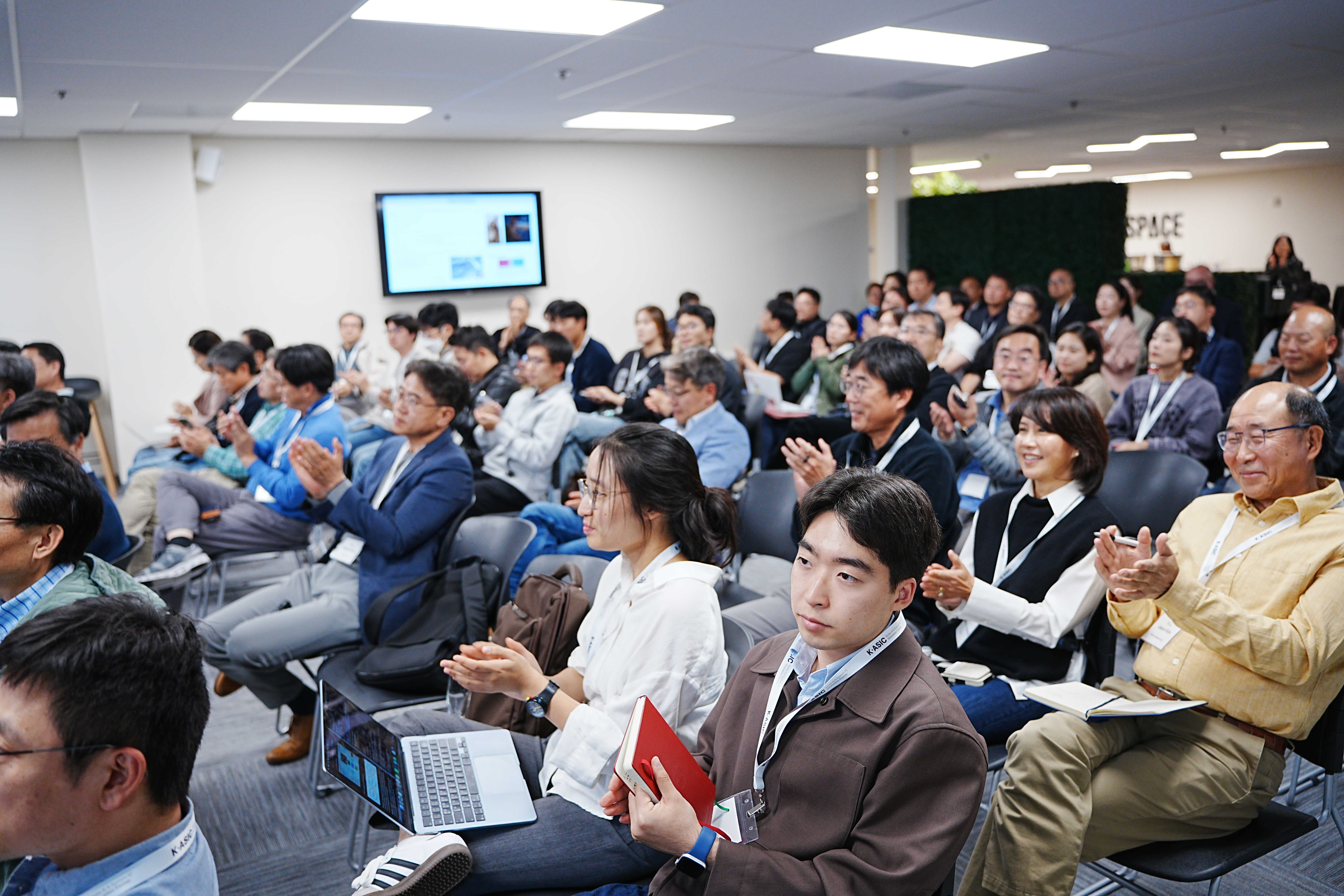
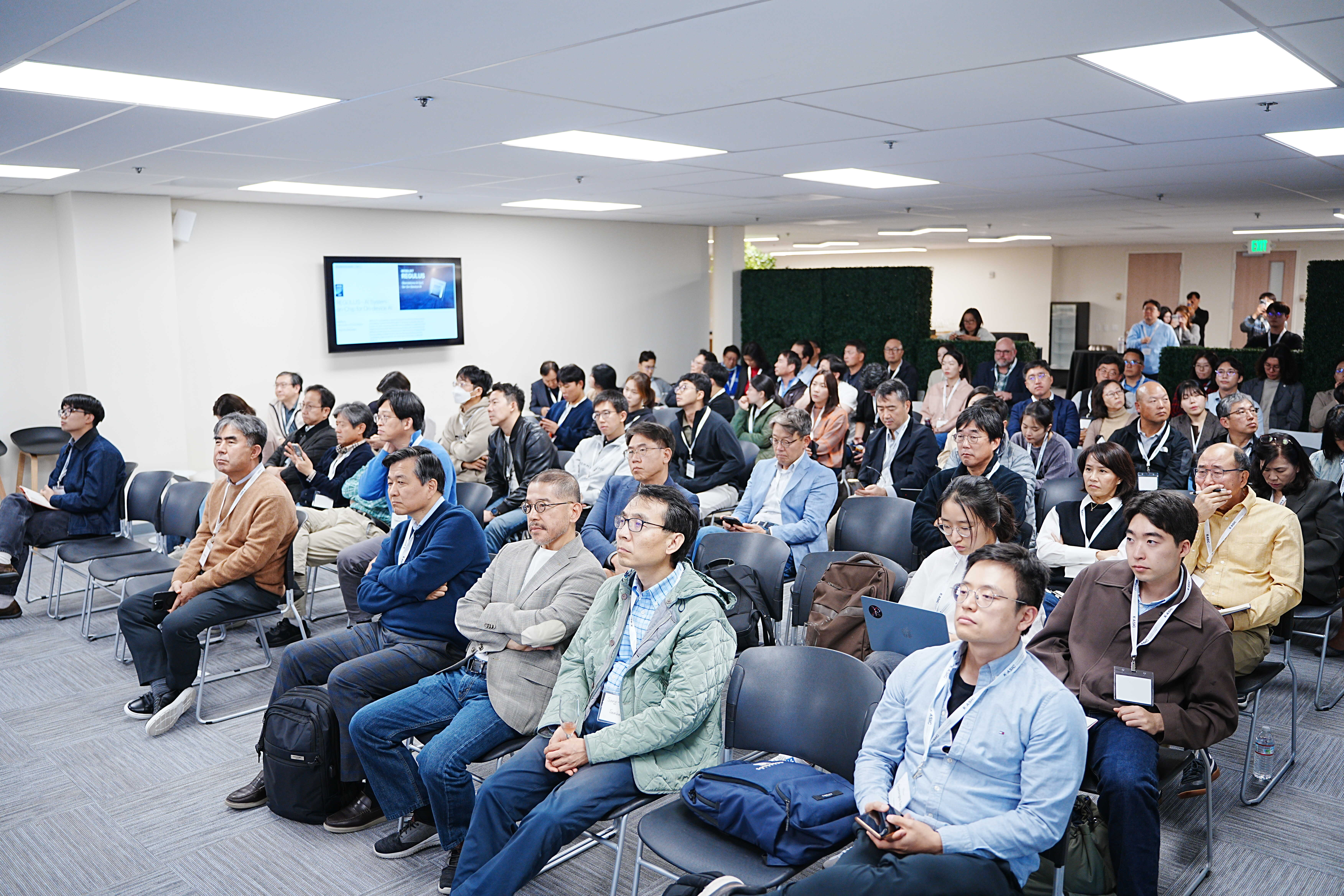
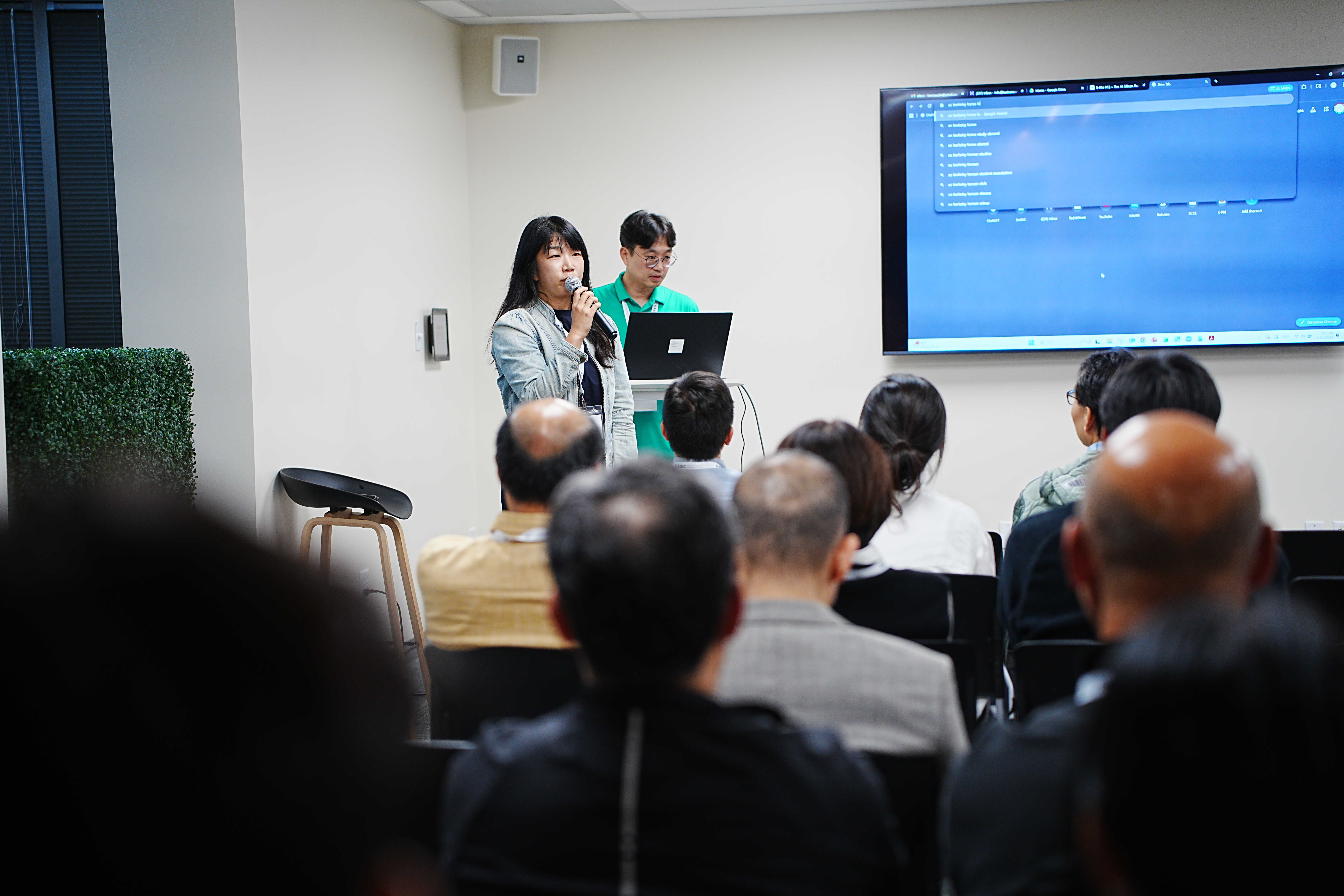
The extended networking dinner and Q&A session (7pm - 8pm) provided what many attendees described as the forum’s highest-value component. SVAIN members are encouraged to introduce themselves and their companies, creating opportunities for meaningful business connections and potential collaborations in the rapidly evolving AI hardware space.
Previous forums have seen transformative partnerships emerge during these dynamic discussions, where hardware engineers, AI researchers, chip designers, and entrepreneurs bridge technical challenges with innovative solutions in real-time conversations. The semiconductor focus attracted a particularly rich attendee mix—architects from leading chip companies, startup founders developing novel accelerators, investors evaluating AI hardware opportunities, and researchers exploring new computational paradigms.
The conversations that continued well past the scheduled conclusion revealed genuine enthusiasm about both the specific technical insights shared and the broader implications for participants’ work. Semiconductor engineers discovered how AI optimization techniques could improve their chip design workflows. AI researchers gained appreciation for the hardware constraints shaping what’s architecturally possible. Entrepreneurs identified specific technical bottlenecks where novel solutions might create differentiated value.
The Partnership Model in Action
The SVAIN x K•ASIC collaboration demonstrated institutional partnership benefits tangibly:
Venue Access - K•ASIC’s state-of-the-art Innovation Center provided professional facilities that would be prohibitively expensive for an independent organization to secure, while embodying the semiconductor focus thematically.
Network Leverage - K•ASIC’s connections throughout Korean semiconductor industry facilitated speaker recruitment and attendee engagement that would be difficult to achieve through cold outreach alone.
Content Expertise - K•ASIC’s technical leadership provided guidance on forum themes, speaker selection, and content depth—ensuring discussions matched industry needs rather than academic abstractions.
Operational Support - Comprehensive event logistics—signage, name badges, catering, technical setup—enabled SVAIN organizers to focus on content quality and community building rather than administrative details.
This partnership model creates sustainable infrastructure for ongoing dialogue rather than episodic events requiring repeated resource mobilization. The commitment to minimum twice-yearly co-hosted forums establishes predictable cadence while the perpetual nature enables long-term planning and cumulative community development.
Looking Forward - The H1 2026 Second Forum
The announcement of a second SVAIN x K•ASIC joint forum planned for H1 2026 with expanded scope and impact creates immediate anticipation. Potential themes building on the 13th forum’s foundation might include:
Advanced Packaging and Chiplet Architectures - Exploring how 2.5D/3D integration, chiplet-based designs, and heterogeneous integration enable next-generation AI systems while managing manufacturing complexity and cost.
Memory Innovation Beyond HBM - Examining emerging memory technologies (processing-in-memory, near-memory compute, novel memory hierarchies) that could address the memory bandwidth bottleneck limiting AI accelerator performance.
AI for Chip Design - Deeper exploration of how machine learning is automating and optimizing semiconductor design flows—from architecture exploration through physical design to verification and test.
Edge AI and Embedded Intelligence - Comprehensive examination of architectural approaches for on-device AI, including NPU evolution, quantization techniques, model-architecture co-design, and power management strategies.
Geopolitical Dimensions of AI Silicon - Strategic analysis of how semiconductor supply chains, export controls, manufacturing capacity, and international partnerships shape AI development trajectories and competitive dynamics.
The flexibility to define topics based on industry evolution and community feedback demonstrates the partnership’s responsiveness while the institutional commitment ensures continuity regardless of short-term market fluctuations.
Conclusion - Silicon First
The 13th SVAIN Forum successfully illuminated AI’s most essential yet frequently overlooked layer—the semiconductor infrastructure enabling all innovation above. Through Chang’s exploration of library-based design evolution and AI-driven optimization, through Burroughs and Oh’s pragmatic examination of inference economics and architectural tradeoffs, the evening built compelling argument that understanding AI futures requires understanding silicon realities.
The historic SVAIN x K•ASIC partnership launch provided more than symbolic significance—it created institutional infrastructure for sustained dialogue between Korea’s semiconductor manufacturing leadership and Silicon Valley’s AI algorithm innovation. This partnership positions SVAIN at the nexus of two critical technology domains while advancing the organization’s evolution from technical education toward strategic discourse.
Most fundamentally, the forum reinforced that AI development cannot be divorced from its silicon substrate. Algorithmic innovation, application creativity, and business model ingenuity all ultimately constrain against what’s physically implementable in semiconductor technology at economically viable cost points within acceptable power budgets.
The companies and communities that will succeed in the AI era are those developing integrated strategies addressing algorithms, applications, and architectures simultaneously—recognizing that breakthrough AI capabilities emerge from co-optimization across these traditionally separate domains rather than from excellence in any single dimension.
The SVAIN community is building exactly this kind of holistic understanding through cumulative forum experiences—October’s marketing applications, September’s energy infrastructure, August’s legal frameworks, and now November’s semiconductor foundations. Each perspective enriches understanding of others, creating systems-level comprehension rather than narrow technical specialization.
As we look toward the H1 2026 second SVAIN x K•ASIC joint forum, the foundation established by this inaugural collaboration creates exciting possibilities for deeper exploration—advanced packaging, memory innovation, AI-for-chip-design, edge intelligence, or geopolitical semiconductor dynamics. The partnership’s flexibility enables responsive topic selection matching industry evolution while institutional commitment ensures continuity.
The energy pervading the networking session—semiconductor engineers, AI architects, hardware entrepreneurs, and researchers engaged in animated technical discussions extending well beyond scheduled conclusion—reflected genuine community enthusiasm about both the specific insights shared and the broader vision of Korea-US semiconductor cooperation enabling sustainable AI innovation.
The 13th SVAIN Forum proved that innovation thrives at intersections: between disciplines (EE and CS), between nations (Korea and US), between domains (digital and physical), and between organizations (SVAIN and K•ASIC). By illuminating the foundational silicon layer, the evening demonstrated that AI’s future will be built not only on elegant algorithms but on sophisticated semiconductor engineering—requiring deep cross-disciplinary understanding and sustained international collaboration to realize technology’s full potential while serving humanity’s broader interests.
Semiconductor Innovators, AI Architects, and Technology Leaders (and EVERYONE ELSE Inhabiting or Visiting Silicon Valley ★^^★)!
We are thrilled to invite you to the Thirteenth Edition of the SVAIN Forum,
a premier gathering for researchers, industry leaders,
and innovators exploring the frontier of privacy-first AI technologies.
Following the tremendous success of our SVAIN’s 12th Chapter: Ad Intelligence - AI Revolution in Digital Marketing forum,
this groundbreaking event explores the cutting edge of AI semiconductor innovation—examining how Korea and the US are leading the global race to develop next-generation AI chips, NPU architectures, and on-device AI capabilities that will power the intelligent devices of tomorrow.
Join us for an evening of transformative discussions, networking,
and visionary insights at the intersection of AI innovation and semiconductor technology!
This special SVAIN x K•ASIC Joint Seminar represents a historic collaboration between two pioneering organizations dedicated to advancing AI hardware innovation. Our forums have become a cornerstone for meaningful dialogue
in Silicon Valley’s tech community, bringing together semiconductor engineers, AI architects, chip designers, hardware entrepreneurs,
and thought leaders who are shaping the future of intelligent computing at the silicon level.
Please visit SVAIN Membership to learn about our SVAIN membership for the qualification and all exclusive perks you can enjoy!
and join us at SVAIN Members Kakaotalk Chatroom using this info (if you’re qualified)!
SVAIN Leader’s Perspectives
Contemporary discourse on AI ecosystems tends to focus heavily on visible layers—software services, algorithms, and applications—while overlooking the foundational infrastructure. Even within technical domains, semiconductor and hardware infrastructure constitute the essential pillars of the AI ecosystem: GPUs (Nvidia’s dominance), HBM (SK hynix’s breakthroughs), specialized AI semiconductors (NPUs, DPUs), and custom accelerators from tech giants. This landscape is increasingly shaped by geopolitical dynamics including the US-China technology competition, CHIPS Act, export controls, and supply chain restructuring. To understand and lead sustainable AI development, deep knowledge of the AI semiconductor ecosystem is absolutely essential.
The strategic partnership between K•ASIC and SVAIN transcends simple technical exchange—it illuminates the most foundational layer of the AI ecosystem while connecting Korea’s and America’s semiconductor innovation leadership. This is why we titled this forum “The AI Silicon Race: Korea-US Innovation Leadership.” This event shares the core insight that AI’s future is built not only on algorithms but on silicon, serving as a venue to explore sustainable development of the global AI ecosystem by consolidating the semiconductor capabilities of both nations.
Historic Partnership with K•ASIC
🎉 SVAIN x K•ASIC JOINT SEMINAR! 🎉
We are delighted to announce this special Joint Seminar between SVAIN and K•ASIC, representing a powerful alliance in advancing AI semiconductor innovation! This strategic collaboration bridges Korea’s world-leading semiconductor expertise with Silicon Valley’s cutting-edge AI ecosystem.
Partnership Highlights:
Co-hosted Event: First joint seminar showcasing Korea-US AI silicon innovation
Expert Speakers: Leading researchers and industry pioneers from both nations
Comprehensive Coverage: From AI-driven semiconductor library optimization to lightweight NPU architecture evolution
Premium Facilities: K•ASIC’s state-of-the-art innovation center in the heart of Silicon Valley
This partnership exemplifies the vision of creating synergistic relationships that amplify innovation while fostering international collaboration in the critical field of AI semiconductor technology. This Forum marks an exciting milestone in Korea-US tech cooperation!
We extend our sincere gratitude to K•ASIC for hosting this event at their prestigious Innovation Center, providing comprehensive event support including signage, name badges, and catering, and for this transformative partnership that will foster enhanced international collaboration in AI chip innovation.
Reception & Networking (5pm ~ 5:30pm)
Experience our signature networking reception in K•ASIC’s state-of-the-art facilities! This welcoming atmosphere provides the perfect setting for meaningful connections between semiconductor engineers, AI chip architects, hardware designers, and technology entrepreneurs who are pioneering the next generation of AI silicon. Light refreshments will be provided as you connect with fellow innovators in the AI hardware space.
Join us as we officially open this historic SVAIN x K•ASIC Joint Seminar, celebrating the collaboration between two leading organizations in AI semiconductor innovation. This opening address will set the stage for an evening of cutting-edge insights into AI chip design, NPU architecture evolution, and the future of on-device AI.
Presentations (5:40pm ~ 7pm)
Main Keynote Session: From Semiconductor PPA Optimization to Physical AI - Library-Based Design Challenges and New Frontiers
Speaker: Naehyuck Chang, Advisor and Former EVP of Samsung Electronics
Time: 5:40pm ~ 6:20pm
Semiconductor design optimization has been a major source of competitiveness in the chip industry and has often had more impact than improvements in architecture or software. Even after many years of progress, the conventional layered design process still leaves room for improvement within standard cell libraries, which play a crucial role in determining power, performance, and area (PPA). The first part of this talk introduces a practical approach that uses artificial intelligence to improve cell library design and enhance PPA efficiency. The second part presents a future-oriented view of Physical AI, which combines control intelligence with physical systems, and introduces the concept of pretrained libraries, revealing new opportunities and challenges in applying library-based design and optimization methods to the next generation of intelligent physical systems.
As an ACM Fellow, IEEE Fellow, and former Technical Program Chair of the prestigious Design Automation Conference (DAC), Naehyuck brings unparalleled expertise in power and energy optimization from embedded systems to large-scale AI systems.
Sub-Session: AI Starts Here - 온디바이스 AI 시대, 경량화된 NPU 아키텍처의 진화
Richard Burroughs will present an in-depth exploration of how Neural Processing Unit (NPU) architectures are evolving to meet the demands of the on-device AI era. As AI capabilities increasingly shift from the cloud to edge devices, the need for lightweight, power-efficient NPU designs has become critical. This presentation will examine the architectural innovations enabling efficient on-device AI inference—from quantization techniques and model compression to novel dataflow architectures and memory hierarchies optimized for neural network workloads.
Richard will demonstrate how NPU architecture evolution is enabling sophisticated AI capabilities in smartphones, IoT devices, and embedded systems while maintaining strict power budgets and thermal constraints. Attendees will gain insights into the design tradeoffs between computational throughput, power efficiency, and silicon area, understanding how next-generation NPUs are being architected to support increasingly complex AI models in resource-constrained environments.
Sub-Session 2: Bridging Performance and Affordability in AI Silicon - AI 반도체 혁신, 성능과 비용의 균형을 잇다
Juntaek Oh will present insights on bridging the critical gap between performance and affordability in AI silicon design. As the AI semiconductor landscape rapidly evolves, balancing cutting-edge computational capabilities with cost-effective implementations has emerged as one of the industry’s most pressing challenges.
This presentation will explore innovative approaches to optimizing AI chip architectures that deliver high performance without prohibitive costs, examining compiler-level optimizations, hardware-software co-design strategies, and architectural innovations that maximize computational efficiency per dollar. Attendees will gain practical insights into the engineering tradeoffs and design decisions that enable scalable, economically viable AI silicon solutions for both edge devices and data center deployments.
Networking Dinner & Q&A (7pm ~ 8pm)
SVAIN Members’ favorite time! The very moment everyone awaits!
—
This extended networking and dinner session provides a unique opportunity to engage directly with our expert speakers and fellow attendees while enjoying a catered meal. Connect with semiconductor engineers from leading chip companies, engage with AI architects designing next-generation NPUs, and collaborate with hardware entrepreneurs building innovative AI silicon solutions. SVAIN members are encouraged to introduce themselves and their companies, creating opportunities for meaningful business connections and potential collaborations in the rapidly evolving AI hardware space. Previous forums have seen transformative partnerships emerge during these dynamic discussions, where hardware engineers, AI researchers, chip designers, and entrepreneurs bridge technical challenges with innovative solutions in real-time conversations.
Why Attend?
Attending this landmark SVAIN x K•ASIC Joint Seminar offers a rare opportunity to explore the cutting edge of AI semiconductor innovation from world-class researchers and industry practitioners. You’ll gain essential insights into AI-driven semiconductor library optimization from leading experts in design automation, discover how NPU architectures are evolving to enable efficient on-device AI, and understand the technical challenges and solutions shaping the future of AI chip design. This forum bridges academic research with practical industry implementation, providing actionable frameworks for building next-generation AI hardware. Engage with thought leaders from both Korea and the US who are pioneering new approaches to AI silicon design that will power the intelligent devices of tomorrow.
Target Audience
The event is tailored to a diverse yet focused audience. It caters to:
Semiconductor engineers and chip designers
AI hardware architects and researchers
NPU and accelerator designers
ASIC and FPGA engineers working on AI workloads
Embedded systems engineers
Hardware-software co-design specialists
Computer architecture researchers
Physical design and verification engineers
AI system engineers
Hardware technology entrepreneurs and investors
Engineering managers in semiconductor and AI companies
Product managers for AI hardware solutions
Academic researchers in computer engineering and electrical engineering
Anyone interested in the intersection of AI innovation and semiconductor technology
Note: This announcement page will be updated as additional speakers are confirmed. Please check back regularly for the latest information, or follow our updates on the Luma registration page.
We look forward to your participation in this transformative SVAIN x K•ASIC Joint Seminar! If you have any questions or topics you’d like to discuss, please don’t hesitate to reach out at sunghee.yun@gmail.com.
]]>SVAINReflection on SVAIN’s Twelfth Forum - The Marketing Intelligence Revolution and the Perpetual Partnership in Action2025-10-10T23:18:59-07:002026-01-22T01:59:10-08:00https://nexus-pai.github.io/seminar-reflections/PDT%20-%20K-PAI%20seminar%20reflection%20-%2012posted: 10-Oct-2025
&
updated: 22-Jan-2026
The 12th SVAIN Forum demonstrated how Artificial Intelligence is fundamentally transforming digital marketing from intuitive guesswork into precision science—while simultaneously showcasing the tangible benefits of the historic KOTRA Silicon Valley partnership through exceptional hospitality and world-class content delivery.
CPC Drop and the 100-Millisecond Wall - How AI is Re-Engineering Advertising(12:08)
Ad Intelligence Unleashed - How AI Is Turning Digital Marketing Into a Precision Science(16:28)
AI Advertising Revolution - Decoding the Programmatic Blueprint(14:22)
AI's $740 Billion Pivot - Optimizing Video Content, Not Just Users(15:00)
AI vs. Traditional Marketing - The Intelligent Decision-Making Revolution(11:25)
Decoding the Ad Intelligence Revolution - How AI Slashes Costs by 65%(11:38)
Where Speed Meets Sophistication
The 12th Silicon Valley AI Nexus (SVAIN), held on October 8, 2025, at KOTRA Silicon Valley’s Alaska venue, marked a unique moment in SVAIN’s evolution—the first forum to occur in rapid succession following the previous month's historic event. This compressed timeline, far from diminishing the forum’s impact, actually amplified the community’s energy and demonstrated SVAIN’s capacity to deliver exceptional value at an accelerated pace. The evening brought together marketing professionals, AI researchers, and adtech entrepreneurs to explore how artificial intelligence is revolutionizing digital advertising through sophisticated video analysis, mathematical budget optimization, and intelligent programmatic systems.
The forum’s theme—”Ad Intelligence - AI Revolution in Digital Marketing”—proved remarkably timely as the digital advertising industry grapples with fundamental transformations driven by privacy regulations, cookie deprecation, and the explosive capabilities of modern AI systems. The combination of Dr. Sunghyuk Park’s practical entrepreneurial insights from building ADOASIS and Diko Ko’s comprehensive engineering perspective from extensive relevant industry experience created a compelling narrative arc from specific applications to systemic architecture.
The Double-Forum Dynamic - Innovation at Velocity
The forum’s timing deserves special attention. As noted in the announcement, SVAIN’s 11th forum (Power Paradigm) concluded on September 29, and the 12th forum launched just nine days later on October 8—a scheduling compression that might concern other organizations but which SVAIN executed flawlessly! This rapid cadence emerged from practical constraints; the September Forum required month-end timing due to speaker availability across four distinguished energy experts, while the October Forum needed early-month positioning for logistical reasons.
Yet this “accidental” acceleration revealed important insights about SVAIN’s organizational maturity. The ability to deliver two world-class forums within ten days—each with multiple speakers, comprehensive technical content, premium hospitality, and extensive networking opportunities—demonstrates institutional capabilities that extend far beyond periodic event management. The KOTRA Silicon Valley Partnership proved instrumental in enabling this velocity, providing consistent venue access, exceptional catering, and operational support that allowed the organizing committee to focus on content quality rather than logistical firefighting.
Attendee feedback reinforced that the rapid succession enhanced rather than diminished engagement. Several participants noted that the back-to-back forums created a sense of momentum and continuity, with insights from the energy-focused Power Paradigm forum informing discussions about AI marketing’s computational requirements and sustainability implications. The double-forum experience positioned SVAIN not as a quarterly gathering but as a dynamic platform capable of responding to community interests with agility.
Perhaps most remarkably, the compressed timeline not only maintained but actually amplified community engagement. The organizing committee initially harbored concerns that two consecutive forums within a nine-day window might exhaust the community, leading to diminished attendance as professionals faced calendar conflicts or event fatigue. These concerns proved entirely unfounded: the 12th forum reached maximum venue capacity with over 110 attendees—exceeding the attendance of previous standalone events held at comfortable monthly intervals. This turnout validated that SVAIN has cultivated a community sufficiently engaged and diverse that back-to-back forums appeal to overlapping but distinct audience segments, with some attendees prioritizing energy topics (the 11th forum) while others focused on marketing applications (the 12th forum), and many attending both for comprehensive AI industry insights.
The Partnership Delivers - Premium Experience as Standard
The Perpetual Partnership as a form of Strategic Alliances between SVAIN and KOTRA Silicon Valley, announced at September’s Forum, demonstrated its tangible value through this event’s exceptional execution. The premium luxury dinner experience that opened the evening—featuring carefully curated cuisine and world-class hospitality—established a welcoming atmosphere that facilitated the meaningful professional connections SVAIN forums have become known for generating.
The partnership’s value extends beyond hospitality. KOTRA SV’s commitment to providing premium venue access solved one of the most persistent challenges facing community organizations in Silicon Valley—securing professional spaces that match the caliber of the content and speakers. The Alaska venue’s elegant setting and technical capabilities enabled seamless presentation delivery while reinforcing SVAIN’s positioning as a premier forum for serious AI discourse.
Most significantly, the partnership enables sustainability and predictability in SVAIN’s operations. Rather than negotiating venue access for each event, the perpetual agreement provides a stable foundation that allows the organizing committee to focus energy on speaker recruitment, content curation, and community building. This operational efficiency directly contributed to SVAIN’s ability to execute the compressed double-forum schedule successfully.
Dr. Sunghyuk Park - The Practical Revolution in Video Advertising
Dr. Sunghyuk Park’s presentation on “The Future of Advertising Revolutionized by AI” provided a masterclass in how academic research translates into commercial impact. As CEO of Impact AI and Assistant Professor at KAIST, Park bridges the worlds of rigorous scholarship and entrepreneurial execution—a combination that produced genuinely novel insights into AI-driven advertising optimization.
The ADOASIS Platform - Intelligence at the Video Level
Park’s central contribution lies in recognizing that video content itself represents the critical but overlooked variable in advertising effectiveness. Traditional digital advertising treats video inventory as fungible—advertisers specify demographic targets and keywords, then their ads appear on whatever videos the platform’s algorithm selects. Park’s insight: the specific videos on which ads appear dramatically affect campaign performance, yet advertisers have historically lacked tools to control this placement at granular levels.
The ADOASIS platform addresses this gap through AI-powered video analysis that enables both “on-targeting” (identifying the best 10% of videos aligned with brand values and campaign objectives) and “de-targeting” (blocking the worst 20% of inappropriate videos). This dual approach—simultaneously pursuing positive alignment and avoiding negative associations—represents a more sophisticated framework than traditional binary inclusion/exclusion targeting.
Park’s technical explanation revealed that ADOASIS analyzes video content across multiple dimensions:
Content Classification - Computer vision and natural language processing extract semantic understanding of video themes, tone, and subject matter beyond simple keyword matching.
Brand Safety Analysis - AI models detect potentially controversial, offensive, or brand-inappropriate content that might damage advertiser reputation if ads appear alongside such material.
Audience Affinity Prediction - Machine learning predicts which video content attracts audiences most likely to engage with specific advertiser messages based on behavioral patterns rather than declared demographics alone.
Contextual Relevance Scoring - Algorithms assess thematic alignment between video content and advertising creative, improving message resonance and reducing viewer ad fatigue.
The case studies Park presented demonstrated dramatic performance improvements:
Healthcare Campaign A - Implementing both on-targeting and de-targeting for a female-focused health product reduced Cost Per Click (CPC) by 23.9% without any other campaign modifications. The AI simply ensured ads appeared on more appropriate videos and avoided problematic placements.
Healthcare Campaign B - A male-targeted medical service saw even more impressive results—64.9% CPC reduction after applying ADOASIS’s video targeting methods. Park noted this larger improvement likely reflected the baseline campaign’s particularly poor video selection, demonstrating how AI can recover performance from fundamentally flawed manual targeting approaches.
Consumer Goods Campaign C - For a female-targeted consumer product, on-target reach ratio improved by 39.5%, meaning significantly more ad impressions reached the intended audience within the same budget allocation.
Marketing Mix Modeling - The Optimization Layer
Beyond video-level targeting, Park introduced ADOASIS’s approach to Marketing Mix Modeling (MMM)—the classic challenge of allocating advertising budgets across multiple channels (Google, Meta, TikTok, etc.) to maximize overall campaign performance. This represents a complex mathematical optimization problem that has traditionally relied on statistical regression models built on historical data.
Park’s innovation involves applying AI-powered optimization that continuously learns from campaign performance data to recommend budget reallocations. The system addresses the fundamental question: “Given 100,000 videos across multiple platforms with different performance characteristics, and a fixed budget, how should we allocate spend to maximize conversions, minimize cost per acquisition, or achieve other campaign objectives?”
The presentation showed how ADOASIS’s MMM achieved 25% average performance improvement across diverse campaigns by dynamically shifting budget toward higher-performing channels and video categories. Critically, these optimizations occur within existing campaign structures—advertisers don’t need to redesign creative, change targeting parameters, or modify landing pages. The AI simply directs budget more intelligently across available inventory.
Park’s discussion of the Wharton AI & Analytics Initiative and Google Research Partnership validated ADOASIS’s academic rigor. The fact that his proprietary Marketing Mix Model outperforms both Meta’s Robyn and Google’s Lightweight MMM—open-source tools from two of the world’s most sophisticated advertising platforms—in terms of both accuracy (lower error rates) and operational efficiency (faster computation, lower cost) represents a genuine technical achievement worthy of academic-industry collaboration.
The Generative AI Integration - Creative Analysis at Scale
Park’s presentation culminated with ADOASIS’s integration of Generative AI for creative performance analysis—specifically, analyzing banner images and video creatives to predict performance and optimize budget allocation at the asset level. This represents the frontier of AI advertising: moving beyond optimizing where ads appear to optimizing the creative content itself.
The case study demonstrated analyzing automotive advertising creatives across different asset types (closeup images, full vehicle images, interior shots, video content). ADOASIS’s Gen AI models predicted which creative types would perform best for specific campaign objectives, then recommended budget reallocations that achieved 21.30% lead improvement and 23.70% CPA (Cost Per Acquisition) reduction compared to the advertiser’s original creative budget allocation.
This creative-level optimization addresses one of advertising’s persistent challenges: creative fatigue and the need for constant asset refresh. By systematically analyzing which creative elements drive performance, ADOASIS enables data-driven creative strategy rather than relying on subjective creative judgment alone.
Diko Ko - The Architectural View from 30,000 Feet
If Park’s presentation zoomed into specific AI applications revolutionizing advertising practice, Diko Ko’s talk provided the essential wide-angle perspective—mapping the entire digital advertising ecosystem and identifying where AI/ML creates value across each component. As Director of Engineering at Toss USA, Ko brings deep technical expertise in building scalable advertising platforms, and his presentation revealed both the complexity and the elegant systematization that modern programmatic advertising has achieved.
The Historical Evolution - From Manual to Intelligent
Ko’s historical framing proved invaluable for understanding why AI has become essential rather than optional in digital advertising. He traced the industry’s evolution through distinct phases:
Direct Sales Era (1990s-early 2000s) - Publishers sold banner ads directly to advertisers through manual contracts and insertion orders. Limited targeting (basic contextual placement based on site theme), high barriers for small advertisers, and entirely manual workflow characterized this period. The inefficiency was staggering—sales teams negotiating individual deals, no real-time optimization, and massive unsold “remnant” inventory wasted.
Ad Networks (2000s) - The first attempt at systematization emerged when ad networks aggregated inventory from multiple publishers and sold it in bulk to advertisers and agencies. This improved efficiency compared to 1:1 direct deals but introduced black-box pricing and transparency issues. Advertisers gained some basic targeting (demographics, content categories) but lacked granular control or performance visibility.
Programmatic Era (late 2000s-present) - The introduction of Ad Exchanges, Supply-Side Platforms (SSPs), and Demand-Side Platforms (DSPs) fundamentally transformed advertising into a real-time marketplace. Ko emphasized that OpenRTB (Real-Time Bidding) standardization—created by IAB Tech Lab starting in 2011—enabled this revolution by establishing common protocols for programmatic buying and selling across all platforms.
Mediation and Header Bidding (mid-2010s-) - As the ecosystem matured, publishers gained tools to optimize yield by allowing multiple demand sources to compete for each impression. Mediation platforms (especially in mobile) and header bidding (in web) enabled true price discovery across demand sources.
Ko’s key insight: Each evolutionary phase increased complexity while demanding faster decision-making, creating inexorable pressure toward AI/ML automation. When auctions occur in <100 milliseconds and involve thousands of potential bidders evaluating millions of impressions, human decision-making becomes impossible. AI isn’t optional; it’s the only viable operating model.
The Market Landscape - Following the Money
Ko provided essential context about digital advertising’s economic scale: ~$740 billion global market in 2025, broken into major segments:
Retail Media / Commerce Ads: 20-25% (~$160B)
Non-Retail Search Ads: 20-25% (~$160B)
Display / Social / Other (CTV): 50-60% (~$420B)
This market segmentation matters because each segment employs AI differently. Search advertising (Google’s original business model) pioneered using ML for keyword relevance and quality scoring. Retail media networks (Amazon, Walmart, Target) leverage first-party purchase data for highly accurate conversion prediction. Display and social advertising rely heavily on behavioral targeting through user modeling and lookalike audience expansion.
The sheer scale—nearly three-quarters of a trillion dollars annually—explains why incremental AI improvements translate to massive value. If ADOASIS’s 25% performance improvement applied across even a fraction of this market, the economic impact would measure in tens of billions of dollars. These economics drive relentless investment in AI advertising research and platform development.
Where AI Creates Value - A Systematic Mapping
Ko’s most valuable contribution was systematically mapping AI applications across each ecosystem participant, revealing how intelligence distributes throughout the advertising value chain:
Publishers - Maximizing Yield Through Content Understanding
Content Classification (CV/NLP) - Computer vision and natural language processing detect ad-appropriate or brand-safe content, enabling publishers to label inventory accurately for targeting while protecting advertiser brand safety.
Ad Layout Optimization - Machine learning predicts best-performing placements per user/session—should ads appear above-the-fold, within content, or at page bottom? Should native ads be mixed with editorial content or clearly separated?
User Engagement Prediction - Forecasting scroll depth, dwell time, and interaction probability refines inventory value assessment. An impression where users typically engage deeply with surrounding content commands higher prices than impressions users quickly scroll past.
Fraud Detection - Anomaly detection models identify invalid traffic patterns—bot activity, click farms, domain spoofing—protecting both publisher reputation and advertiser budgets from waste.
SSPs - Optimizing the Supply Side
Bid Landscape Forecasting - Predicting expected bid ranges guides floor pricing decisions—setting minimum bids too high leaves inventory unsold, while setting them too low sacrifices revenue.
Auction Optimization - ML chooses between header bidding, direct deals, programmatic guaranteed, private auctions, or open auctions based on predicted yield for each impression.
Traffic Quality Scoring - Detecting low-quality impressions or click fraud before sending to exchanges protects SSP reputation and advertiser relationships.
Latency Prediction - Optimizing routing between exchanges and demand sources to meet <100ms Service Level Agreements requires predicting network and compute costs across complex distributed systems.
Ad Exchanges - Fair and Fast Auctions
Auction Dynamics Simulation - Predicting clearing prices under different auction types (first-price vs. second-price) enables exchange operators to design mechanisms that balance fairness, efficiency, and revenue.
Bid Shading - Estimating optimal bid adjustment strategies for DSPs participating in first-price auctions (where winners pay their bid amount rather than second-highest bid plus one cent).
Latency Optimization - Meeting <100ms total latency requirements across bid request distribution, bid collection, auction execution, and creative delivery demands sophisticated optimization.
DSPs - Maximizing ROI Through Intelligence
This is where Ko’s presentation dove deepest, reflecting his direct engineering experience building demand-side systems. He identified six critical AI applications:
Retrieval - Candidate ad selection using embedding similarity—given a user and context, which of millions of possible ads should we even consider showing? Ko presented Pinterest’s two-tower model architecture, where separate neural networks encode user features and ad features into shared embedding spaces. Cosine similarity in this space enables fast approximate nearest-neighbor search to identify top-K candidate ads in milliseconds.
Ranking - Once retrieval narrows millions of ads to hundreds of candidates, ranking models predict Click-Through Rate (CTR), Conversion Rate (CVR), and ultimately Return on Investment (ROI) using deep neural networks that capture complex feature interactions. Ko emphasized that modern ranking uses sophisticated DNN architectures rather than simple logistic regression.
Budget Pacing - Predictive control systems ensure campaign budgets spend evenly across time periods or aggressively when performance peaks. This prevents campaigns from exhausting budgets too quickly (missing end-of-period high-value impressions) or spending too slowly (leaving money unspent).
Bid Shading - In first-price auctions (now standard across most exchanges), predicting the minimum winning bid rather than bidding true value saves budget while maintaining win rates.
Creative Optimization - A/B testing and multi-armed bandit algorithms test headline/image variations and allocate impressions toward better-performing creative assets.
User Modeling - Sequence models (RNNs, Transformers, Graph Neural Networks) predict behavior and intent from user interaction histories, enabling more accurate targeting than simple demographic features alone.
Advertisers - Strategic Intelligence
Audience Segmentation - Clustering users by intent, demographics, and predicted Lifetime Value (LTV) enables targeted messaging and budget allocation.
Attribution Modeling - Data-driven contribution analysis determines which touchpoints in multi-channel customer journeys deserve credit for conversions.
Media Mix Modeling - Regression and causal ML allocate spend across channels—exactly the problem Park’s ADOASIS addresses with its optimized MMM approach.
Creative Generation - Large Language Models and diffusion models generate personalized copy or images, automating what was historically expensive human creative labor.
Performance Prediction - Forecasting campaign ROI and customer LTV enables proactive budget adjustments rather than reactive optimization after poor performance emerges.
The Pinterest Deep Dive - Making Retrieval Concrete
Ko’s detailed walkthrough of Pinterest’s ad retrieval architecture transformed abstract concepts into concrete engineering patterns. The system demonstrates how modern DSPs handle the fundamental challenge: given a user request, select the best ads from millions of candidates in <100 milliseconds.
Signal Enrichment - Multiple graph-based expanders fetch features from key-value stores—user demographics, historical behaviors, contextual signals—enriching the sparse initial request with hundreds of features needed for intelligent decision-making.
Two-Tower Architecture - Separate neural networks process user information and ad information, each producing dense embedding vectors in a shared latent space. This architecture enables offline pre-computation of ad embeddings—since ad characteristics change slowly compared to real-time user contexts, ads can be encoded once and stored for fast retrieval.
Approximate Nearest Neighbor Search - Rather than computing similarity between the user embedding and every ad embedding (millions of comparisons), specialized indexes (ANN indices, inverted indices) enable sub-linear search that returns top-K candidates in milliseconds.
Serving Architecture - The production system separates online components (user tower, retrieval server) from offline pipelines (ad tower, index building), enabling independent scaling and optimization of each component.
This architectural pattern—retrieval via learned embeddings and approximate nearest-neighbor search—has become standard across major advertising platforms, recommendation systems, and search engines. Ko’s explanation provided attendees with a reusable mental model applicable far beyond advertising.
No One-Size-Fits-All - The Conclusion’s Wisdom
Ko concluded with a critical insight that distinguished his presentation from simplistic “AI will solve everything” narratives: There is no boilerplate template for how ML/AI should be applied in advertising. Each participant faces different objectives, constraints, and data realities.
Publishers prioritize yield maximization while maintaining content quality and user experience. SSPs balance publisher revenue against advertiser performance. Exchanges optimize for fairness and efficiency. DSPs maximize ROI for specific advertiser objectives. Advertisers pursue diverse goals from brand awareness to direct-response conversions.
These conflicting objectives mean AI systems must be designed for specific contexts rather than deployed as generic solutions. The techniques that optimize a publisher’s yield might harm advertiser ROI. The models that maximize click-through rate might select ads that generate clicks but not conversions, wasting advertiser budgets. Success requires understanding the specific problem being solved, the available data, the computational constraints, and the broader ecosystem dynamics.
Ko’s final observation resonated throughout the networking session: “Programmatic advertising is no longer about automation—it’s about intelligent decision-making at scale.” This reframing captures the evolution from simple rule-based systems to adaptive AI that learns, predicts, and optimizes across millions of daily decisions.
Convergent Themes and Cross-Pollination
The evening’s most powerful insights emerged from recognizing connections between Park’s specific applications and Ko’s systematic architecture.
The Video Content Gap
Park’s ADOASIS platform addresses what Ko’s architecture revealed as a systematic blind spot - despite elaborate systems for user targeting, bid optimization, and budget allocation, the actual content on which ads appear has historically received minimal algorithmic attention beyond basic keyword matching and brand safety filtering.
Ko’s DSP architecture discussion focused on user modeling, creative optimization, and bidding strategies—all critical components—but largely treated inventory as fungible once basic targeting criteria were met. Park demonstrated that this assumption leaves massive performance gains unrealized. The 23.9% to 64.9% CPC improvements from better video targeting aren’t marginal refinements; they represent a fundamental capability gap in current programmatic systems.
This suggests an architectural evolution opportunity - integrating video intelligence systems like ADOASIS directly into DSP retrieval and ranking stages rather than treating content analysis as a post-auction filtering step. Future DSP architectures might include a “content tower” alongside user and ad towers in multi-tower retrieval models, enabling content-aware targeting as a first-class optimization dimension.
The Measurement and Attribution Challenge
Both presentations grappled with advertising’s fundamental attribution problem, though from different angles. Ko discussed attribution modeling as a critical advertiser-side AI application—determining which touchpoints in multi-channel customer journeys deserve credit for conversions. Park’s MMM addresses the related but distinct challenge of channel-level budget allocation across platforms.
The tension: individual platforms (Google, Meta, TikTok) each claim credit for conversions using last-touch or probabilistic attribution models, often resulting in total attributed conversions exceeding actual conversions (the classic “attribution inflation” problem). Park’s MMM approach sidesteps granular attribution by using aggregate statistical relationships between spend and outcomes, but sacrifices the tactical precision that attribution modeling theoretically provides.
During Q&A, attendees explored whether combining these approaches—using MMM for strategic budget allocation while employing attribution modeling for tactical creative and audience optimization—might offer superior results. The consensus: current fragmentation across walled gardens (limited cross-platform data sharing) prevents this integration, but privacy-preserving techniques like differential privacy or federated learning might eventually enable it.
The Privacy Paradox
An undercurrent throughout both presentations involved advertising’s collision with privacy regulations and platform changes. Ko’s historical narrative showed how advertising evolved by exploiting increasingly granular user data—cookies, device IDs, behavioral tracking across sites and apps. Yet he acknowledged that this foundation is crumbling: cookie deprecation, App Tracking Transparency (ATT), GDPR, CCPA, and other privacy initiatives are eliminating the precise user identifiers that powered targeting.
Park’s content-focused approach offers a partial solution: if video content analysis can identify high-performing placement opportunities, advertisers become less dependent on granular user tracking. Contextual targeting (showing ads based on content being consumed rather than user tracking) represents a privacy-friendly alternative that ADOASIS-style video intelligence makes more sophisticated and effective.
Several attendees noted the irony: advertising is simultaneously becoming more privacy-protective (less individual user tracking) and more AI-driven (more sophisticated algorithmic optimization). The shift from “track this specific user across sites” to “predict which content contexts attract users likely to convert” represents a fundamental architectural change—from deterministic identity graphs to probabilistic behavior modeling.
The Real-Time Constraint as AI Driver
Ko’s emphasis on <100ms latency requirements illustrated how time constraints force architectural choices. When every millisecond matters, you cannot run complex models on every impression. This explains the universal adoption of two-stage architectures: fast retrieval narrows millions of candidates to hundreds using lightweight models, then more sophisticated ranking models evaluate only the retrieved candidates.
Park’s optimization systems operate on different time scales—analyzing thousands of videos offline, computing budget allocations hourly or daily—but still face computational constraints. Training MMM models on weeks of campaign data requires different techniques than real-time bid prediction.
The lesson: AI in advertising must be time-aware, with different models and techniques appropriate for different decision horizons. Real-time bidding demands low-latency inference. Budget pacing operates on hourly cycles. Creative testing runs over days or weeks. Campaign planning occurs monthly or quarterly. Effective AI advertising platforms employ a temporal hierarchy of models matched to decision timescales.
The Democratization Question
An intriguing discussion during networking explored whether AI tools like ADOASIS and sophisticated DSP platforms democratize advertising access or concentrate power among those with AI expertise and computational resources.
Optimistic view: Platforms like ADOASIS enable smaller advertisers to achieve performance previously available only to enterprises with dedicated data science teams. Park’s 25% average improvement comes from smarter algorithms, not bigger budgets. This levels the competitive playing field.
Skeptical view: Building, training, and operating AI advertising systems requires significant technical sophistication and computational infrastructure. The winners will be large platforms (Google, Meta, Amazon) and well-funded startups with ML expertise. Small businesses using these tools may see improvements but remain dependent on platform providers who control the underlying algorithms.
The reality likely combines both dynamics: AI makes certain capabilities accessible while raising the ceiling on what’s possible. A local business can now run sophisticated video-targeted campaigns through ADOASIS that would have been impossible five years ago. Meanwhile, enterprise advertisers employ teams of data scientists building proprietary models that extract even greater performance. The gap between best-in-class and average may widen even as the average improves.
Industry Implications and Emerging Patterns
The Consolidation Toward Integrated Platforms
Ko’s ecosystem map showed numerous specialized players—SSPs, DSPs, exchanges, mediation platforms, attribution providers. Yet market dynamics favor vertical integration. Google operates Ad Manager (SSP), Google Ads (DSP), AdX (exchange), and Analytics (measurement). Amazon runs a retail media network that collapses the entire stack. Meta controls inventory, demand, and measurement within its walled garden.
Park’s ADOASIS represents a different integration model: specialized intelligence as a service that sits atop existing platforms rather than replacing them. Advertisers continue buying through Google/Meta/TikTok but layer on ADOASIS’s video intelligence and MMM optimization. This “middleware” approach may offer more sustainable competitive positioning than attempting to build yet another full-stack advertising platform.
The pattern emerging: markets will support both vertically integrated platforms (Google, Amazon, Meta) and specialized intelligence layers (ADOASIS, The Trade Desk, LiveRamp) that enhance but don’t replace existing infrastructure. The key differentiator is whether a solution requires exclusive inventory access or can operate across multiple platforms.
The Shift Toward Outcome Optimization
Traditional advertising metrics—impressions, clicks, click-through rates—increasingly give way to outcome-based optimization - conversions, revenue, lifetime value, return on ad spend (ROAS). This shift reflects AI’s maturation: early systems optimized proxies (clicks) because conversion data was sparse and delayed. Modern systems handle sparse delayed signals through sophisticated modeling.
Park’s case studies demonstrated CPC reduction and conversion lift—outcome metrics that directly affect advertiser economics. Ko’s discussion of CVR and ROI prediction in ranking models reflects the same evolution. The industry consensus: optimizing for business outcomes rather than engagement metrics represents AI advertising’s future.
This has profound implications for creative strategy. If systems optimize for conversions, creatives that generate clicks but not conversions get deprioritized. Clickbait tactics that worked when CTR was the primary metric become counterproductive. Advertisers must align creative messaging with actual conversion pathways rather than attention-grabbing but misleading hooks.
The Content Quality Renaissance
An unexpected theme emerged from Park’s presentation: AI-driven advertising may actually improve content quality by better matching ads to appropriate content contexts. When advertisers can precisely target thematically relevant videos and avoid brand-unsafe content, they pay premiums for high-quality placements while deprioritizing low-quality inventory.
This creates economic incentives for publishers to produce quality content: better content attracts higher advertising rates through intelligent targeting systems. Conversely, low-quality or controversial content gets systematically de-targeted, reducing revenue. These market forces could drive a quality equilibrium where content creators invest in valuable programming to attract advertising premiums.
The counterargument: automated systems might over-optimize for “safe” content, suppressing legitimate but controversial journalism or creative expression. Brand safety filters could inadvertently censor important but difficult topics. The challenge is balancing advertiser brand protection against content diversity and editorial freedom.
The Skills Gap and Education Challenge
Both presentations assumed significant technical sophistication: embedding spaces, neural architectures, auction mechanisms, causal inference. Yet the advertising industry historically developed around creative, media planning, and account management skills rather than engineering and data science.
This creates a widening skills gap between what modern AI advertising demands and what the existing workforce provides. Marketing professionals need at least conceptual understanding of how AI systems work to use them effectively, avoid pitfalls, and interpret results. Engineering teams need domain knowledge of advertising dynamics to build useful systems.
Several attendees mentioned their organizations’ investments in cross-functional training: sending marketers to ML bootcamps, having engineers shadow media buyers, creating hybrid “marketing technologist” roles. The pattern suggests that successful advertising organizations will increasingly resemble technology companies with engineering, data science, and traditional marketing functions deeply integrated.
The Regulatory Horizon
While not a primary focus of either presentation, regulatory considerations hovered throughout discussions. The European Union’s Digital Services Act, various U.S. state privacy laws, and potential federal legislation will shape what data can be collected, how algorithms can target users, and what transparency advertisers and platforms must provide.
Park’s content-focused approach appears relatively regulation-resistant: analyzing publicly available video content raises fewer privacy concerns than tracking individual users. Ko’s discussion of identity resolution and cross-device tracking operates in legally murkier territory, particularly as regulations tighten.
Forward-thinking participants noted that AI systems designed with privacy-by-default architectures—federated learning, differential privacy, on-device computation—may gain competitive advantages as regulations evolve. Platforms that depend on extensive user tracking face greater regulatory risk than those employing privacy-preserving techniques.
Key Takeaways for Marketing and AI Practitioners
Content Is the Overlooked Dimension
The most actionable insight: video and content analysis represents advertising’s current frontier. While enormous engineering resources have optimized user targeting, bidding, and budget allocation, the specific content on which ads appear has received insufficient algorithmic attention. Organizations that integrate content intelligence into their advertising strategies will likely see performance improvements comparable to those Park demonstrated.
Implementation pathway: Audit current campaigns to understand video placement patterns. Use tools like ADOASIS or build internal content analysis capabilities. Establish brand safety and content suitability guidelines beyond basic keyword blocking. Measure performance lift from content-aware targeting to build ROI case for investment.
Architecture Matters as Much as Algorithms
Ko’s systematic mapping revealed that choosing where to apply AI is as important as which algorithms to use. Organizations should map their specific advertising challenges to the ecosystem components Ko identified, then prioritize AI investments where marginal improvements deliver disproportionate value.
For advertisers: Focus on attribution modeling, audience segmentation, and creative optimization where you control data and decisions. For publishers: Invest in content classification, engagement prediction, and fraud detection where you own inventory. For platforms: Build differentiation through unique data advantages or specialized capabilities rather than generic ML.
The Measurement Foundation Enables Everything
Both presentations implicitly assumed robust measurement infrastructure: impression logging, conversion tracking, attribution systems, experimentation frameworks. Without accurate measurement, AI optimization becomes “garbage in, garbage out.” Organizations must invest in measurement foundations before pursuing sophisticated AI.
Critical capabilities: Unified event logging capturing impressions, clicks, conversions. Integration between advertising platforms and business systems (CRM, e-commerce, billing). Experimentation infrastructure enabling A/B tests and causal inference. Data pipelines moving advertising data to analysis environments. These unglamorous infrastructure investments enable the sophisticated AI applications both speakers described.
Specialization Beats Generalization in Tools
Park’s success with ADOASIS demonstrates that specialized tools solving specific problems can compete with generalist platforms. While Google and Meta offer comprehensive advertising solutions, ADOASIS’s focused video intelligence and MMM optimization deliver superior results in their specific domain.
For entrepreneurs: Look for narrow but valuable problems within the advertising ecosystem where specialized expertise creates sustainable advantages. For practitioners: Assemble best-of-breed specialized tools rather than assuming integrated platforms provide optimal solutions everywhere. For platforms: Expect specialized competitors to chip away at specific capabilities rather than attempting wholesale platform replacement.
Privacy-Preserving Techniques Are Competitive Advantages
The industry’s shift away from granular user tracking creates opportunities for privacy-respecting approaches that deliver comparable or better performance. Content-based targeting, cohort modeling, and on-device computation may provide competitive differentiation as privacy regulations tighten and consumer preferences shift toward privacy protection.
Organizations that build expertise in privacy-preserving techniques now—differential privacy, federated learning, contextual targeting, statistical modeling on aggregated data—position themselves advantageously for the emerging regulatory and platform landscape where traditional tracking mechanisms become unavailable.
Areas for Future SVAIN Exploration
While this forum provided comprehensive coverage of AI in digital advertising, several adjacent topics warrant dedicated exploration:
Generative AI for Creative Production
Park touched on using GenAI for creative analysis, but the broader question of AI-generated advertising creative—copy, images, video—deserves deeper examination. How do human creative professionals and AI creative generation systems optimally collaborate? What quality control and brand safety considerations apply? How do we evaluate creative effectiveness when production costs approach zero?
Cross-Platform Attribution and Measurement
The measurement and attribution challenge emerged repeatedly but wasn’t fully resolved. A future forum exploring privacy-preserving cross-platform measurement—federated learning for attribution, differential privacy for aggregate reporting, statistical techniques for inferring cross-platform effects—would provide valuable insights as cookie-based tracking disappears.
The Economics of Attention and Creator Compensation
Ko’s presentation mapped money flows between advertisers and publishers, but didn’t explore creator economics in depth. How should value be distributed between platforms, content creators, and technology providers? How do AI recommendation and advertising systems affect creator incentives and content production? These questions become increasingly important as creator economies grow.
Adversarial Dynamics and Gaming Prevention
Sophisticated AI optimization creates incentives for sophisticated gaming—advertisers finding loopholes in platform rules, publishers fabricating engagement signals, fraudsters mimicking legitimate traffic patterns. The adversarial dynamics between optimization systems and those attempting to exploit them deserves examination, particularly as AI enables both more sophisticated optimization and more sophisticated fraud.
The Global Advertising Landscape
Both presentations focused implicitly on U.S. and developed market advertising. Yet emerging markets—India, Southeast Asia, Africa, Latin America—develop advertising ecosystems with different characteristics, regulations, and cultural norms. How do AI advertising systems adapt to diverse global contexts? What lessons from developed markets apply versus require fundamental rethinking?
Looking Forward - The Silicon Foundation and Strategic Korea-US Alliance
The 12th SVAIN Forum’s success in delivering exceptional content and networking despite compressed timing reinforces the value of the KOTRA Silicon Valley partnership and SVAIN’s organizational maturation. Yet the November 12th forum on “The AI Silicon Race: Korea-US Innovation Leadership” at the Korea AI & IC Innovation Center (K•ASIC) represents far more than the next event in SVAIN’s calendar—it addresses a fundamental gap in how the AI ecosystem is typically understood and discussed.
Beyond Software - The Foundational Layer
General discourse on AI tends to concentrate on highly visible layers - software services (e.g., ChatGPT, Claude, Grok, DeepSeek, Gemini, Mistral AI, etc.), algorithms (e.g., GPT-4o, diffusion models, Transformer architecture, etc.), software toolchains (e.g., MCP, LangChain, etc.), and application domains (e.g., biotech, robotics, physical AI, mobility, industrial AI, etc.). These are undeniably important, but they represent only the upper strata of a much deeper technological stack.
The term “Artificial Intelligence” itself demands interdisciplinary understanding that transcends pure technology—encompassing ethics, cognitive science, legal frameworks, and philosophical implications. AI was never the exclusive province of technologists, nor could it be, hence, most importantly, nor should it be! Even restricting our view to the technical domain, semiconductor and hardware infrastructure constitute the foundational layer upon which all AI capabilities ultimately rest.
The AI hardware ecosystem’s critical components include:
GPUs (Graphics Processing Units) - Nvidia-led parallel processing accelerators that have become synonymous with AI training and inference, though increasingly facing competition from specialized alternatives.
HBM (High Bandwidth Memory) - The next-generation memory architecture that has propelled SK hynix to prominence—exemplified by the company’s unprecedented 2,000% performance bonuses reflecting HBM’s criticality to AI systems. This technology addresses the memory bandwidth bottleneck that increasingly limits AI performance as models scale.
AI-dedicated Semiconductors - NPUs (Neural Processing Units), DPUs (Data Processing Units), and other specialized chips that offer greater efficiency than general-purpose GPUs for specific AI workloads.
Custom AI Accelerators - Domain-specific architectures designed by Microsoft, OpenAI, Google, Amazon, Apple, and Meta to optimize for their particular AI applications and escape dependence on commodity GPU markets.
A crucial observation - most of these companies function as fabless design houses, creating chip architectures but outsourcing actual fabrication to specialized foundries like TSMC. This separation between design and manufacturing creates complex dependencies and strategic vulnerabilities that became painfully apparent during recent supply chain disruptions.
The Geopolitical Semiconductor Landscape
The semiconductor industry exists inseparably from geopolitical competition, particularly the US-China technological rivalry. The CHIPS Act, export controls on advanced manufacturing equipment and chip designs, and ongoing supply chain restructuring fundamentally reshape the industry’s geography and competitive dynamics.
Korea occupies a unique strategic position in this landscape: Samsung and SK hynix lead in memory technologies essential for AI, while TSMC’s Taiwan location creates dependencies that both the US and China seek to mitigate through domestic manufacturing investments. The semiconductor supply chain’s fragmentation across Korea, Taiwan, the United States, Japan, and the Netherlands creates both resilience through diversification and vulnerability through coordination requirements.
Understanding AI’s sustainable development therefore requires deep comprehension of semiconductor ecosystems, manufacturing capabilities, supply chain dynamics, and geopolitical constraints. Software innovations mean little if constrained by silicon shortages or access restrictions.
The K-ASIC Partnership - Strategic Significance
Against this backdrop, the SVAIN and K•ASIC strategic partnership transcends simple technical exchange. The November forum will illuminate the foundational silicon and semiconductor architecture layer while functioning as a strategic platform connecting Korea-US AI semiconductor innovation leadership.
This collaboration addresses the reality that AI’s future is built on silicon, not just algorithms. The most sophisticated language models, computer vision systems, and robotics platforms remain theoretical without the computational substrate to execute them. As Park and Ko’s presentations demonstrated, even software-layer optimizations—video targeting algorithms, programmatic bidding systems—ultimately depend on sufficient computational capacity delivered economically and sustainably.
The Korea-US semiconductor alliance brings complementary strengths:
Korea’s Manufacturing Excellence - Samsung and SK hynix’s leadership in memory technologies, advanced packaging, and high-volume manufacturing provides the production capacity that AI scaling demands.
US Design Innovation - American companies’ dominance in chip architecture design, EDA (Electronic Design Automation) tools, and systems integration creates the intellectual foundation for next-generation AI accelerators.
Shared Strategic Interests - Both nations face similar challenges from China’s semiconductor ambitions and share interests in maintaining technological leadership, supply chain security, and access to critical manufacturing capabilities.
Thematic Progression and Cumulative Knowledge
The progression from October’s marketing-focused discussion to November’s semiconductor exploration demonstrates SVAIN’s evolving sophistication in creating narrative arcs across forums rather than treating each event in isolation.
The 12th forum examined how AI transforms advertising through intelligent optimization—video analysis, budget allocation, programmatic systems. These capabilities rest on assumptions about available computational resources. Park’s ADOASIS platform analyzes thousands of videos using computer vision and NLP models. Ko’s DSP architectures employ deep neural networks for retrieval and ranking. Both applications demand massive parallelizable computation that only modern AI accelerators enable.
The 13th forum will explore the silicon layer making these applications possible - How are AI chips designed? What manufacturing processes enable current and future capabilities? Where do supply chain vulnerabilities threaten AI scaling? How do Korea and the United States collaborate to maintain semiconductor leadership?
This layered approach—applications in October, enabling hardware in November—creates cumulative understanding of the complete AI stack. Attendees gain appreciation not just for what AI can do (video targeting, programmatic optimization) but for what makes it possible (specialized silicon, advanced memory, efficient manufacturing).
Future forums might continue this progression - data center architecture and energy infrastructure (building on the September Power Paradigm insights), AI security at the hardware level (extending July’s Fortress Code discussion to silicon-layer vulnerabilities), or edge AI and embedded systems (connecting semiconductor capabilities with robotics and physical AI applications).
The Expanding Partnership Ecosystem
The K•ASIC partnership complements rather than competes with the KOTRA Silicon Valley relationship. Where KOTRA provides consistent venue access, premium hospitality, and operational support enabling rapid event execution, K•ASIC brings deep semiconductor industry connections, technical expertise in chip architecture and manufacturing, and access to Korea’s leading semiconductor companies and research institutions.
This growing web of strategic partnerships positions SVAIN for sustainable long-term growth while maintaining the community’s distinctive character: rigorous technical content, cross-disciplinary dialogue, and genuine networking rather than superficial mingling. The partnerships provide:
Institutional Stability - Perpetual agreements eliminate the uncertainty of event-by-event venue negotiations and sponsorship solicitation.
Content Access - Partner networks facilitate speaker recruitment from leading companies, universities, and research institutions that might not respond to cold outreach.
International Reach - Connections spanning Korea and Silicon Valley enable truly global perspectives on AI development, regulatory approaches, and market dynamics.
Resource Efficiency - Operational support from partners allows the SVAIN organizing committee to focus on strategic vision and content quality rather than logistical details.
The November forum will demonstrate this partnership model’s full potential - co-hosted by SVAIN and K•ASIC, featuring speakers from Korean semiconductor leaders and Silicon Valley AI companies, exploring topics that bridge manufacturing expertise and application innovation, and creating connections that span the Pacific to strengthen the Korea-US AI semiconductor alliance.
The Broadening AI Discourse
The semiconductor focus also advances SVAIN’s implicit mission to broaden AI discourse beyond narrow technical optimization toward comprehensive ecosystem understanding. Just as the August Forum explored legal frameworks and humanistic principles alongside technical implementation, the November event will examine geopolitical, economic, and strategic dimensions alongside semiconductor architectures.
This multi-perspectival approach reflects the reality that AI development cannot be divorced from its context:
Technical constraints (what’s physically possible with current silicon) shape application possibilities (what AI systems can practically accomplish).
Economic forces (semiconductor manufacturing costs, supply chain economics) influence business models (which AI applications become commercially viable).
Geopolitical dynamics (export controls, manufacturing locations) affect strategic choices (which technologies to pursue, which partnerships to form).
Regulatory frameworks (chip export restrictions, technology transfer rules) constrain innovation pathways (which research directions remain accessible).
Understanding AI requires navigating these intersecting dimensions simultaneously rather than treating technology as isolated from economics, politics, and strategy. SVAIN’s evolution toward facilitating these complex discussions represents a maturation from technical education toward strategic discourse.
Conclusion
The 12th SVAIN Forum successfully demonstrated that AI’s transformation of digital advertising operates at every level—from individual video placements to system-wide architectural patterns, from real-time auction dynamics to strategic budget allocation, from creative asset generation to privacy-preserving measurement.
Park’s practical entrepreneurial insights showed how focused AI applications (video targeting, MMM optimization) deliver measurable performance improvements that directly affect advertiser economics. His willingness to share specific case studies with quantitative results—23.9% to 64.9% CPC reductions, 25% average MMM improvements—provided attendees with concrete expectations rather than abstract possibilities.
Ko’s comprehensive architectural mapping revealed how intelligence distributes throughout the advertising ecosystem, with different participants employing AI for complementary objectives. His historical narrative contextualized current AI applications within advertising’s decades-long evolution toward programmatic automation, showing how each technological generation created both new capabilities and new challenges requiring further innovation.
The convergence between these perspectives—specific applications and systemic architecture, entrepreneurial execution and engineering discipline, optimization techniques and operational constraints—created a rich tapestry of insights that attendees can apply across their diverse roles in marketing, technology, and business strategy.
The forum also reinforced SVAIN’s community-building ethos through the member introduction session, where SVAIN members had the opportunity to introduce themselves and their work to the full assembly. This practice—now becoming a cherished tradition at SVAIN forums—transforms attendees from passive audience members into active community participants. Hearing fellow members describe their companies, research, and professional interests created immediate connection points for subsequent networking conversations. The introductions revealed the remarkable diversity within SVAIN’s community - CEOs of AI startups, university professors, corporate engineers, financial advisors, and technology entrepreneurs spanning domains from parking AI to medical documentation to global talent acquisition. This visible demonstration of community breadth reinforces that SVAIN has evolved beyond a lecture series into a genuine professional network where members actively engage with and learn from one another.
Most fundamentally, the forum reinforced that AI advertising isn’t about replacing human judgment but augmenting it—enabling marketers to make better decisions by providing data-driven insights, automating repetitive optimization tasks, and revealing patterns invisible to human analysis alone. The most successful advertising organizations will combine AI’s computational advantages with human creativity, strategic thinking, and domain expertise rather than viewing these capabilities as mutually exclusive alternatives.
The energy that pervaded the networking session—attendees clustered in animated discussions well past the scheduled conclusion—reflected genuine enthusiasm about both the specific insights shared and the broader implications for their work. Marketing professionals gained understanding of the AI systems increasingly mediating their advertising investments. Engineers discovered new problem domains where their ML expertise could create business value. Entrepreneurs identified opportunities for specialized solutions within the expansive advertising ecosystem.
The perpetual KOTRA Silicon Valley partnership’s second forum delivered on its promise - exceptional content, world-class hospitality, and meaningful professional connections that will continue generating value long after the evening concluded. The premium luxury dinner that opened the event established a tone of quality and care that carried through the technical presentations and networking session, demonstrating that institutional partnerships can enhance both operational efficiency and attendee experience.
As SVAIN moves toward its 13th forum in November on AI semiconductor innovation, the foundation established by this marketing-focused discussion will inform explorations of the computational infrastructure enabling sophisticated advertising AI. The community is building cumulative knowledge of how AI transforms industries from multiple perspectives—applications, architecture, algorithms, and hardware—creating holistic understanding rather than siloed technical depth.
The 12th SVAIN Forum proved that innovation thrives at the intersection of disciplinary boundaries, geographical connections, and institutional collaboration. By bringing together academic research (Park’s KAIST affiliation), entrepreneurial execution (Impact AI and ADOASIS), engineering excellence (Ko’s Toss USA experience), and international partnership (KOTRA Silicon Valley & SVAIN), the evening embodied the cross-pollination that drives progress in AI and its applications across industries.
The future of advertising lies not in choosing between creativity and technology, between human judgment and algorithmic optimization, but in architecting systems where each enhances the other—creating intelligent platforms that amplify human capabilities while respecting individual privacy and dignity.
]]>SVAINSVAIN’s 12th Chapter: Ad Intelligence - AI Revolution in Digital Marketing2025-10-01T03:52:54-07:002026-01-22T01:55:26-08:00https://nexus-pai.github.io/event-announcements/KST%20-%20K-PAI%20forum%20announcement%20-%2012posted: 01-Oct-2025
&
updated: 22-Jan-2026
Yes! I know—SVAIN’s 11th Chapter just wrapped up a few days ago, and now I’m already announcing the next one for next week? Before you wonder if I’ve lost my mind ★^^★, let me explain! September’s forum had to shift to the end of the month due to speaker availability (you know how it is with FOUR busy thought leaders), and October’s forum needed to jump to the beginning due to some logistics. But honestly? Two forums in quick succession just means double the innovation, double the networking, and double the excitement—what’s not to love?
Having said that,
we are thrilled to invite you to the Twelfth Edition of the SVAIN Forum,
a premier gathering for researchers, industry leaders,
and innovators exploring the frontier of privacy-first AI technologies.
Following the tremendous success of our SVAIN’s 11th Chapter: Power Paradigm - AI-Driven Solutions for Energy’s Future forum,
this groundbreaking event explores how artificial intelligence is revolutionizing digital marketing and advertising—examining cutting-edge applications in video analysis, budget optimization, and intelligent ad targeting that are transforming how brands connect with audiences.
Join us for an evening of transformative discussions, networking,
and visionary insights at the intersection of AI innovation and digital marketing!
Our forums have become a cornerstone for meaningful dialogue
in Silicon Valley’s tech community, bringing together entrepreneurs, engineers, scientists, investors, marketing professionals,
and thought leaders who are shaping the future of intelligent advertising and customer engagement.
Please visit SVAIN Membership to learn about our SVAIN membership for the qualification and all exclusive perks you can enjoy!
Historic Partnership Benefits Continue
🎉 CELEBRATING OUR KOTRA SILICON VALLEY PARTNERSHIP! 🎉
As part of our Perpetual Partnership between SVAIN and KOTRA Silicon Valley (SV) announced at last month’s historic Power Paradigm forum, we are delighted to offer attendees an exceptional premium luxury dinner experience made possible by this transformative alliance!
Partnership Benefits for This Event:
Premium Luxury Dinner: Enjoy an exquisite culinary experience featuring carefully curated cuisine, graciously provided by KOTRA Silicon Valley as part of our strategic partnership
Prestigious Venue: Alaska @ KOTRA, one of Silicon Valley’s most distinguished networking spaces
Enhanced Networking: Extended opportunities to connect with marketing leaders, AI innovators, and international business professionals
World-Class Hospitality: Premium refreshments and hors d’oeuvres throughout the evening
This premium luxury dinner represents the tangible benefits of our perpetual partnership commitment—bringing together exceptional content, world-class hospitality, and meaningful connections that define the SVAIN experience. The partnership continues to foster innovation and collaboration in the AI ecosystem, bridging Korean and Silicon Valley AI communities while providing unparalleled value to our community members.
We extend our profound gratitude to KOTRA Silicon Valley for their generous support in making this premium luxury dining experience possible, for providing the prestigious Alaska Venue, and for this transformative partnership that continues to foster enhanced international business collaboration and innovation in the heart of Silicon Valley.
Reception & Premium Networking (5pm ~ 6pm)
Experience our premium luxury dinner generously provided by KOTRA Silicon Valley as part of our historic perpetual partnership! This exceptional dining experience begins our evening, featuring an exquisite culinary selection alongside carefully curated premium refreshments and hors d’oeuvres in the elegant KOTRA setting. This welcoming atmosphere provides the perfect setting for meaningful connections between marketing professionals, AI researchers, adtech entrepreneurs, and digital advertising specialists who are pioneering the intelligent marketing revolution. Enjoy world-class hospitality while networking with industry leaders—a tangible benefit of the transformative KOTRA-SVAIN partnership announced at last month’s forum.
Join us as we open this exciting forum exploring how AI is transforming the digital marketing landscape. This opening address will set the stage for an evening of cutting-edge insights into video intelligence, budget optimization, and the future of intelligent advertising systems.
Featured Presentations (6:10pm ~ 7:30pm)
The Future of Advertising Revolutionized by AI
Speaker: Sunghyuk Park, CEO @ Impact AI and Assistant Professor @ KAIST
Time: 6:10pm ~ 6:50pm
Sunghyuk will present groundbreaking insights into how artificial intelligence is fundamentally transforming the advertising industry. The presentation explores AI video analysis technology that enables advertisers to deliver ads only on videos aligned with brand values, dramatically improving campaign performance through intelligent content analysis and strategic ad placement.
The talk will also demonstrate how AI solves complex mathematical optimization problems to allocate advertising budgets across multiple channels, maximizing marketing efficiency through intelligent portfolio management. Attendees will gain insights into emerging trends shaping the next generation of AI-driven marketing solutions, from predictive analytics to automated creative optimization.
AI and Machine Learning in Online Advertising - An Overview from 30,000 Feet
Speaker: Diko Ko, Director of Engineering @ Toss USA
Diko will take attendees on a comprehensive journey through the evolution of online advertising, examining how the industry has transformed from the early days of simple search ads to today’s sophisticated display advertising systems and complex retail/commerce ecosystems. This high-altitude perspective will illuminate how AI and machine learning have become the driving force behind modern demand-side platforms (DSPs), exploring the intricate technical components including retrieval systems that identify relevant ad inventory, ranking algorithms that optimize ad placement, and sophisticated auction mechanisms that determine pricing and allocation in real-time.
Drawing from his extensive experience in engineering leadership at Toss USA, Diko will deepen our collective understanding of how these cutting-edge technologies are practically applied in the advertising industry. Rather than presenting rigid architectures or fixed rules, this presentation encourages dynamic thinking about how AI/ML systems can be designed and adapted to solve evolving challenges in digital advertising, providing attendees with frameworks for innovation in this rapidly changing landscape.
Q&A - AI in Digital Marketing
Time: 7:20pm ~ 7:30pm
An interactive dialogue exploring how AI is reshaping marketing strategies, technical implementation challenges, and the future of intelligent advertising systems.
Premium Networking & Deep Discussions (7:30pm ~ 8pm)
SVAIN Members’ favorite time! The very moment everyone awaits!
—
This extended networking session provides a unique opportunity to engage directly with our expert speakers and fellow attendees. Connect with marketing professionals leveraging AI for campaign optimization, engage with engineering leaders building scalable adtech platforms, and collaborate with entrepreneurs creating innovative marketing solutions. SVAIN members are encouraged to introduce themselves and their companies, creating opportunities for meaningful business connections and potential collaborations in the rapidly evolving marketing technology space. Previous forums have seen transformative partnerships emerge during these dynamic discussions, where marketing strategists, AI technologists, product managers, and entrepreneurs bridge creative vision with technical innovation in real-time conversations.
Why Attend?
Attending this landmark event offers a rare opportunity to explore the cutting edge of AI-driven marketing innovation while enjoying premium luxury dining made possible by our historic KOTRA Silicon Valley partnership. You’ll gain essential insights into video intelligence and content analysis from leading academic researchers at KAIST, learn about mathematical optimization techniques for advertising budget allocation, and discover practical engineering approaches to building scalable marketing platforms from industry leaders at Viva Republica. This forum bridges the worlds of marketing strategy and technical implementation, providing actionable frameworks for leveraging AI to improve campaign performance, enhance targeting precision, and maximize marketing ROI. Engage with thought leaders who are pioneering new models of intelligent advertising that balance effectiveness with user privacy and brand safety—all while experiencing the exceptional hospitality that defines our partnership events.
Target Audience
The event is tailored to a diverse yet focused audience. It caters to:
Marketing professionals and CMOs
Digital advertising specialists
AI researchers and practitioners
Software engineers building marketing platforms
Product managers in adtech and martech
Data scientists working on optimization problems
Growth marketing leaders
Marketing technology entrepreneurs and investors
Brand managers and creative directors
Media buyers and planners
E-commerce and retail professionals
Journalists and marketing media professionals
Anyone interested in the intersection of AI innovation and digital marketing
We look forward to your participation in this transformative forum! If you have any questions or topics you’d like to discuss, please don’t hesitate to reach out at k.private.ai@gmail.com.
The 11th SVAIN Forum marked a historic inflection point—not only in addressing AI's existential energy challenge but in forging the strategic alliances necessary to solve it. The perpetual partnership between SVAIN and KOTRA Silicon Valley signals a new era of international collaboration bridging Korean innovation and Silicon Valley's AI ecosystem.
The 11th Silicon Valley AI Nexus (SVAIN), held on September 29, 2025, at KOTRA Silicon Valley’s Alaska venue,
drawing close to one hundred participants eager to explore one of AI’s most existential challenge,
represented far more than another successful Technical Forum. The evening began with a groundbreaking announcement that will fundamentally reshape SVAIN's institutional foundation, followed by four exceptional presentations addressing one of AI’s most existential challenges: the growing chasm between computational demand and energy supply. The palpable energy in the room—from the opening partnership ceremony through the extended networking session that refused to end ★^^★—reflected the community’s recognition that they were witnessing something genuinely historic.
The evening began with an announcement that will reverberate through Silicon Valley’s AI and energy communities for years to come: SVAIN and KOTRA Silicon Valley have entered into a Perpetual Partnership as Strategic Alliances. This is not a temporary collaboration or a project-based agreement—this is a foundational commitment to long-term cooperation that positions both organizations at the forefront of AI innovation and international business collaboration.
The partnership encompasses four transformative pillars:
Co-hosted Forums - A commitment to minimum twice-yearly collaborative SVAIN Forum events, ensuring sustained dialogue between Korean and Silicon Valley AI ecosystems. This guarantees that SVAIN’s platform will continue growing and evolving with institutional support.
Technical Consultation - SVAIN will provide cutting-edge technical, business, and entrepreneurial consultation to KOTRA SV, positioning the organization as a bridge between Korean (and non-Korean) companies seeking Silicon Valley partnerships and the expertise they need to succeed.
Network Access - KOTRA SV will share its extensive academic and industry networks with the SVAIN community, opening doors that have historically been difficult for individual researchers and entrepreneurs to access.
Event Spaces - KOTRA SV provides premium venue access for SVAIN events and activities, solving one of the persistent logistical challenges facing community organizations while ensuring professional settings for world-class discussions.
This partnership exemplifies SVAIN’s vision of creating synergistic relationships that amplify innovation while fostering international collaboration. The alliance recognizes that the challenges facing AI—particularly the energy crisis explored throughout the evening—cannot be solved by any single country, company, or community. Both Korean innovation capacity and Silicon Valley’s AI leadership must converge to address the unprecedented scale of infrastructure required for AI’s continued growth.
Sunghee Yun, SVAIN’s founder and leader, and Oh Hyoung Kwon, Managing Director of KOTRA Silicon Valley, jointly announced this partnership in a ceremony that set the tone for the entire evening. The symbolism was profound: at a forum dedicated to solving AI’s power challenge, SVAIN was simultaneously demonstrating how to build the institutional power necessary to tackle such massive problems—through strategic alliances that combine complementary strengths.
The partnership also reflects a maturing understanding within the AI community that sustainable innovation requires institutional foundations, not just brilliant individuals working in isolation. SVAIN has evolved from an informal gathering of AI enthusiasts into a recognized platform with the organizational partnerships necessary to drive real change.
The Energy Imperative - Four Expert Perspectives
Jae-Won Chung - Power and Energy as First-Class AI Design Metrics
Jae-Won Chung, a Ph.D. student from the University of Michigan and leader of the ML.ENERGY Initiative, opened the technical presentations with a comprehensive examination of why power and energy must become primary considerations in AI system design rather than afterthoughts. He opened the presentation mentioning that the unprecedented scale of modern AI workloads have led to unprecented demand for compute, power, and energy.
Chung outlined the three challenges present today in the context of AI, power, and energy. First is getting the power to supply to large capacity datacenters, which takes multiple years of planning, approval, and construction. The second challenge is managing the energy cost, which presents complex dynamics based on the electricity supply and sustainability committment structure of the said company. Finally, with extremely large scale AI training, properly managing the power consumption of such jobs lead to grid infrastructure stability challenges.
The presentation’s practical contributions included detailed demonstrations of the Zeus framework for measuring and optimizing AI energy consumption, along with compelling visualizations of where energy actually goes during large model training. Chung revealed that significant “energy bloat” exists in current AI training pipelines—with his research showing potential for 30% energy reduction through better pipeline scheduling and power management. His work on the ML.ENERGY Leaderboard, which systematically measures inference energy consumption across models and hardware, provides the community with essential tools for making energy-aware architectural decisions.
Jieul Jang - How Silicon Valley and Energy Companies Must Both Win for AI to Scale
Jieul Jang, Senior Director at Hanwha Qcells, argued that the AI industry faces an unavoidable reality: massive renewable energy deployment represents the only viable path forward at the required speed and scale. His central thesis—that efficiency gains and energy capacity expansion must both succeed for AI to scale—challenged Silicon Valley’s tendency to view technical optimization as the primary solution to the energy challenge.
Jang’s presentation excelled at making abstract energy numbers visceral and comprehensible. He demonstrated that a single AI server rack consuming 120kW equals 38 Tesla Model Y charges per day, providing attendees with an intuitive grasp of the energy scale involved. He then showed that even with Nvidia Blackwell’s impressive 2.5x efficiency improvement, AI energy consumption will still grow from 176 TWh today to 400-450 TWh by 2028—an increase roughly equivalent to adding Texas-sized electricity demand to the grid. The brutal math: efficiency growing 2-3x while demand grows 10x means we still need at least 2x grid capacity expansion even under optimistic scenarios.
The most compelling aspect of Jang’s argument centered on deployment speed. He systematically demonstrated that natural gas plants require 7-10 years from decision to operation, with current gas turbine delivery times alone stretching 5-7 years due to manufacturing constraints. Nuclear plants require 10+ years. In stark contrast, solar plus storage projects can achieve 18-month deployment timelines from decision to grid connection—the only technology that matches AI’s 2-3 year development cycles. Combined with cost advantages (new solar is now cheaper than running existing coal plants), Jang presented renewables not as an idealistic preference but as the pragmatic solution to an existential constraint.
Brian Shin - Challenges of Modern Power Grid Operations
Brian Shin from PG&E provided a comprehensive examination of the operational challenges facing modern power grids, drawing on his experience at one of California’s major utilities. His presentation explored the complexities of managing blackout prevention and restoration procedures, renewable energy integration with various inverter technologies, and the intricacies of power market operations. Shin highlighted the critical technical distinctions between Grid Tie (GT), Grid Forming (GFM), and Grid Following (GFL) inverters, referencing historical incidents from 2016-2017 in Southern California where solar installations tripped before grid relays, necessitating the introduction of trip-delay mechanisms to inverters.
A particularly illuminating aspect of Shin’s presentation was his analysis of the 2025 Iberia Peninsula blackout, which he attributed to inverter control failures and the absence of Grid Forming (GFM) inverters. His discussion of power market operations distinguished between ancillary service markets focused on power balance and frequency regulation versus energy service markets concerned with transmission congestion and price volatility. The dramatic transformation of California’s energy landscape was evident in his data showing battery storage output increasing tenfold from 500MW in April 2021 to over 5,000MW in April 2024, demonstrating how Battery Energy Storage Systems (BESS) are fundamentally reshaping grid operations.
Shin’s presentation examined real-world security events, including Australia’s Hornsdale BESS response to a “Large System Security Event” on August 25, 2018, where the battery system responded within 5 seconds to stabilize grid frequency. He detailed how California’s August 14, 2020 Stage 3 emergency, which resulted in two load shedding events, could potentially have been avoided through strategic peak shaving using battery storage. His technical discussion of BESS operations explored optimal transformer sizing (1.5 to 2 times BESS capacity) and the dual revenue opportunities from both load balancing during high ramping periods and Frequency Control Ancillary Services (FCAS) for grid disturbances, positioning battery storage as potentially the main business opportunity for modern grid operators.
Seong Choi - The Control Room of the Future
Seong Choi from the National Renewable Energy Laboratory (NREL) presented a visionary yet practical roadmap for transforming grid control rooms through the integration of artificial intelligence and digital twin technology. Choi contextualized his work within the broader challenge of managing what has been called “the world’s largest machine”—the U.S. transmission and distribution system, which the National Academy of Engineering recognized as part of the greatest engineering achievement of the 20th century. His presentation provided sobering statistics: 5,840 conventional power plants over 20MW, 30,000 transmission substations above 100kV, 526,833 miles of transmission lines, approximately 2.7 million transmission towers, and an estimated 170 million wood poles comprising the North American grid infrastructure.
Choi’s historical analysis of cascading outages—from the 1965 Northeast blackout affecting 30 million people that collapsed in 13 minutes to the 2011 Western US event affecting 2.7 million customers—illustrated the persistent vulnerability of interconnected systems. His presentation distinguished between planned outages for vegetation management and equipment maintenance versus forced outages from faults, tornadoes, and lightning, noting that California ISO alone processes 15,000-20,000 outage records annually. The outage coordination process he described—from transmission operator submission through ISO review, equipment mapping, and contingency analysis—demonstrates the complex manual workflows that AI and digital twins could potentially automate and optimize.
The centerpiece of Choi’s presentation was NREL’s eGridGPT platform, which integrates generative AI with digital twin technology to create what he termed “trustworthy AI” for grid operations. His vision traced the evolution from past analog control rooms through present digital systems to a future of comprehensive digital transformation, with eGridGPT designed to be cyber-secure, NERC compliant, and capable of running on-premise to satisfy critical infrastructure protection requirements. Choi demonstrated specific use cases including automated outage studies that can evaluate multiple scenarios in 30 minutes, integration of disparate tools to reduce display complexity, and processing of alarm floods exceeding 1,000 alarms per hour—showcasing how AI can transform previously manual or impossible analytical tasks into routine operations while maintaining the essential role of human operators in final decision-making.
The Atmosphere - Enthusiasm That Wouldn’t End
Throughout the evening, the Alaska conference room buzzed with extraordinary energy and engagement. The historic partnership announcement generated immediate and sustained discussion among attendees, who recognized they were witnessing SVAIN’s evolution into something larger and more enduring than a periodic gathering. The generosity of UClone and MangoBoost in sponsoring the reception created a welcoming atmosphere that encouraged meaningful connections during the networking hour, with premium refreshments facilitating conversations that would continue throughout the evening.
The technical presentations maintained intense audience focus, with attendees asking sophisticated questions that demonstrated deep engagement with the material. The diversity of perspectives—spanning academic research, renewable energy industry, utility operations, and national laboratory research—created a comprehensive view of the AI-energy challenge from multiple angles. Attendees repeatedly noted the exceptional quality of the speaker lineup and the practical applicability of the insights shared.
Most remarkably, the networking session following the formal presentations refused to end. Small groups clustered throughout the venue, with animated discussions continuing well past the scheduled 8pm conclusion. Energy professionals engaged with AI researchers about workload scheduling possibilities. Entrepreneurs explored potential collaborations in energy storage. Utility engineers discussed AI implementation strategies with software developers. The conversations were so intense and productive that, as has become a recurring pattern at SVAIN forums, the organizers once again had to actively encourage attendees to leave the conference room—a task made more difficult by the fact that nobody wanted to miss out on the valuable connections being forged.
Emerging Themes and Technical Insights
The Two-Front War Reality
A central theme emerging from the evening’s presentations was the inescapable reality that AI’s energy challenge requires simultaneous progress on both efficiency and capacity. Chung’s rigorous analysis demonstrated that efficiency improvements are real and continuing—but simply cannot keep pace with demand growth. Jang’s renewable deployment roadmap showed that massive capacity expansion is possible—but requires unprecedented acceleration of deployment timelines. The two-front war metaphor captures the essential insight: betting exclusively on either efficiency or capacity expansion will fail. Success requires excellence on both fronts simultaneously.
This realization aligns perfectly with concerns I raised in my recent blog post, “MIT-Invented Liquid Neural Networks - A Game-Changer for the Future of LLMs”, where I explored the unsustainable trajectory of AI’s energy consumption. The forum’s discussions validated my observation that even with optimistic projections for technologies like nuclear fusion becoming commercially viable by 2035-2050, we cannot wait for future energy breakthroughs. The mathematical reality presented by both Chung and Jang—that demand grows 10x while efficiency improves only 2-3x—demands immediate action on both fronts.
The two-front war has profound implications for how organizations approach energy strategy. Technology companies cannot assume that next-generation chips will solve the energy problem without also securing long-term power supply. Energy companies cannot assume that traditional deployment timelines are adequate for AI’s accelerating demand. The companies and communities that will succeed in the AI era are those that develop integrated strategies addressing both optimization and capacity expansion with equal seriousness.
Architectural Innovation: The Missing Third Front
While the forum focused primarily on hardware efficiency (Chung) and capacity expansion (Jang), there exists a complementary dimension that deserves equal attention: fundamental architectural innovation at the model level. In my blog post on Liquid Neural Networks (LNNs), I highlighted MIT spinoff Liquid AI’s breakthrough non-Transformer architecture that addresses energy consumption at its algorithmic roots rather than through incremental hardware or infrastructure improvements.
The Transformer architecture, despite its revolutionary capabilities, fundamentally requires constant toggling of GPU circuits during attention mechanisms—an inherent energy cost that persists regardless of hardware efficiency gains. Liquid Neural Networks challenge this paradigm by eliminating the Transformer’s attention mechanism entirely, achieving what the forum discussions suggested was impossible: dramatic energy reduction without sacrificing performance. According to the research I examined, LNNs deliver results with significantly lower energy consumption and notably faster inference speeds compared to Transformer-based models.
This architectural dimension represents what might be called the “third front” in AI’s energy war. While Chung’s work optimizes existing architectures and Jang’s strategy expands energy supply, architectural innovations like LNNs fundamentally reduce the energy required per unit of computation. The combination of all three approaches—hardware optimization, capacity expansion, and architectural innovation—offers the most promising path toward sustainable AI scaling.
The forum’s emphasis on specialized, domain-specific models (as discussed in the context of medical charting applications) aligns perfectly with the LNN approach. As I noted in my blog, most use cases don’t require the full linguistic capabilities of general-purpose LLMs. Liquid Neural Networks’ architecture is particularly well-suited for creating lighter, task-specific models that can deliver specialized performance with a fraction of the energy footprint. This convergence of insights—from both the forum presentations and architectural innovation research—suggests that the future of AI will be characterized by diverse model architectures optimized for specific domains rather than universal Transformer-based systems for all applications.
The Speed Imperative
The forum crystallized growing recognition that deployment speed has become as critical as technical capability. Jang’s stark comparison of deployment timelines—18 months for solar versus 7-10 years for gas versus 10+ years for nuclear—reveals why renewable energy has become the pragmatic choice rather than merely the idealistic one. When AI model development cycles run 6 months and chip generations turn over every 2 years, energy solutions requiring a decade to deploy simply cannot match the pace of demand growth.
This speed imperative applies equally to architectural innovation. The Transformer architecture has dominated for years, but its energy characteristics make it increasingly untenable at scale. The rapid commercialization of alternatives like Liquid Neural Networks—moving from MIT research to production deployment in just a few years—demonstrates that architectural innovation can match or exceed the deployment speed of renewable energy infrastructure. Organizations that wait for “perfect” solutions in any of these three areas (hardware, infrastructure, architecture) will find themselves constrained by preventable energy shortages.
The speed imperative is driving fundamental changes in corporate strategy. The hyperscaler companies are pursuing direct renewable procurement through virtual PPAs rather than waiting for utilities to expand capacity. Tech companies are evaluating data center locations based on proximity to renewable energy sources rather than traditional factors alone. Similarly, forward-thinking AI companies are experimenting with non-Transformer architectures rather than assuming the Transformer paradigm is permanent. Speed has become a first-order constraint rather than a secondary consideration across all three fronts.
The Grid as Bottleneck
Shin’s operational perspective and Choi’s AI-enhanced control room vision together highlighted an often-overlooked constraint: even with both efficiency improvements and renewable capacity expansion, the grid itself represents a potential bottleneck. The existing transmission infrastructure was not designed for either the distributed generation patterns of renewable energy or the concentrated loads of hyperscale data centers. The $180 billion required for transmission upgrades alone—separate from generation capacity—illustrates the magnitude of the infrastructure challenge.
This grid modernization requirement creates both challenges and opportunities. The challenge lies in coordinating improvements across generation, transmission, distribution, and demand management—requiring collaboration between technology companies, utilities, regulators, and grid operators. The opportunity lies in deploying AI and advanced software systems to make existing grid infrastructure more capable and efficient while new physical infrastructure is built. Choi’s eGridGPT demonstration suggested how AI can help extract more capability from current infrastructure during the extended period required for physical upgrades.
Interestingly, architectural innovations like Liquid Neural Networks could ease grid pressure by reducing peak power demands. If LNNs can deliver comparable results with significantly lower instantaneous power draw, data centers using these architectures would place less strain on local grid infrastructure. This creates a virtuous cycle: more efficient architectures reduce grid stress, enabling faster deployment of AI capacity within existing infrastructure constraints while new grid capacity comes online.
The Partnership Model
The perpetual SVAIN–KOTRA partnership announced at the Forum’s opening represents a broader theme – complex challenges require institutional collaboration rather than isolated efforts. The energy challenge facing AI cannot be solved by technology companies alone, energy companies alone, or policymakers alone. It requires sustained collaboration across traditionally separate domains, with institutions building lasting relationships rather than episodic interactions.
This partnership model has implications beyond SVAIN’s specific collaboration with KOTRA SV. It suggests how professional communities, trade organizations, research institutions, and private sector companies might create more effective collaboration mechanisms. The perpetual nature of the partnership—with concrete commitments around event co-hosting, industrial and academic collaboration, consultation, network sharing, and venue access—provides a template for how organizations can move beyond informal cooperation toward genuine institutional integration.
The collaboration between MIT research (Liquid AI), hardware manufacturers (Nvidia, AMD), renewable energy companies (Hanwha Qcells), utilities (PG&E), and national laboratories (NREL) exemplifies this partnership imperative. No single organization possesses all the expertise required to solve AI’s energy challenge. Success requires bridging academic research, commercial deployment, infrastructure development, and operational excellence—exactly the kind of cross-sector collaboration that SVAIN’s partnership with KOTRA SV is designed to facilitate.
Key Takeaways for AI Community
Energy as Competitive Advantage
The forum reinforced that energy access and efficiency are becoming genuine competitive advantages in AI development rather than merely operational considerations. Organizations that secure long-term renewable power agreements now will have strategic advantages over competitors facing power constraints later. Companies that achieve superior energy efficiency—whether through hardware optimization, architectural innovation like Liquid Neural Networks, or both—can train larger models within power budgets or deploy more inference capacity with available supply. Energy strategy is evolving from a facilities management concern to a core element of technical and business strategy.
The competitive dimension extends to architectural choices. Organizations that diversify beyond Transformer-based architectures to include energy-efficient alternatives will have greater deployment flexibility and lower operational costs. As I noted in my LNN blog post, the speed difference alone—instant results versus token-by-token generation—represents a qualitative user experience advantage beyond just energy savings. Companies that recognize architecture as a competitive lever, not just a technical constraint, will capture disproportionate value in energy-constrained markets.
The Renewable Reality
Jang’s presentation in particular challenged Silicon Valley’s tendency to view multiple energy options as equally viable paths forward. The speed imperative, combined with cost advantages and manufacturing scalability, makes renewable energy the pragmatic choice for near-term capacity expansion regardless of one’s position on climate policy. While nuclear energy may play important roles in longer-term baseload capacity and existing natural gas plants will continue operating, the energy that can actually be deployed fast enough to match AI’s growth timelines comes primarily from solar and wind with battery storage.
This renewable reality should inform architectural decisions as well. Renewable energy’s variability—the famous “duck curve” problem—creates natural synergies with flexible AI workloads. Training jobs can be scheduled during periods of peak solar generation. Inference workloads using energy-efficient architectures like LNNs can operate economically even during lower-generation periods. The combination of renewable energy infrastructure and energy-aware AI architectures creates opportunities for optimization impossible with either approach alone.
Measurement Enables Optimization
Chung’s emphasis on rigorous energy measurement—through tools like Zeus and the ML.ENERGY Leaderboard—highlights a foundational principle: optimization requires measurement. The AI community’s historical focus on computational metrics (FLOPs, latency, throughput) without comparable attention to energy metrics has left significant efficiency gains unrealized. Organizations that integrate energy measurement into their standard performance evaluation and optimization workflows will discover opportunities invisible to those focused exclusively on computational metrics.
This measurement imperative extends to architectural comparisons. The ML.ENERGY Leaderboard should expand to include non-Transformer architectures like Liquid Neural Networks, enabling direct energy comparisons across architectural paradigms rather than just across Transformer variants. Such comprehensive measurement would accelerate adoption of genuinely energy-efficient architectures by making their advantages quantitatively visible to decision-makers. Without rigorous measurement spanning all three fronts—hardware, infrastructure, and architecture—we risk optimizing only the dimensions we measure while missing larger opportunities.
Architectural Diversity as Sustainability Strategy
The forum’s discussions on specialized models for specific domains (medical charting, legal document processing, etc.) suggest a natural evolution toward architectural diversity rather than universal Transformer dominance. This diversity represents not just technical optimization but a sustainability strategy: different architectures optimized for different tasks, each achieving maximum energy efficiency for its specific domain.
Liquid Neural Networks exemplify this principle. Rather than attempting to match Transformers’ general-purpose capabilities while reducing energy consumption, LNNs explore a fundamentally different architectural paradigm optimized for specific characteristics (continuous dynamics, temporal reasoning, edge deployment). As organizations develop domain-specific AI solutions, they should evaluate whether Transformer architectures are genuinely optimal for their use case or whether alternatives like LNNs, state space models, or hybrid approaches might deliver superior energy efficiency without sacrificing performance.
This architectural diversity approach aligns with both technical and business realities. Technically, no single architecture can be optimal for all tasks across all deployment contexts. Economically, energy costs increasingly dominate AI deployment budgets, making architecture selection a critical business decision rather than purely a technical choice. Organizations that embrace architectural diversity as a strategic advantage rather than treating it as technical complexity will be better positioned for sustainable AI scaling.
Operational Complexity Matters
The perspectives from Shin and Choi reminded the audience that deploying energy solutions in real-world operational environments involves challenges that don’t exist in theoretical analyses. Grid operators must maintain reliability standards while integrating variable renewable generation. Control rooms must process overwhelming data streams while making time-critical decisions. AI systems intended to enhance grid operations must work within existing regulatory frameworks and operational constraints. Entrepreneurial energy solutions that ignore operational complexity will fail regardless of their technical elegance.
This operational reality applies equally to architectural innovation. Liquid Neural Networks or other alternative architectures must integrate with existing MLOps toolchains, development workflows, and deployment infrastructure. Organizations cannot simply swap architectures without considering training pipelines, inference serving, monitoring, and maintenance implications. The most energy-efficient architecture in isolation means nothing if operational complexity makes it impractical to deploy. Successful architectural innovation must balance theoretical energy efficiency with operational feasibility—exactly the same constraint facing renewable energy deployment.
Areas for Future Exploration
While the forum provided comprehensive coverage of the AI-energy challenge, several areas warrant deeper investigation in future SVAIN events!
Architectural Innovation and Energy Economics
The forum focused primarily on hardware efficiency and infrastructure capacity, but future events should explore architectural alternatives to Transformers in depth. How do different architectures (Liquid Neural Networks, state space models, mixture-of-experts, hybrid approaches) compare across energy consumption, training time, inference latency, and task-specific performance? What economic models support architectural diversity versus Transformer monoculture? Can we develop standardized benchmarks that measure energy efficiency across architectural paradigms rather than just within them?
My exploration of Liquid Neural Networks suggests that architectural innovation may offer the most dramatic near-term gains in energy efficiency—potentially exceeding what’s achievable through hardware or infrastructure optimization alone. Yet the AI community lacks systematic frameworks for evaluating and comparing architectural alternatives on energy dimensions. Future SVAIN forums could bring together researchers working on alternative architectures with energy economists and infrastructure planners to develop comprehensive models of how architectural choices cascade through entire AI deployment ecosystems.
International Deployment Models
The discussion focused primarily on US energy infrastructure and regulatory frameworks, but AI development and deployment is fundamentally global. How do energy constraints and solutions differ across regions? What can Silicon Valley learn from energy strategies in Asia, Europe, and other markets facing similar AI scaling challenges, and vice versa? How do different regulatory environments enable or constrain architectural innovation and renewable energy deployment?
Korea, for instance, has significant nuclear baseload capacity combined with aggressive renewable deployment targets—a different energy mix than California’s renewable-dominated approach. How do these different energy contexts influence optimal AI architecture choices? Should organizations developing AI for Korean deployment prioritize different architectural characteristics than those targeting US markets? What role can SVAIN’s partnership with KOTRA SV play in facilitating knowledge exchange around regionally-optimized AI energy strategies?
Long-Duration Storage Economics
While speakers discussed the need for 12+ hour storage to solve the overnight inference problem, the economic viability of these longer-duration storage technologies remains uncertain. What cost thresholds must be achieved for different storage durations? How do different technologies (lithium-ion, iron-air, flow batteries, mechanical storage) compare for various duration requirements?
The intersection between storage economics and architectural innovation deserves particular attention. If Liquid Neural Networks or similar architectures can deliver comparable inference quality with significantly lower power draw, they effectively extend the useful duration of given battery capacity. A 12-hour battery becomes an 18-hour battery when serving LNN inference instead of Transformer inference (assuming proportional energy reduction). This architectural-infrastructure synergy could dramatically improve storage economics while we wait for long-duration storage costs to decline.
Demand Response Sophistication
The Forum touched on workload time-shifting for AI training but didn’t deeply explore more sophisticated demand response strategies. Could AI inference itself become more flexible in its energy consumption? What mechanisms might enable market-based demand response for AI workloads?
Grid-Scale AI Coordination
Choi’s presentation on AI-enhanced control rooms focused on utility operations, but what about AI systems coordinating across utilities, regions, and even internationally? Could AI-to-AI communication enable more sophisticated grid management at larger scales?
Energy Justice and Access
The Forum’s focus on serving hyperscale AI needs raises questions about equitable energy access. As renewable deployment accelerates to serve AI workloads, how do we ensure this doesn’t disadvantage other electricity consumers or exacerbate energy access inequalities?
Looking Forward
The 11th SVAIN Forum successfully combined institutional advancement with technical excellence, demonstrating the forum’s maturation into an essential venue for meaningful dialogue about AI’s most pressing challenges. The perpetual partnership with KOTRA Silicon Valley provides SVAIN with enhanced institutional stability, expanded network access, and deeper integration into the Korean-American innovation ecosystem. This foundation positions the forum to tackle increasingly complex topics that require sustained engagement rather than episodic exploration.
The upcoming October 8th forum on “Ad Intelligence - AI Revolution in Digital Marketing” will explore how AI is transforming another critical application domain, with speakers from Impact AI, KAIST, and Viva Republica. The November 12th forum on “The AI Silicon Race - Korea-US Innovation Leadership,” to be held at the Korea AI & IC Innovation Center (K•ASIC) through SVAIN’s new partnership with that organization, will examine the semiconductor innovations enabling AI advancement. These future forums will build on the energy-focused insights from the 11th forum, recognizing that AI’s practical deployment depends on solving infrastructure challenges alongside algorithmic advances.
The extraordinary enthusiasm demonstrated by attendees—manifested in the extended networking session that organizers had to actively end—reflects the community’s recognition that SVAIN provides something genuinely valuable and increasingly rare: a venue for substantive, cross-disciplinary dialogue about AI’s real challenges rather than superficial hype. The combination of rigorous technical content, diverse industry perspectives, and genuine community connection creates an environment where meaningful insights emerge and lasting professional relationships form.
Conclusion
The 11th SVAIN Forum marked a pivotal moment in the community’s evolution, establishing institutional foundations that will support its continued growth while tackling one of AI’s most fundamental challenges. The perpetual partnership with KOTRA Silicon Valley represents more than a collaboration agreement—it signals SVAIN’s maturation into a cornerstone institution bridging Korean and Silicon Valley AI communities with staying power and strategic vision.
The evening’s technical content revealed uncomfortable truths about AI’s energy future that demand a more comprehensive response than the community has yet fully embraced. The Forum demonstrated that efficiency gains alone cannot solve the demand explosion (Chung), that renewable energy represents the only viable path to rapid capacity expansion (Jang), that the grid itself requires massive modernization investment (Shin), and that AI can help optimize operations during this transition (Choi). These insights, delivered by speakers combining academic rigor, industry experience, and operational expertise, provided attendees with clear-eyed understanding of both challenges and opportunities.
Yet the Forum also highlighted a critical gap: while hardware efficiency and infrastructure capacity received thorough treatment, fundamental architectural innovation—the potential “third front” in AI’s energy war—deserves equal attention and investment. As I explored in my blog post on MIT-Invented Liquid Neural Networks, alternatives to the Transformer architecture offer the possibility of dramatic energy reductions at the algorithmic level, complementing hardware and infrastructure improvements. The combination of all three approaches—optimizing existing architectures (Chung’s focus), massively expanding renewable capacity (Jang’s vision), and fundamentally reimagining AI architectures (the LNN promise)—represents the most comprehensive path toward sustainable AI scaling.
The Forum’s emphasis on specialized, domain-specific models aligns perfectly with architectural innovation opportunities. Most applications don’t require the full linguistic capabilities of general-purpose LLMs, suggesting natural fit for lighter architectures optimized for specific tasks. Whether medical charting, legal document analysis, or industrial control systems, the future likely belongs to diverse architectural approaches matched to specific domains rather than universal Transformer-based systems for all use cases. This architectural diversity represents not just technical optimization but a sustainability strategy and a democratization opportunity—enabling organizations without hyperscale resources to deploy sophisticated AI within their energy constraints.
Most fundamentally, the Forum demonstrated that AI’s future depends on solving infrastructure challenges with the same creativity and intensity typically reserved for algorithmic innovations. The companies, communities, and countries that recognize this reality and act accordingly—investing in hardware efficiency, capacity expansion, and architectural innovation simultaneously, while building institutional collaborations to coordinate across these domains—will shape the AI-powered future. Those that focus exclusively on software and chips while ignoring electrons, grids, and alternative architectures will find their ambitions constrained by preventable energy shortages.
The mathematical reality is stark and unavoidable: when demand grows 10x while efficiency improves only 2-3x, we need revolutionary approaches on multiple fronts. Hardware optimization alone is insufficient. Infrastructure expansion alone is too slow. Architectural innovation alone lacks deployment ecosystem. But the combination—pursued with urgency and coordinated through partnerships like SVAIN and KOTRA SV—offers genuine hope for sustainable AI scaling.
The atmosphere of enthusiasm and engagement that pervaded the evening—from the historic partnership announcement through the technical presentations to the networking session that refused to end—reflected the community’s recognition that they are participants in something genuinely important. SVAIN has become a venue where Silicon Valley’s AI community confronts real challenges, builds authentic relationships, and charts paths forward through collective wisdom rather than individual assertion. This 11th Forum advanced that mission substantially, setting the stage for continued exploration of how technology and human collaboration can together address the most consequential challenges of our era.
The path forward requires embracing uncomfortable truths: that efficiency gains alone cannot save us, that infrastructure deployment must accelerate beyond historical precedent, and that the Transformer architecture—despite its revolutionary impact—may not be the optimal foundation for AI’s energy-constrained future. Organizations and communities willing to act on these truths, pursuing excellence across all three fronts while building collaborative partnerships to coordinate progress, will define the next era of AI development. The 11th SVAIN Forum provided both the institutional foundation and the intellectual framework to pursue this comprehensive vision.
The 11th SVAIN Forum demonstrated that solving AI’s energy challenge requires simultaneous progress on efficiency and capacity—a two-front war where success depends on both Silicon Valley’s technical innovation and the energy sector’s deployment speed working in unprecedented coordination.
]]>SVAINSVAIN’s 11th Chapter: Power Paradigm - AI-Driven Solutions for Energy’s Future2025-09-23T10:26:16-07:002026-01-22T01:53:39-08:00https://nexus-pai.github.io/event-announcements/KST%20-%20K-PAI%20forum%20announcement%20-%2011posted: 23-Sep-2025
&
updated: 22-Jan-2026
We are thrilled to invite you to the eleventh edition of the SVAIN Forum,
a premier gathering for researchers, industry leaders,
and innovators exploring the frontier of privacy-first AI technologies.
Following the tremendous success of our “The Human-Centric AI Revolution - From Technical Compliance to Humanistic Leadership” forum,
this groundbreaking event explores the critical intersection of artificial intelligence and energy systems—examining how AI is transforming power generation, grid management, and energy efficiency while addressing the growing energy demands of AI infrastructure itself.
Join us for an evening of transformative discussions, networking,
and visionary insights at the intersection of AI innovation and energy transformation!
Our forums have become a cornerstone for meaningful dialogue
in Silicon Valley’s tech community, bringing together entrepreneurs, engineers, scientists, investors, energy professionals,
and thought leaders who are shaping the future of sustainable AI and intelligent energy systems.
Please visit SVAIN Membership to learn about our SVAIN membership for the qualification and all exclusive perks you can enjoy!
Historic Partnership Announcement
🎉 MAJOR ANNOUNCEMENT: SVAIN & KOTRA Silicon Valley Perpetual Partnership! 🎉
We are thrilled to announce a groundbreaking Perpetual Partnership between SVAIN and KOTRA Silicon Valley (SV) as a type of Strategic Alliances that will transform how we foster innovation and collaboration in the AI ecosystem! This strategic alliance represents a new chapter in bridging Korean and Silicon Valley AI communities.
Partnership Highlights:
Co-hosted Forums: Minimum twice yearly collaborative SVAIN Forum events
Technical Consultation: SVAIN provides cutting-edge technical, business, and entrepreneurial consultation to KOTRA SV
Network Access: KOTRA SV shares its extensive academic and industry networks with SVAIN community
Event Spaces: KOTRA SV provides premium venue access for SVAIN events and activities
This partnership exemplifies the vision of creating synergistic relationships that amplify innovation while fostering international collaboration. This Forum marks the beginning of this exciting new era!
We extend our sincere gratitude to KOTRA Silicon Valley for providing the prestigious Alaska Venue and for this transformative partnership that will foster enhanced international business collaboration and innovation in the heart of Silicon Valley. This event will feature premium refreshments and networking opportunities throughout the evening, creating meaningful connections between energy professionals, AI researchers, policy experts, and industry leaders.
Experience our signature networking reception featuring a carefully curated selection of premium refreshments and hors d’oeuvres in the elegant KOTRA setting, generously sponsored by UClone and MangoBoost!
This welcoming atmosphere provides the perfect setting for meaningful connections between energy industry professionals, AI researchers, renewable energy specialists, and policy experts who are pioneering the sustainable AI revolution.
Join us for this historic moment as we officially announce the groundbreaking perpetual partnership between SVAIN and KOTRA Silicon Valley. This opening ceremony will formalize the strategic alliance that will transform how we foster innovation and collaboration in the AI ecosystem, bridging Korean and Silicon Valley AI communities while setting the stage for an evening of transformative discussions about the intersection of AI and energy systems.
The field of AI is experiencing unprecedented scale, which has made power and energy a key concern in building and deploying AI models in the real world. This talk will first discuss current challenges in AI power management and energy consumption, and how increasing scale will exacerbate them. Following this, Jae-Won will discuss current academic and open-source advances in systematically measuring, understanding, and optimizing the energy consumption of AI, leading to our vision for a cross-layer optimized, energy-optimal AI stack. This presentation provides essential insights for anyone building or deploying AI systems at scale.
How Silicon Valley and energy companies must both win for AI to scale
AI chips are becoming 2–3x more efficient every generation, but demand is rising 10x faster. Even with technological breakthroughs, AI’s energy use will triple by 2030. To keep AI scaling, efficiency alone isn’t enough. We need massive, fast energy deployment and solar and storage can be a very viable answer. The future of AI depends on the energy sector as much as on chipmakers. Both must win together. Jieul will explore how renewable energy infrastructure and AI development are becoming increasingly interdependent, creating new market opportunities and transformation strategies.
This talk will explore challenges of modern power grid operations. Modern power grids require comprehensive analysis using multiple data types—real-time operational data, historical performance records, simulation models, and research study data—to effectively implement generative AI solutions. Brian will discuss core operational challenges spanning blackout management and restoration procedures, renewable energy integration with various inverter technologies, and complex power market operations. Energy storage system technology presents both opportunities and challenges, with battery output experiencing rapid growth that must be carefully managed alongside evolving supply and demand patterns. Real-world security events in California’s CAISO system and Australia demonstrate the vulnerability of power grids and highlight the critical need for enhanced operational strategies using AI.
The control room of the future - AI meets digital twin
As the energy grid becomes increasingly complex and dynamic, utility control centers must adapt to process vast amounts of data, respond quickly to changing grid conditions, manage floods of alarms, and maintain reliability in an era of high stress and uncertainty. Can Artificial Intelligence truly live up to its promise to support this transformation, or is it more hype than help? This presentation examines the potential for AI to move from concept to reality in transmission and distribution grid operations. Seong will demonstrate the capabilities of eGridGPT, a cutting-edge Generative AI model designed specifically for NERC compliant on-premise use in grid control rooms. By integrating eGridGPT with existing control room tools and Digital Twin, operators can gain enhanced guidance and decision support, leading to improved situational awareness, operational effectiveness, security and reliability.
Q&A & Further Networking (7:40pm ~ 8pm)
SVAIN Members’ favorite time! The very moment everyone awaits!
—
This extended networking session provides a unique opportunity to engage directly with our expert speakers and fellow attendees. Connect with energy industry professionals from PG&E and NREL, engage with renewable energy leaders from Hanwha Qcells, and collaborate with AI researchers pioneering energy-efficient AI systems. SVAIN members are encouraged to introduce themselves and their companies, creating opportunities for meaningful business connections and potential collaborations in the rapidly growing AI-energy intersection. Previous forums have seen transformative partnerships emerge during these dynamic discussions, where energy experts, AI technologists, policy professionals, and entrepreneurs bridge sustainability challenges with innovative AI solutions in real-time conversations.
Why Attend?
Attending this landmark event offers a rare opportunity to explore the critical intersection of AI innovation and energy transformation. You’ll gain essential insights into energy-efficient AI design from leading academic researchers, learn about renewable energy market opportunities from industry leaders at Hanwha Qcells, understand real-world power grid challenges from PG&E specialists, and discover cutting-edge AI applications in energy management from NREL experts. This forum bridges the often-separate worlds of AI development and energy infrastructure, providing practical frameworks for building sustainable AI systems and intelligent energy solutions. Engage with thought leaders who are pioneering new models of AI development that prioritize energy efficiency while advancing clean energy deployment and grid modernization.
Target Audience
The event is tailored to a diverse yet focused audience. It caters to:
AI researchers and practitioners
Energy industry professionals and engineers
Renewable energy specialists and developers
Power grid operators and utility professionals
Clean technology entrepreneurs and investors
Energy policy makers and regulatory professionals
Sustainability and ESG professionals
Hardware engineers working on energy-efficient systems
Data center and cloud infrastructure professionals
Climate technology researchers and advocates
Journalists and technology media professionals
Anyone interested in the intersection of AI innovation and energy transformation
We look forward to your participation in this transformative forum! If you have any questions or topics you’d like to discuss, please don’t hesitate to reach out at k.private.ai@gmail.com.
]]>SVAINReflection on SVAIN’s Tenth Forum: The Human-Centric AI Revolution - From Technical Compliance to Humanistic Leadership2025-08-26T13:13:36-07:002026-01-22T01:45:29-08:00https://nexus-pai.github.io/seminar-reflections/PDT%20-%20K-PAI%20seminar%20reflection%20-%2010posted: 26-Aug-2025
&
updated: 22-Jan-2026
The achievement of 10 forums represents not just a numerical milestone but evidence of SVAIN’s successful evolution into an essential venue for Silicon Valley’s most important conversations about AI’s future. The quality of speakers, the depth of audience engagement, and the sophistication of the discussions demonstrate the forum’s unique value in fostering the kind of cross-disciplinary dialogue necessary for responsible AI development.
The 10th SVAIN Forum marked a pivotal evolution in Silicon Valley’s AI discourse—moving beyond technical implementation to explore how legal frameworks and humanistic principles can work together to create AI systems that truly serve humanity while meeting regulatory requirements.
The 10th Silicon Valley AI Nexus (SVAIN), held on August 20, 2025, at Stanford University’s EVGR Theater, represented a landmark achievement for the SVAIN community. This milestone event, themed “The Human-Centric AI Revolution - From Technical Compliance to Humanistic Leadership,” brought together legal experts, AI developers, and visionary leaders to address one of the most pressing challenges of our time: how to build AI systems that are both legally compliant and genuinely human-centered.
Reaching the tenth forum represents a significant achievement for SVAIN’s mission of fostering privacy-first AI innovation. The choice to focus on the intersection of legal compliance and humanistic leadership proved remarkably prescient, addressing the growing recognition that technical excellence alone is insufficient for responsible AI development. The collaboration between legal expertise from Quinn Emanuel and transformative leadership insights demonstrated SVAIN’s unique ability to bridge traditionally separate domains.
The Stanford venue provided an appropriate setting for this landmark discussion, reinforcing the academic rigor and intellectual depth that has become characteristic of SVAIN events. The continued strong attendance and engagement from Silicon Valley’s AI community underscores the forum’s established position as a premier venue for meaningful dialogue about responsible AI development.
Natalie Huh’s presentation on “From Intellectual Property to Data Scraping and Privacy – AI Regulatory Insights for Engineers” provided essential grounding in the legal realities facing AI developers. Her comprehensive coverage of intellectual property challenges, including the evolving standards for AI-generated inventions and the complexities of patent eligibility, offered crucial guidance for technical professionals navigating an increasingly complex regulatory landscape.
Particularly valuable were her insights into data scraping regulations and the practical implications. The distinction between publicly accessible data and legally permissible use represents a critical understanding gap that can have severe consequences for AI companies. Her emphasis on the growing importance of trade secrets as an alternative to patent protection for AI innovations reflects the pragmatic realities of current intellectual property law.
The presentation’s focus on practical implementation tips—from ensuring meaningful human contribution to inventive processes to establishing robust data governance frameworks—provided actionable guidance that bridges the gap between legal theory and engineering practice. This practical orientation exemplifies the kind of cross-disciplinary knowledge transfer that makes SVAIN forums uniquely valuable.
Humanistic Leadership – James Rhee’s Vision of Agency
James Rhee’s presentation on “Agency in a New World Order - AI and Humanism in Musical Counterpoint” introduced a fundamentally different paradigm for thinking about human-AI collaboration. The musical counterpoint metaphor—where different voices maintain their independence while creating harmony together—offers a compelling alternative to the dominant narrative of AI replacement or displacement.
The concept of “Agency” (주도성) provided a framework for understanding how human agency can be preserved and enhanced rather than diminished by AI systems. Rhee’s emphasis on agency as comprising intentionality, ownership of choices, competence, and adaptability offers concrete dimensions for evaluating human-AI interactions. The critical role of connectedness in preventing what he termed “warped agency” (narcissism, social isolation) highlights the importance of designing AI systems that enhance rather than undermine human relationships.
The red helicopter methodology’s integration of systems dynamics with creative processes presents an intriguing approach to organizational transformation. The emphasis on measurement, connectedness, and balance across dimensions of life, money, and joy suggests a holistic framework that could inform both AI system design and organizational implementation strategies.
The demonstration of Jennifer Kim Lin’s practical applications made these humanistic principles tangible, showing how abstract concepts of agency and counterpoint can be translated into functional tools and processes.
Bridging Technical & Humanistic Approaches
The forum’s most significant contribution was demonstrating how legal compliance and humanistic leadership can work synergistically rather than in tension. The Q&A session revealed sophisticated understanding among attendees of the practical challenges involved in implementing both regulatory requirements and ethical principles simultaneously.
The discussion highlighted several key integration points:
Accountability Frameworks – Legal compliance requires clear attribution of responsibility, while humanistic leadership demands genuine agency and empowerment. The integration of these requirements necessitates new organizational structures that distribute both authority and accountability appropriately. Participants identified specific mechanisms such as “agency audits” that assess both legal compliance and human empowerment outcomes, creating dual accountability systems where technical teams are responsible not just for performance metrics but for preserving human decision-making capacity.
Privacy as Enabler – Rather than viewing privacy requirements as constraints on AI development, the presentations framed privacy-preserving techniques as enablers of more sophisticated human-AI collaboration. This reframing has significant implications for how organizations approach compliance. For example, differential privacy techniques that protect individual data can simultaneously enable more authentic human feedback loops, creating AI systems that learn from human preferences without compromising individual autonomy.
Agency-Preserving Design – The concept of preserving human agency while leveraging AI capabilities provides practical design criteria that can satisfy both regulatory requirements and ethical imperatives. This emerged as a design philosophy where AI systems are evaluated not just for accuracy and efficiency, but for their impact on human competence, autonomy, and meaningful choice. Attendees discussed specific implementation approaches such as “explanatory interfaces” that meet legal transparency requirements while genuinely empowering users to understand and influence AI decisions.
Counterpoint Implementation – James Rhee’s musical metaphor translated into concrete technical practices during the discussion. Several attendees described “counterpoint architectures” where AI systems are designed to complement rather than replace human capabilities, maintaining distinct roles while achieving harmonious outcomes. This approach satisfies regulatory requirements for human oversight while genuinely enhancing rather than diminishing human agency.
Value Alignment Through Law – The presentations revealed how legal frameworks can serve as practical mechanisms for embedding humanistic values in AI systems. Rather than viewing regulation as external constraint, attendees explored how legal requirements for fairness, transparency, and human oversight can be implemented through technical architectures that inherently respect human dignity and agency.
Emerging Themes and Industry Implications
Several critical themes emerged from the evening’s discussions, each with profound implications for how Silicon Valley and the broader AI industry approaches development, deployment, and governance:
The Evolution of AI Governance
The forum demonstrated a fundamental maturation in thinking about AI governance, moving beyond the traditional adversarial relationship between regulation and innovation toward what several attendees termed “symbiotic governance.” This evolution reflects a growing recognition that regulatory frameworks, when thoughtfully designed, can actually accelerate responsible innovation rather than constrain it.
The discussion revealed three distinct phases in AI governance evolution:
Phase 1 – Reactive compliance - treating regulation as external constraints to be minimized
Phase 2 – Proactive compliance - anticipating regulatory requirements and building them into development processes
Phase 3 – Governance-enabled innovation - using regulatory frameworks as design principles that enhance rather than limit AI capabilities
Industry implications include the emergence of new roles such as “AI Constitutionalists” who specialize in translating legal requirements into technical architectures, and the development of “regulatory-native” AI systems designed from inception to exceed compliance requirements while maximizing human benefit.
Practical Ethics Implementation
The presentations moved ethical AI discourse from philosophical abstraction toward operational concreteness. James Rhee’s agency framework and Natalie Huh’s compliance roadmaps provided what participants described as “ethics with implementation pathways” - specific practices that organizations can adopt immediately.
This practical turn has several industry implications:
Measurable Ethics – Organizations are beginning to develop “agency metrics” alongside traditional performance indicators. Companies like those represented at the forum are experimenting with “human empowerment scores” that track whether AI deployments increase or decrease human autonomy, competence, and meaningful choice.
Ethics-Driven Architecture – The counterpoint metaphor is inspiring new architectural patterns where AI systems are designed with “human agency preservation” as a primary design constraint, not an afterthought. This includes developing AI interfaces that explicitly enhance rather than replace human decision-making capabilities.
Compliance as Competitive Advantage – Forward-thinking organizations are beginning to view deep ethical compliance not as cost centers but as sources of sustainable competitive advantage, particularly in B2B markets where clients increasingly demand evidence of responsible AI practices.
Cross-Disciplinary Collaboration as Strategic Necessity
The successful integration of legal expertise and humanistic leadership insights at the forum reflects a broader industry recognition that AI development can no longer be dominated by purely technical considerations. The evening demonstrated that cross-disciplinary collaboration is evolving from “nice to have” to strategic necessity.
New Organizational Structures – Companies are experimenting with “integrated development teams” that include legal, ethical, and humanistic expertise from project inception rather than consulting these perspectives only during review phases. Some organizations are creating “Chief Agency Officers” whose role is ensuring that AI deployments enhance rather than diminish human capabilities.
Educational Implications – The forum’s success suggests growing demand for “T-shaped professionals” who combine deep technical expertise with meaningful literacy in law, ethics, and human-centered design. Several attendees mentioned their organizations’ investments in cross-disciplinary training programs.
Partnership Evolution – The industry is seeing the emergence of new partnership models between technology companies, law firms, and humanistic organizations. These partnerships go beyond traditional client-service relationships toward genuine collaborative development of AI systems that satisfy technical, legal, and ethical requirements simultaneously.
Human-Centric Design as Market Differentiator
The emphasis on preserving and enhancing human agency is beginning to emerge as a genuine market differentiator rather than merely a compliance requirement. Consumer and enterprise buyers are increasingly sophisticated in evaluating AI systems based on their impact on human autonomy and empowerment.
Consumer Awareness Evolution – End users are becoming more discerning about AI systems that diminish versus enhance their capabilities. This is driving demand for “agency-positive” AI that makes humans more capable rather than more dependent.
Enterprise Adoption Criteria – B2B customers are developing procurement criteria that explicitly evaluate AI systems’ impact on employee agency, skill development, and job satisfaction. Organizations are recognizing that AI systems that demoralize or de-skill their workforce create long-term competitive disadvantages.
Talent Attraction and Retention – Top AI talent increasingly wants to work on projects that align with humanistic values. Organizations that can demonstrate genuine commitment to human-centric AI development are finding significant advantages in recruiting and retaining the best technical professionals.
The Convergence of Privacy and Agency
A particularly significant theme was the recognition that privacy-preserving AI technologies and human agency enhancement are not just compatible but mutually reinforcing. This convergence has profound implications for how the industry approaches both technical development and market positioning.
Technical Synergies – Privacy-preserving techniques like federated learning and differential privacy inherently preserve human control over data, which directly supports human agency. This alignment suggests that privacy-first AI development naturally leads to more human-centric outcomes.
Regulatory Alignment – The forum revealed how privacy regulations like GDPR and emerging AI governance frameworks create consistent incentives for human-centric design. Organizations that excel at privacy preservation often find compliance with human-centric AI requirements more straightforward.
Market Positioning – Companies are beginning to market their privacy-preserving AI capabilities not just as security features but as human empowerment tools. This reframing opens new market opportunities and customer relationships.
The Institutionalization of AI Ethics
The sophistication of the forum’s discussions reflected the ongoing institutionalization of AI ethics within Silicon Valley organizations. This is moving beyond individual champions or voluntary initiatives toward systematic organizational capabilities.
Systematic Capability Building – Organizations are developing institutional capabilities for ethical AI development, including specialized roles, dedicated budgets, and integration with core business processes. The forum’s attendee list reflected this trend, with many participants holding titles like “AI Ethics Lead” or “Responsible AI Director.”
Standards and Certification Evolution – The industry is moving toward standardized approaches for evaluating and certifying human-centric AI systems. Several forum participants mentioned ongoing work on “agency preservation standards” that could become industry benchmarks.
Supply Chain Integration – Large technology companies are beginning to require human-centric AI practices from their suppliers and partners, creating market incentives that extend ethical AI practices throughout the technology ecosystem.
Global Implications and Cultural Translation
While the forum focused primarily on Silicon Valley perspectives, the discussions revealed awareness of global implications and the need for cultural translation of human-centric AI principles.
Cultural Adaptation – The concept of “agency” requires thoughtful translation across different cultural contexts. Organizations operating globally are developing frameworks for implementing human-centric AI that respects cultural differences in autonomy, decision-making, and human-technology relationships.
Regulatory Harmonization – The forum’s international attendance reflected growing recognition that responsible AI development requires coordination across regulatory jurisdictions. Participants discussed the emergence of “global AI governance networks” that coordinate standards and practices across borders.
Development Model Export – Silicon Valley’s evolution toward human-centric AI development is beginning to influence AI development practices in other global technology hubs, creating opportunities for knowledge sharing and collaborative development of responsible AI practices.
Areas for Future Exploration
While the forum provided excellent foundations, several areas warrant deeper investigation:
International Regulatory Harmonization – The discussion focused primarily on U.S. legal frameworks, but global AI deployment requires understanding how different regulatory approaches can be reconciled.
Measurement and Assessment – While the humanistic leadership framework provides conceptual clarity, developing practical metrics for assessing agency preservation and enhancement remains challenging.
Organizational Transformation – Implementing these approaches requires significant organizational change capabilities that many technology companies may lack.
Scalability Challenges – The highly personalized nature of agency-preserving design may create challenges for large-scale AI deployment.
Key Takeaways for AI Development
The forum yielded several actionable insights for AI practitioners:
Legal-First Design – Incorporating legal requirements from the earliest stages of AI system design rather than treating compliance as an afterthought.
Agency Assessment – Developing systematic approaches for evaluating how AI systems impact human agency and autonomy.
Holistic Frameworks – Moving beyond narrow technical optimization toward integrated approaches that consider legal, ethical, and humanistic dimensions.
Community Engagement – Recognizing that responsible AI development requires ongoing dialogue with diverse stakeholders rather than isolated technical development.
Looking Forward
The 10th SVAIN Forum established a foundation for the kind of integrated thinking necessary for navigating AI’s complex future. The successful bridging of legal and humanistic perspectives suggests that the traditional silos between technical, legal, and ethical considerations can be transcended.
As we look toward future SVAIN events, the challenge will be building on these foundations to develop even more sophisticated approaches to responsible AI development. The forum’s emphasis on practical implementation suggests that future events might focus on case studies and detailed examples of successful integration.
The achievement of 10 forums represents not just a numerical milestone but evidence of SVAIN’s successful evolution into an essential venue for Silicon Valley’s most important conversations about AI’s future. The quality of speakers, the depth of audience engagement, and the sophistication of the discussions demonstrate the forum’s unique value in fostering the kind of cross-disciplinary dialogue necessary for responsible AI development.
Conclusion
The 10th SVAIN Forum successfully demonstrated that the apparent tension between technical compliance and humanistic leadership is false—that properly designed AI systems can satisfy legal requirements while preserving and enhancing human agency. The integration of Natalie Huh’s regulatory expertise with James Rhee’s humanistic framework provided a compelling vision for AI development that serves both legal and ethical imperatives.
The musical counterpoint metaphor offers a particularly powerful framework for thinking about human-AI collaboration. Rather than viewing AI as either a tool or a replacement for human capabilities, the counterpoint model suggests genuine partnership where different capabilities complement each other while maintaining their distinct characteristics.
As SVAIN continues to evolve, the foundations established by this tenth forum will undoubtedly inform future discussions about privacy-preserving AI, regulatory compliance, and human-centered design. The success of this milestone event reinforces SVAIN’s position as Silicon Valley’s premier forum for responsible AI innovation.
The human-centric AI revolution is not about choosing between technological advancement and human values—it is about creating systems where both can flourish together in counterpoint, each maintaining their essential characteristics while creating something greater than either could achieve alone.
The 10th SVAIN Forum marked a pivotal evolution in Silicon Valley’s AI discourse—moving beyond technical implementation to explore how legal frameworks and humanistic principles can work together to create AI systems that truly serve humanity while meeting regulatory requirements.